Architecture
The Titanium City After Its Architect
On 18 October 1997, Frank Gehry's Guggenheim Bilbao opened and gave the world a phrase — the Bilbao Effect: a port that rebuilt its identity around a single building clad in titanium. Gehry died on 5 December 2025, aged 96. The museum drew 1,301,343 visitors in 2024 and marks its thirtieth anniversary in 2027, the first milestone without its author. Come read a city that chose to reinvent itself, now in the past tense.
Mondmodel Intelligence ·
The Building and the Phrase
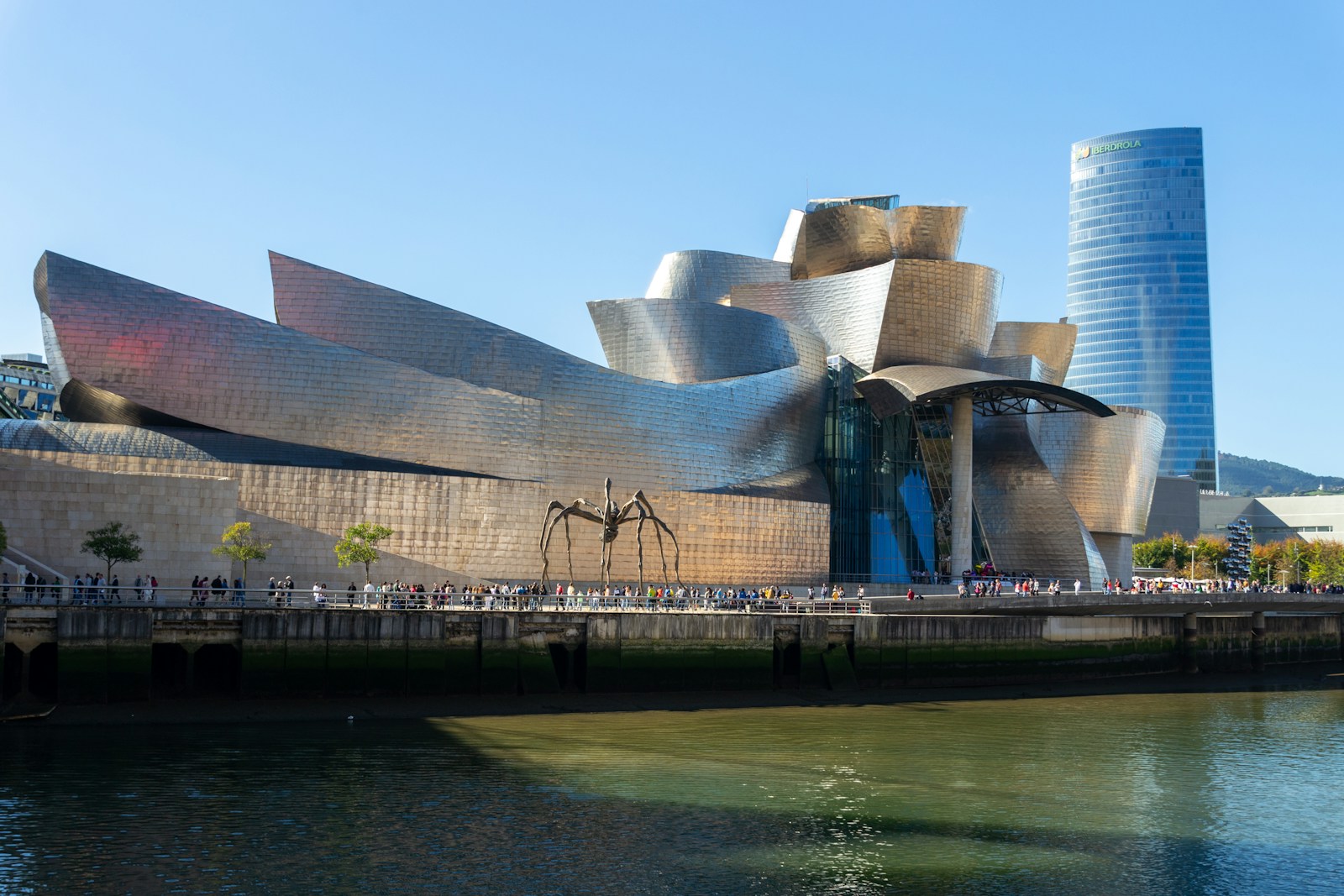
In October 1997, Frank Gehry's Guggenheim Bilbao opened, clad in titanium at the edge of the Nervión river, and became the canonical case of culture-led urban regeneration — the Bilbao Effect. The phrase describes how a single building could pull a post-industrial port out of its decline and give it a new name on the world map. The museum drew 1,301,343 visitors in 2024 and has held for several years to a plateau of roughly 1.3 million a year. It is a figure that no longer climbs steeply — the city has stopped proving a point and begun to steward what it already won.
Walk the Nervión quay at sunset: the titanium panels shift colour with the light, and the west face toward the river is the one angle where the building reads whole, without the crowds.
The Architect in the Past Tense
Frank Gehry died on 5 December 2025, aged 96. Since then the Guggenheim Bilbao reads differently: the building that gave Bilbao its second life has outlived the man who drew it, and its continuing story is now written without him. The thirtieth anniversary in 2027 becomes the first major milestone after the architect's death — a jubilee the museum will mark alone, with no author to turn to. That lends an elegiac undertone to a building otherwise read as pure triumph. The titanium does not age; the story around it does, and 2027 marks where it turns.
Inside the atrium, look up into the central light well before heading to the galleries — it is the gesture Gehry himself called the building's heart, and it reads best empty, early in the morning.
The Reinvention That Was Refused
On 16 December 2025, the board voted against the Guggenheim Urdaibai — a planned outpost of 128 million euros in the Urdaibai biosphere reserve — after sustained environmental opposition. The decision closed an expansion that had for several years been presented as the museum's next chapter. For an institution born of a single audacious building, it is a telling reversal: the city that taught the world culture could remake a port chose not to repeat the gesture in a fragile landscape. The Guggenheim Bilbao thus stays on its plateau of roughly 1.3 million visitors a year — not in growth, but in stewardship of what is already built.
To see the contrast on the ground: the Urdaibai biosphere reserve lies barely an hour northeast of Bilbao, and its untouched estuary makes plain why the outpost met resistance. Take the train from Atxuri station.
Reading the City Around the Museum
Abandoibarra, the waterfront where the Guggenheim stands, was shipyards and rail goods-yard until the 1990s — the post-industrial port into which Gehry's building was written. Across the river lies Casco Viejo, Bilbao's old town with its Siete Calles, the seven founding streets dating to the fourteenth century. Between the two you read the city's whole decision to reinvent itself: the dense medieval lanes against the titanium's curves. Facing the museum stands the Gran Hotel Domine Bilbao, a five-star house of around 145 rooms that opened in 2002 with interiors by Javier Mariscal and was rebranded in 2024 as The Artist Grand Hotel of Art. Its roof bar gives the level return gaze at Gehry's façade.
Do the Guggenheim art walk (bc-act-guggenheim-art-walk) in this order: the Siete Calles of Casco Viejo first, then across the river to Abandoibarra. Walking from the fourteenth century to 1997 in that direction makes the reinvention legible.