Food
The gilda, Casa Vallés and the standing ritual
The gilda — a guindilla pepper, a salted anchovy and an olive on a single skewer — was born at Casa Vallés in San Sebastián in the 1940s, the first pintxo to carry a name. Around it grew the txikiteo: one pintxo, one glass, on to the next bar. The Parte Vieja holds among the world's densest pintxo concentrations, a saturated zone excluded from the 2026 hotel freeze only because it was already capped. You eat standing, at the counter, and they keep count.
Mondmodel Intelligence ·
The gilda and Casa Vallés
The gilda is three things on one skewer: a guindilla pepper, a salted anchovy and an olive. It emerged at Casa Vallés in San Sebastián in the 1940s and was the first pintxo to carry a name of its own — before it, everything on the counter was nameless nibbling. The name was borrowed from Rita Hayworth's screen character, the local telling goes: green, salty and faintly sharp. It is the doorway into the whole genre. Order a gilda first and you set the palate to the acid and salt every later bar builds on, and you grasp why the skewer, not the plate, is the pintxo's base form.
Casa Vallés sits on Reyes Católicos, outside the Parte Vieja crush. Go there for the original gilda before you enter the old town.
The txikiteo: one pintxo, one glass, move on
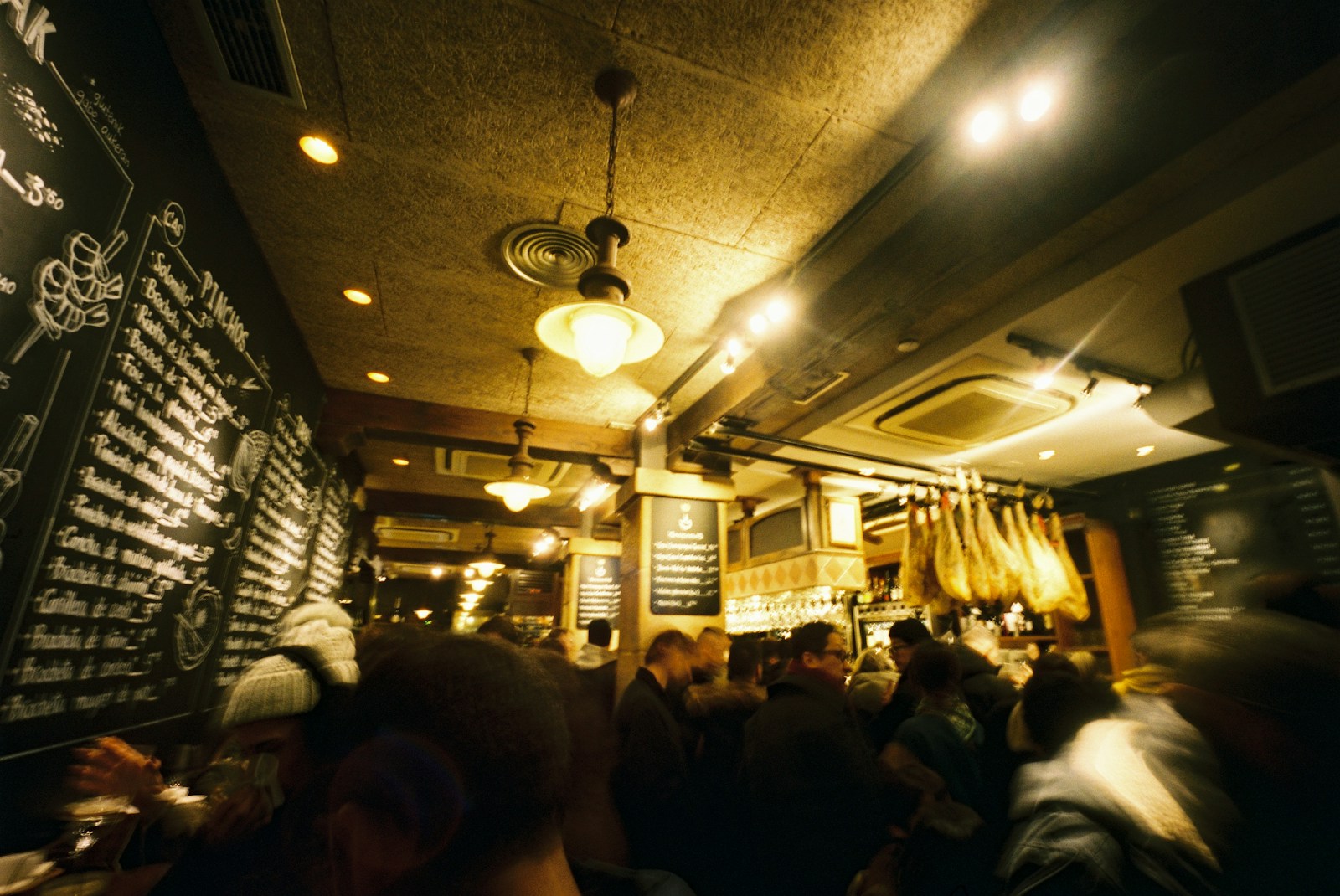
The txikiteo — also called the poteo — means you take a single pintxo and a single glass per bar, then move on to the next counter. You do not sit down; you stand, eat, pay and move. The glass is often txakoli, the tart, lightly sparkling Atlantic white poured from a height to aerate it, though a small red or a beer does the same work. The point is the movement: five bars in an evening, not one. Each counter has its speciality, so you order what the bar is known for and leave the rest. It is a social form as much as a culinary one — you drink standing among people, not at a booked table.
Ask for txakoli and watch the high pour — it is part of the ritual. Pay after each bar; nobody runs a tab between counters.
The saturated grid
The Parte Vieja holds among the world's densest pintxo concentrations across a few blocks between the harbour and the cathedral. That density is exactly why it has become a regulated zone: San Sebastián's PGOU modification, approved unanimously on 29 January 2026, halts new hotels and short-term lets across the saturated central districts — Centro, Parte Vieja, Gros, Antiguo and Ibaeta. It is a zonal suspension, not a numeric bed-cap: the roughly 1,243 registered short-term beds are existing stock, not a legal ceiling. For you, eating, the grid means you can spend a whole evening without leaving a four- or five-street radius — the bars stand wall to wall.
The bc-act-pintxo-crawl-parte-vieja activity maps the zone around the San Sebastián – Parte Vieja & La Concha quarter. Start at the cathedral and work out toward the harbour.
Where the grid tips toward the kitchen
La Cuchara de San Telmo, a pintxo bar in the Parte Vieja, cooks its pintxos to order from an open kitchen rather than setting them out cold on the counter. That is the difference between the classic and the modern pintxo: instead of a skewer you point at, you get a small hot dish — cheek braised in red wine, octopus, foie — carried out when it is ready. Here the txikiteo tips from nibble toward kitchen craft without leaving the standing form. Take it late in the evening, once you have already calibrated the palate on gildas and cold skewers, and let one or two plates from here become the night's centre of gravity. You are still standing; only the kitchen rose.
La Cuchara de San Telmo takes no bookings and keeps no skewers on the counter — you order off the board and wait. Go hungry and late.