Barceló Malaga Hotel
Málaga, Costa del Sol · curated
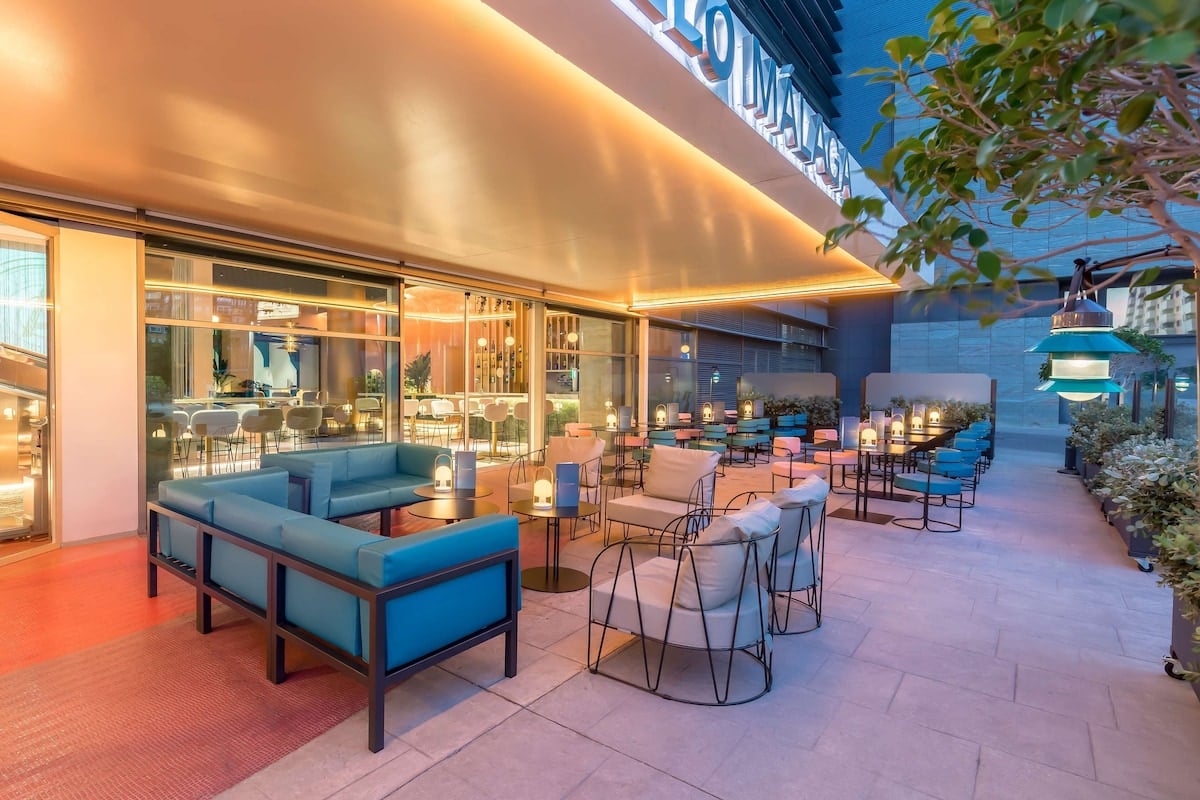
THE VIBE
Steel, concrete and a six-metre slide — Barceló Málaga is the design hotel that landed inside a railway station.
THE BACKSTORY
Barceló Málaga opened in 2007 — the same year the AVE connection reached Málaga and the Vialia María Zambrano complex was completed. The interior design of the B-Lounge lobby was carried out by Catalan designer Jordi Torres, who was also responsible for EDHA: a six-metre-high stainless-steel slide sculpture — its official name is Estructura Deslizante para Humanos Atrevidos, roughly Sliding Structure for Daring Humans — connecting the entrance level directly to the gastrobar La Santa María.
WHY NOW
Málaga María Zambrano now connects Granada in 1.5 hours and Seville in 2 hours by AVE. The hotel sits literally inside the station building — the right call for anyone using Costa del Sol with high-speed rail as their base.
THE ROOM
A Junior Suite on the seventh or eighth floor delivers city views without the direct sightlines onto the station platforms that affect lower floors.
WELLNESS
B-Heaven on the eighth floor is the hotel's rooftop level: outdoor pool, solarium, lounge beds and a bar with views over the city skyline. The gym and sauna are included at no extra charge for hotel guests. Day passes to the pool are sold to the public.
THE TABLE
Ajoblanco de almendra marcona con perlas de albahaca — La Santa María. Hotel-run gastrobar in the same building, TheFork 9.0/10 — the almond-milk-based Andalusian classic with basil pearls is one of the house signature dishes.
THE SERVICE
El Andén on the ground floor was awarded the José Meliá Finisterra prize as best hotel restaurant in Málaga — an industry-internal recognition the hotel still cites in its own presentation.
THE NEIGHBORHOOD
The address is Calle Héroe de Sostoa 2, inside the Vialia complex at María Zambrano. Cercanías to the airport takes 10 minutes. The Centro de Arte Contemporáneo (CAC) on the Guadalmedina river is 600 metres to the south. The Picasso Museum and the cathedral are a 20-minute walk east. Soho's street art begins along Calle Tomás Heredia one block away.
HONEST CAVEAT
The view from B-Heaven on the eighth floor covers railway tracks and urban skyline — not the coast. The historic old town requires a 10–15 minute walk.
THE VERDICT
Barceló Málaga is not a beach hotel and makes no attempt to be one. It is a well-executed design hotel inside a railway station — correctly positioned for travellers moving along the AVE network who want a Málaga base with art, food and a rooftop without sacrificing logistics.
THE FULL PICTURE
You don’t check into the Barceló Málaga so much as you dock with it. The transition from the kinetic chaos of the María Zambrano train station is a sudden, atmospheric plunge. One moment you are navigating the river of wheeled luggage and the echoing announcements of the 10:30 a.m. AVE from Madrid; the next, you are through a set of glass doors and the air changes. It becomes cool, compressed, and silent, save for a low-frequency hum that is the ghost of the station next door. The scent is a sterile cocktail of ozone and the sharp, almost bitter aroma of espresso being pulled for men in unstructured blazers, their eyes fixed on laptop screens. This is a place of transit, made manifest by the audacious stainless-steel slide—the EDHA—that coils down from the first floor. It’s a sculptural folly, a whimsical dare in a lobby otherwise governed by the severe geometry of a corporate headquarters. You have arrived, but the feeling is one of having entered a pressurised airlock connecting you to the city’s primary artery.
The tribe here is specific: they are the architects of Andalusia’s new velocity. They are Madrid-based consultants on a 36-hour surgical strike, founders of Málaga’s burgeoning tech startups meeting with venture capitalists, and art directors scouting locations. They measure time in the intervals between high-speed trains, a rhythm supercharged by the arrival of the Iryo service, which has turned this corridor into a blur of hyper-efficiency. They don’t linger over breakfast; they download presentations. They use the hotel not as a refuge, but as a command centre. This is not a crowd that seeks charm; it seeks a strategic advantage, and the Barceló offers the most potent one in the city: the ability to step off a platform and be poolside on the B-Heaven rooftop, Negroni in hand, in under five minutes, watching the next train glide in beneath you like a conquered vessel.
To use this hotel correctly requires insider knowledge, a refusal of the default setting. You must insist, with unwavering resolve, on a B-Room on the eighth or ninth floor, facing east. From this specific altitude—say, room 814—the city unfolds at dawn. You watch the first light catch the honeyed stone of the distant Alcazaba fortress, a reminder of a slower, more fortified epoch, before it spills across the terracotta rooftops of the working-class Perchel Sur district. To accept a west-facing room, on any floor, is to fundamentally misunderstand the assignment. Your window will frame the vast, sun-bleached industrial roof of the station, a panorama of humming HVAC units and relentless afternoon glare that is a punishment for poor planning. The lower floors, too, are a mistake, absorbing the deep, vibrational rumble of the platforms. The premium for the correct room is not a luxury; it is the non-negotiable cost of transforming a transit hub into a vantage point.
Be brutally clear about the pact you are making. You are sacrificing soul for logistics. The hotel’s immediate environs are an architectural no-man's-land of glass-fronted offices and the characterless Larios Centro shopping mall. The promise of Málaga—the labyrinthine old town, the Picasso museum holding the artist’s reckoning with his own origins, the colossal, one-towered Cathedral—is a fifteen-minute walk away. But this is no romantic constitutional. It is a noisy, exhaust-choked march down the traffic-clogged Calle de la Explanada de la Estación. Any fantasy of stepping out your door into a warren of ancient tapas bars will be immediately and violently dispelled. After 48 hours, the hotel’s own sleek anonymity can begin to feel oppressive, the constant churn of guests rendering it a chic terminal rather than a place to truly inhabit.
Which is why, by 2 p.m. on your first day, you must escape. Cross the plaza, past the taxis and the hurried travelers, and find Restaurante El Andén. This is your mandatory dose of grit, the necessary antidote to the hotel’s polished composure. Order the Fritura Malagueña. It arrives not as a composed plate but as a chaotic, glorious pile: glistening boquerones, tiny, tender chopitos, and rings of calamari, all dusted in semolina flour and plunged into furiously hot olive oil. They shatter between the teeth with a taste of pure salt and sea. You eat with your fingers, shoulder-to-shoulder with dockworkers and local office staff, the din of shouted orders and clattering ceramic plates a welcome assault. This loud, honest, deeply savory plate is the moment you stop transiting and finally land in Málaga. It’s the textural truth that makes the hotel’s frictionless efficiency not just palatable, but powerful. You return cleansed, ready for the next move. Checkout is a seamless whisper. You are back on the platform, your mission accomplished, feeling the low rumble of the departing train. You haven’t collected a memory; you’ve executed a strategy.
FACTS
- Neighbourhood: Málaga
- Stars: 4
- From 100 EUR per night
- Tripadvisor: 4.5/5 (6169)
- 36.713, -4.431
FAQ
When is the best time to visit?
Málaga María Zambrano now connects Granada in 1.5 hours and Seville in 2 hours by AVE. The hotel sits literally inside the station building — the right call for anyone using Costa del Sol with high-speed rail as their base.
Anything I should know before booking?
The view from B-Heaven on the eighth floor covers railway tracks and urban skyline — not the coast. The historic old town requires a 10–15 minute walk.
What is the neighbourhood like around Barceló Malaga Hotel?
The address is Calle Héroe de Sostoa 2, inside the Vialia complex at María Zambrano. Cercanías to the airport takes 10 minutes. The Centro de Arte Contemporáneo (CAC) on the Guadalmedina river is 600 metres to the south. The Picasso Museum and the cathedral are a 20-minute walk east. Soho's street art begins along Calle Tomás Heredia one block away.
MORE HOTELS IN Costa del Sol
- AC Hotel Málaga Palacio — Málaga
- Alcazaba Premium Hostel — Málaga
- Amare Marbella Beach Hotel — Marbella
- Anantara Villa Padierna Palace — Benahavis
- Hotel Best Triton — Benalmádena
- Hotel Claude Marbella — Marbella