Parador de Hondarribia
Hondarribia, Basque Country · discovery
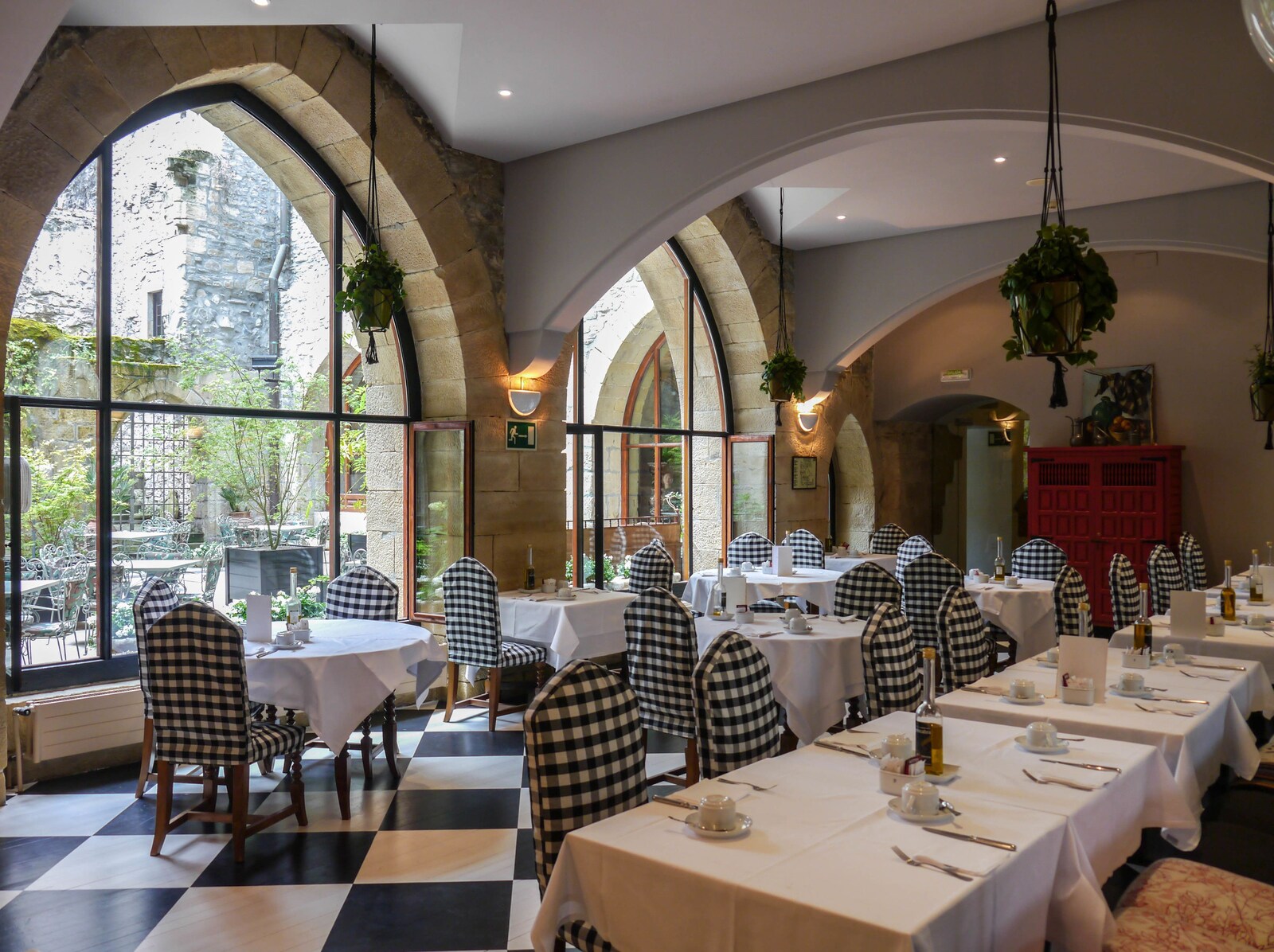
DIE ATMOSPHÄRE
Eine mittelalterliche Festungsburg an der Plaza de Armas, im 16. Jahrhundert von Karl V. umgebaut und seit 1968 ein Parador — zuoberst in der ummauerten Altstadt von Hondarribia.
DIE GESCHICHTE
Der Kern der Burg geht als Grenzfestung am Bidasoa auf das Mittelalter zurück; im 16. Jahrhundert ließ Karl V. sie um eine rechteckige Artillerieplattform verstärken, die der heutigen repräsentativen Fassade ihre Form gab. Nach dem Verfall zur Ruine im frühen 20. Jahrhundert wurde sie restauriert und 1968 als staatlicher Parador eröffnet. Betrieben wird sie von Paradores de Turismo, der spanischen Kette, die Gäste in historischen Denkmälern beherbergt.
WARUM JETZT
Hondarribia gehört zu den Küstenorten Gipuzkoas, die noch nicht unter dem Hotelstopp von San Sebastián stehen; die neue baskische Tourismusabgabe greift erst zum 1. Januar 2027, ein Aufenthalt in diesem Jahr bleibt also ohne Aufschlag pro Nacht.
DAS ZIMMER
Bitten Sie um ein Doppelzimmer zur Bidasoa-Mündung — die Burg hat 36 Zimmer, und der Blick über den Fluss nach Frankreich ist der eigentliche Grund, nicht der Standard, der durchweg historisch statt luxuriös ausfällt.
DAS VIERTEL
Die Burg steht an der Plaza de Armas zuoberst in der ummauerten Altstadt, wenige Gehminuten vom Fischerviertel La Marina mit seinen Pintxo-Bars entfernt. Hondarribia liegt an der französischen Grenze, gegenüber von Hendaye über die Bidasoa-Mündung; der Flughafen EAS liegt in derselben Gemeinde, doch seine britischen Direktverbindungen sind saisonale Sommerflüge, sodass die meisten internationalen Gäste über Bilbao anreisen.
EHRLICHES FAZIT
Dies ist ein Parador, kein Fünf-Sterne-Haus: Hondarribia hat kein Luxussegment, im Schloss selbst gibt es kein nennenswertes eigenes Restaurant, und die Atlantikküste ist regnerisch — die angenehme Saison reicht etwa von Mai bis Oktober.
DAS URTEIL
Die Stärke ist das Gebäude selbst — fünf Geschosse Festung und Palast, in denen Karl V., Philipp IV. und Velázquez weilten, in beherrschender Lage über der Altstadt. Die Schwäche: Service und Zimmer sind Parador-Niveau, nicht Gran Lujo. Geeignet für Reisende, die Lage und Geschichte über Hotelglanz stellen und einen Wagen für die Küste haben.
DAS GESAMTBILD
The gate is the first honest thing about this hotel. A stone archway cut into fortress walls thick enough to stop artillery — which was, in fact, the point — leads you off the Plaza de Armas and into a courtyard where the temperature drops three degrees and the light turns the color of cold honey. You are standing inside a building where Charles V garrisoned troops, where Philip IV held court, where Velázquez slept before anyone thought to hang his paintings in museums. The Parador de Hondarribia does not need to try to impress you. It has been doing this since the Middle Ages.
Check-in happens at a desk wedged into what was once a guardroom. The staff are cordial in the unrushed way of Spanish civil servants who know the building outranks them. Your key — an actual key, not a card — opens a door onto a room that is historic throughout rather than refined. The beds are firm. The bathrooms are clean. The furnishings have the tasteful austerity of a well-run parador, which is to say they would not trouble a design magazine and would not embarrass one either. If you have come expecting thread counts and turndown chocolates, you have come to the wrong castle. Request a double facing the Bidasoa estuary. The castle holds thirty-six rooms, and the view across the river to Hendaye — France beginning where Spain's green hills end, the water moving like pewter under Basque cloud — is the entire argument for being here rather than in a boutique hotel with better pillows.
By morning you understand the argument. Open the shutters at seven and the estuary is fog and gulls and the faint diesel note of a fishing boat heading out from the port below. The walled old town drops away beneath you in tilted streets and painted balconies, geraniums spilling from ironwork that has survived more sieges than you have survived Mondays. Walk downhill — five minutes, maybe less — and you are in the La Marina quarter, the old fishing neighborhood where the houses wear wooden galleries and the pintxo bars start filling by noon. This is where you eat. The castle has no serious restaurant of its own, and there is no reason to pretend otherwise: Hondarribia's kitchens are in the town, not in the parador, and that is part of its charm. At Alameda, scallop carpaccio and Bidasoa seafood arrive with the quiet confidence of a kitchen that has nothing left to prove. Sebastian serves market fish in green sauce — the salsa verde of the Basque coast, parsley and garlic and the memory of the sea — and at Zeria the seafood and fish casserole is the kind of dish that makes you reconsider the entire concept of stew as humble food.
The crowd here is not the San Sebastián crowd, and that matters. Hondarribia sits on the French border, close enough to the Gipuzkoa coast's more celebrated neighbor that you could drive to La Concha in half an hour, but the people who choose this parador over a design hotel in Donostia are making a deliberate decision. They are the retired history professor and his wife who have driven down from Bordeaux. They are the Spanish family returning for the third August in a row because the children can run free in a fortress courtyard. They are the architect from Madrid who has come to spend a weekend reading in a building whose rectangular artillery platform — Charles V's sixteenth-century addition — represents a particular moment in military engineering that most people walk past without understanding. Nobody here is trying to be seen. The vaulted stone hall that passes for a lobby does not lend itself to posing.
By late afternoon, the light on the estuary turns from silver to a bruised amber and the town below starts its evening performance: shutters opening, tablecloths unfurling on terraces, the sound of Basque being spoken fast and with feeling. This is when you should be on the castle's upper floor, watching France go golden across the water, because the parador's own bar does the job without ceremony. The Atlantic coast is wet — let us be plain about that. From November through April, Hondarribia wears rain like a second skin, and the comfortable season runs roughly May to October. Even in July, a squall can roll in off the Bay of Biscay and turn your estuary view into a Turner painting. Pack a jacket. Accept the weather as atmosphere, not inconvenience.
You will need a car. The EAS airport shares the municipality, but its direct routes from Britain are seasonal summer services, and most international guests arrive via Bilbao, an hour's drive west along the coast. The detour rewards: Peine del Viento and its wind-carved sculptures, the funicular climb up Monte Igueldo, the sweep of La Concha visible from Monte Urgull — all of it within striking distance, all of it reason to use Hondarribia as a base rather than a destination unto itself.
Departure feels like leaving a building that does not care whether you return. The fortress will still be here — five storeys of stone and history and the particular silence of a place that has outlasted every guest who ever slept inside it. The Parador de Hondarribia is not the most comfortable hotel on the Basque coast. It is not the most fashionable or the most gastronomically accomplished. But it is the one where you wake up inside six centuries of purpose, and where the view from your window is not decoration but geography — Spain ending, France beginning, and the Bidasoa running between them like a sentence that refuses to finish.
FAKTEN
- Viertel: Hondarribia
- Sterne: 4
- Ab 210 EUR pro Nacht
- Tripadvisor: 4.2/5 (1376)
- 43.36363, -1.79109
FAQ
Wann ist die beste Reisezeit?
Hondarribia gehört zu den Küstenorten Gipuzkoas, die noch nicht unter dem Hotelstopp von San Sebastián stehen; die neue baskische Tourismusabgabe greift erst zum 1. Januar 2027, ein Aufenthalt in diesem Jahr bleibt also ohne Aufschlag pro Nacht.
Was sollte ich vor der Buchung wissen?
Dies ist ein Parador, kein Fünf-Sterne-Haus: Hondarribia hat kein Luxussegment, im Schloss selbst gibt es kein nennenswertes eigenes Restaurant, und die Atlantikküste ist regnerisch — die angenehme Saison reicht etwa von Mai bis Oktober.
Wie ist die Nachbarschaft rund um Parador de Hondarribia?
Die Burg steht an der Plaza de Armas zuoberst in der ummauerten Altstadt, wenige Gehminuten vom Fischerviertel La Marina mit seinen Pintxo-Bars entfernt. Hondarribia liegt an der französischen Grenze, gegenüber von Hendaye über die Bidasoa-Mündung; der Flughafen EAS liegt in derselben Gemeinde, doch seine britischen Direktverbindungen sind saisonale Sommerflüge, sodass die meisten internationalen Gäste über Bilbao anreisen.
WEITERE HOTELS IN Basque Country
- Akelarre — San Sebastián
- The Artist Grand Hotel of Art (formerly Gran Hotel Domine) — Bilbao
- Hotel de Londres y de Inglaterra — San Sebastián
- Hotel María Cristina — San Sebastián
- Hotel Marqués de Riscal — Elciego
- Hotel Viura — Villabuena de Álava