Hotel Vincci Larios Diez
Málaga, Costa del Sol · curated
THE VIBE
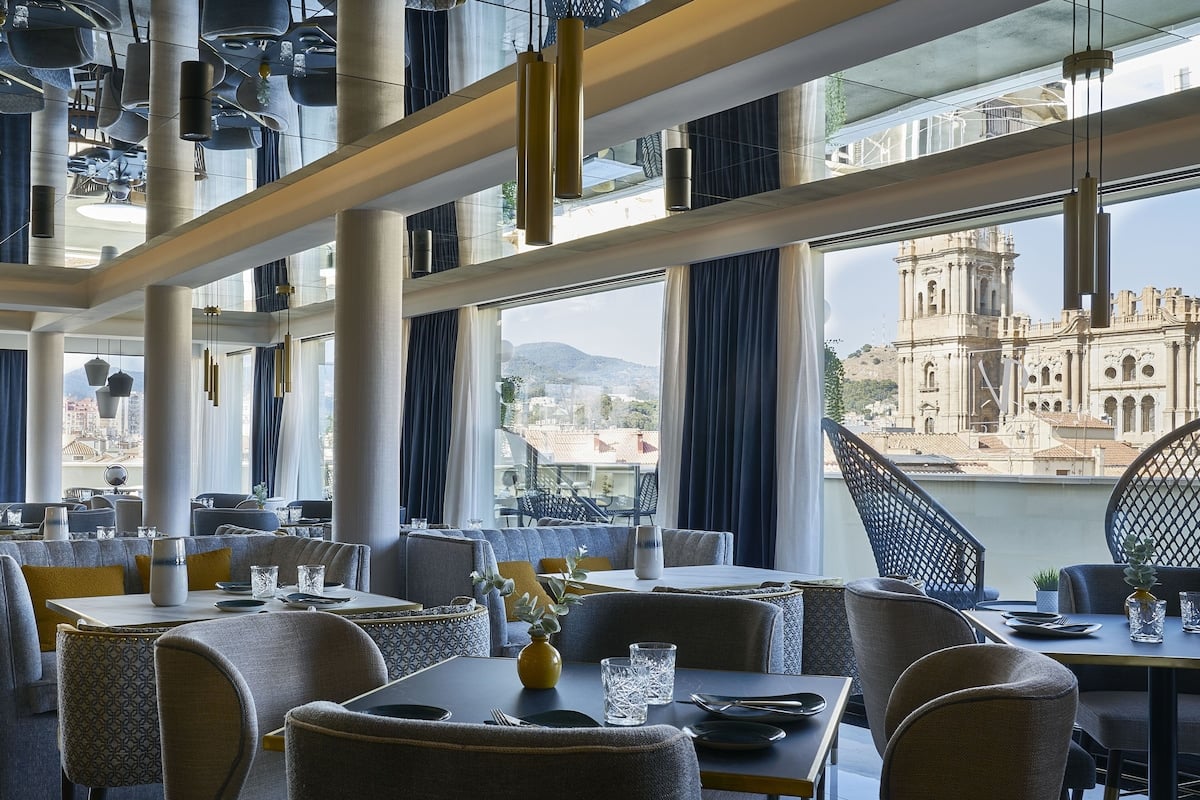
The 1821 building now houses 76 rooms and a rooftop terrace restaurant with unobstructed views of the cathedral.
THE BACKSTORY
The property at Calle Marqués de Larios 10 was built in 1821 and housed Almacenes Gómez Raggio for most of the twentieth century — the most prominent department store address in the province. In 2022, Vincci Hoteles chose to convert the building into a four-star hotel with architect Ignacio Ruiz Rivas responsible for the façade restoration and the project's overall design. The interior, featuring a covered courtyard atrium that organises the flow between floors, was designed by Grupo Plan.
WHY NOW
The hotel opened in July 2022 and is now in its first established phase — the review average of 4.9 on TripAdvisor (no. 1 of 119 in Málaga) is now deep enough to be assessed. The winter months bring overcast skies but empty streets on Calle Larios.
THE ROOM
The Essence floor (floor 5) has private terraces with direct views of the cathedral and Calle Larios — book Vincci Essence Luxe for the best balance of space and view.
THE TABLE
Seasonal produce dish — the menu rotates quarterly depending on local ingredients — El Taller de Larios 10. The hotel's own restaurant concept on the sixth floor with direct cathedral views; seasonally driven kitchen using Andalusian produce and open to the public without a hotel booking requirement.
THE SERVICE
Essence guests on floor 5 have access to a dedicated lounge area with continuous service of tea, coffee and fruit throughout the day — at no extra charge.
THE NEIGHBORHOOD
Calle Marqués de Larios has been Málaga's central commercial street since the nineteenth century. The hotel building stands at number 10 — the Picasso Museum is six minutes' walk to the north, the Roman Theatre and Alcazaba are reached in five minutes to the east, the harbour in eight minutes to the south. Plaza de la Constitución is one block to the north. The street is entirely car-free.
HONEST CAVEAT
There are no spa or wellness facilities at the hotel. Guests seeking treatments or a pool will need to factor in a taxi to another hotel.
THE VERDICT
Málaga's city centre has gained a well-justified addition: a converted 1821 building with verifiably strong reviews, a considered rooftop dining destination and a location that makes taxis unnecessary throughout the stay. The absence of wellness is the hotel's most evident limitation.
THE FULL PICTURE
You don't check into this hotel; you plug into it. Stepping through the automatic glass doors from Calle Larios is a sensory reset, a deliberate shift in atmospheric pressure. The street’s cacophony—a thick stew of flamenco guitar from a busker, the percussive roll of a hundred wheeled suitcases on marble, the insistent patter of shop hawkers—is instantly sealed away. It’s replaced by the low, expensive hum of industrial-grade air conditioning and a scent of white tea and fig, so precise it feels less like an aroma and more like an architectural finish. The polished concrete floors of the lobby are cool and reflective, a spartan stage for a self-assured cast: architects in severe Japanese eyewear debating the merits of the Pompidou’s colorful cube just down the port, and couples in quiet linen who drop shopping bags from Loewe and Massimo Dutti before ascending for the evening. This is not a place for lingering. It is a high-design decompression chamber, an unsentimental gateway that understands its primary function is to provide altitude.
Your entire stay hinges on securing a 'Doble con Terraza' on the fifth or, preferably, the sixth floor. Be insistent. Rooms 601 or 602 offer the most commanding corner perspectives. To accept an 'interior' room is to fundamentally misunderstand the assignment. Those rooms are not merely quiet; they are lightless, dispiriting cells whose only view is a narrow ventilation shaft that whispers of institutional confinement. You are paying a premium for geography, and to be entombed within the hotel’s core is a profound waste of that investment. From the correct room, the city is your private theatre. The first light, around 7 a.m., is accompanied not by an alarm but by the metallic crash and rattle of security shutters rising on the shops below. You slide open the glass door to your small terrace, a concrete ledge just wide enough for two chairs, and the day’s first wave of sound washes up—muted, cinematic, and entirely thrilling. The gargoyles and bell tower of the Malaga Cathedral, a sandstone monolith just 200 meters away, catch the morning sun, grounding your view with ecclesiastical gravitas.
By late afternoon, the hotel’s center of gravity shifts skyward. The elevator, which you’ll often share with a crush of non-guests, becomes a social barometer. It delivers you to the Terraza Vincci, a space that has become the unofficial green room for Málaga’s exploding art scene. This is why you are here now. The city is white-hot, its cultural currency minted with every new blockbuster at the Picasso museum, a five-minute walk from your lobby. On this rooftop, under a retractable glass shield that makes it the city’s only viable all-season perch, the players convene. You’ll listen to gallerists from Madrid and collectors from London discuss auction results over gin tonics that sweat onto the white tables. Getting a prime seat for sunset requires tactical precision, but the reward is a view that sweeps over the city’s tiled roofs to the jagged, ancient profile of the Alcazaba, all while the sky bruises to a deep Andalusian purple.
But let’s be brutally honest. This proximity to the city’s pulse comes at a cost. The double-glazing is formidable, but it is no match for the off-key stag-do serenades that echo up from Calle Larios at 2 a.m. The lobby’s transient nature can make you feel like a tenant in a public building, waiting for an elevator behind a boisterous local birthday party. And the breakfast buffet is a cynical, €20 affair of lukewarm eggs and push-button coffee that feels like an insult when, a two-minute walk away, Casa Aranda serves life-altering churros and thick chocolate for a quarter of the price. Skip the hotel breakfast without a second thought.
Your most vital culinary decision, however, lies beyond the hotel’s slick but soulless rooftop menu. A five-minute walk into the warren of streets behind the hotel leads you to Freiduría La Campana, a temple of fried fish. You must stand. You will shout your order for a *cucurucho* of *Boquerones al Limón* over the glorious din and grab a freezing *caña* of Victoria beer. The paper cone arrives, hot and heavy with tiny, whole anchovies, zinging with lemon, dusted in flour, and fried to a state of crisp, ethereal perfection. The sharp citrus slices through the clean oil; the delicate bones crunch. This is the unadulterated taste of the Andalusian coast, a moment of such chaotic, delicious authenticity it makes any formal dinner reservation feel like a profound miscalculation. You return to the hotel’s monastic calm changed, carrying the scent of salt and lemon on your fingers, a secret knowledge that separates the tourist from the traveler.
FACTS
- Neighbourhood: Málaga
- Stars: 4
- From 130 EUR per night
- Tripadvisor: 4.9/5 (1250)
- 36.7197, -4.4223
FAQ
When is the best time to visit?
The hotel opened in July 2022 and is now in its first established phase — the review average of 4.9 on TripAdvisor (no. 1 of 119 in Málaga) is now deep enough to be assessed. The winter months bring overcast skies but empty streets on Calle Larios.
Anything I should know before booking?
There are no spa or wellness facilities at the hotel. Guests seeking treatments or a pool will need to factor in a taxi to another hotel.
What is the neighbourhood like around Hotel Vincci Larios Diez?
Calle Marqués de Larios has been Málaga's central commercial street since the nineteenth century. The hotel building stands at number 10 — the Picasso Museum is six minutes' walk to the north, the Roman Theatre and Alcazaba are reached in five minutes to the east, the harbour in eight minutes to the south. Plaza de la Constitución is one block to the north. The street is entirely car-free.
MORE HOTELS IN Costa del Sol
- AC Hotel Málaga Palacio — Málaga
- Alcazaba Premium Hostel — Málaga
- Amare Marbella Beach Hotel — Marbella
- Anantara Villa Padierna Palace — Benahavis
- Barceló Malaga Hotel — Málaga
- Hotel Best Triton — Benalmádena