The Season
Calçotada: The Winter Meal That Inverts the Coast’s Calendar
From November to April, calçots — a sweet spring onion — are charred over vine-cutting embers in Valls, the ritual’s capital, and dipped in salvitxada, the local variant of romesco. The Gran Festa de la Calçotada falls this year on a single day, Sunday 25 January 2026; while the resort coast hibernates, the interior wakes around the table.
Mondmodel Intelligence ·
What a Calçot Is — and How It's Eaten
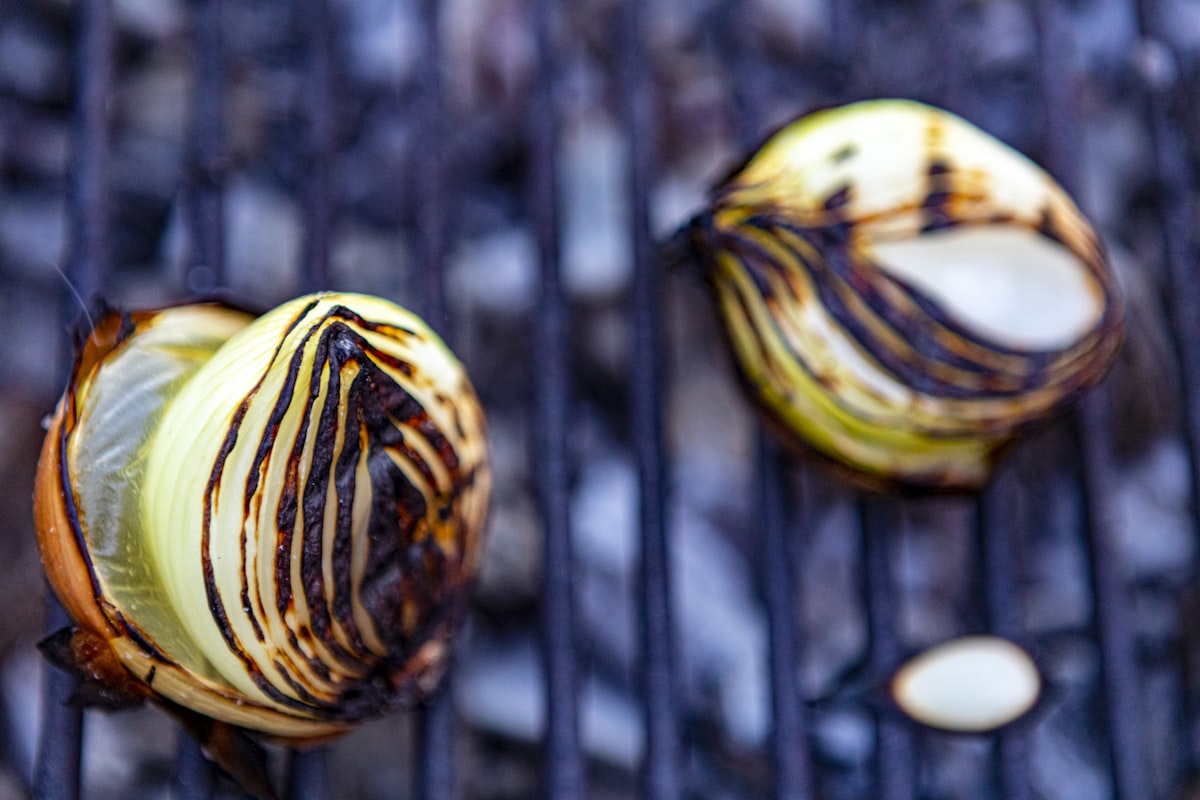
A calçot is a mild, elongated spring onion, grown by mounding earth around the stalk so it turns white and sweet — the name comes from calçar, to put shoes on. It is charred black over open embers, traditionally from pruned vine, and served in a bundle on a roof tile, often under newspaper to hold the heat. Eating it is a technique: you peel off the blackened outer skin with your fingers, dip the bare, steaming stalk in sauce, and lower it into your mouth from above with your head tipped back. It gets messy — the bib is not a joke but equipment, and the black fingers come with the territory. This is not a restaurant dish that happens to be regional, but a winter custom you take part in, a communal table where every hand ends up equally sooty. Anyone who wants to eat a calçot tidily has misread the meal; the whole point is that it strips away politeness and turns everyone at the table into a participant rather than a guest. That is why it feels more like festival than dinner.
Ask for a bib and gloves — several calçoteries hand out both. The salvitxada stains and the black onion skin dyes your fingers; that is the point.
Valls and the Salvitxada
The ritual has its origin in Valls, an inland town northwest of Tarragona reckoned the capital of the calçotada. Here the sauce carries its own name: salvitxada, the local relative of romesco, made from roasted almond and hazelnut, garlic, dried nyora pepper, olive oil and bread. It is thicker and nuttier than a table ketchup and central to the meal — the calçot is only the carrier, and a calçotada without a proper salvitxada is barely a calçotada at all. Valls is the same town that gave the world castells, the human towers, UNESCO-listed as intangible cultural heritage since 2010; it is no accident that the area's two strongest cultural markers were both born around collective effort and festival. Both demand many hands, both are celebrated in a crowd, both trace to the same small town. To eat a calçotada in Valls is to eat it at the source, not in a copy further down toward the coast — the difference lies not in recipe but in context, in the onion being grilled where the tradition actually belongs. Here the calçotada is not a sight served to visitors but a custom the town would give its winter to anyway.
After the onions come grilled meats by tradition — botifarra and lamb — and the house wine in an earthenware jug. Come hungry; the calçotada is a long meal, not a starter.
The Season That Inverts the Calendar
The calçotada runs roughly from November to April — that is, precisely during the months when the Costa Daurada is usually said to sleep. That is the point. While Salou and PortAventura hibernate, the interior wakes around the table, and the traveller who comes in low season gets the destination's most characteristic meal with no crowd at all. No other Mondmodel destination owns a season-extending gastronomic anchor of this kind; it is this single dish that, on its own, turns winter into a reason to travel rather than a dead stretch. It inverts the whole logic: instead of asking whether it is too cold for the beach, you ask whether it is the right month for the onion. And it fits a larger pattern — Priorat harvest in September and October, Tarraco Viva in May, calçotada from November to April — in which the inland calendar runs strongest exactly when the coastal core falls quiet. This is the coast read in reverse — winter as the high point, summer as the part people already know about, and the onion as the proof that the destination has another season the charter catalogue never names.
At mid-season, January and February, the calçot is at its sweetest. Book a weekend lunch at a farmhouse around Valls — on weekdays many calçoteries are closed.
Gran Festa de la Calçotada: 25 January 2026
The calçotada's calendar peak is the Gran Festa de la Calçotada in Valls, held this year on a single day — Sunday 25 January 2026. The town fills with open-air grilling, contests in onion-planting and apple-eating, and castellers raising towers on the square between courses. It is folk festival rather than gastro-tourism, and for exactly that reason worth aiming the trip at: one Sunday in mid-January that concentrates everything winter on this coast is really about. The two cultural markers born in Valls meet on the same day — the onion on the embers and the tower of people — and together they say more about the area than any beach does. Plan your stay inland — the Priorat hotels in Torroja or Escaladei, or an estate around the Camp de Tarragona such as Mas La Boella in La Canonja — and let the beach be the thing you do not miss. Anyone who comes on this Sunday sees the destination as it would most like to be seen: not as a charter coast but as a Catalan inland feast with the sea within reach.
The festival day, 25 January 2026, draws people from across Catalonia — book your room and lunch table weeks ahead, and expect central Valls to be car-free for the day.