Can Bordoy Grand House & Garden
Old Town Palma, Mallorca · imperial
THE VIBE
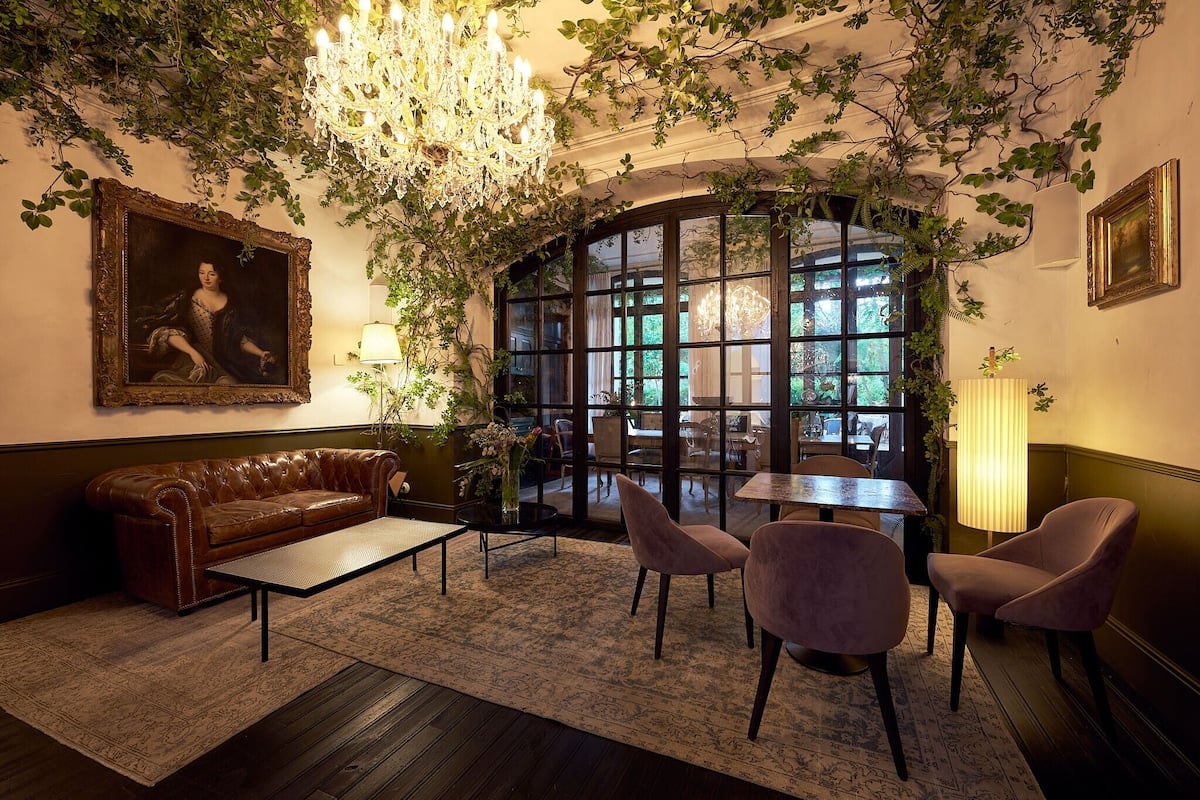
Can Bordoy Grand House & Garden — twenty-four suites in a 500-year-old palacete in La Lonja, where architects OHLAB chose to expose the building's accumulated layers rather than conceal them.
THE BACKSTORY
The building at Carrer del Forn de la Glòria 14 is over 500 years old — originally a private residence for the Bordoy Blanes family, later a religious school for the Sacred Heart. Architecture firm OHLAB (Paloma Hernaiz and Jaime Oliver) restored the 2,500-square-metre building over eighteen months guided by a kintsugi-inspired principle: the layers of history were laid bare rather than whitewashed over. Owner Mikael Hall opened the hotel in December 2018.
WHY NOW
The Michelin Guide awarded Can Bordoy a Key in 2024 — the first time the hotel has been formally classified by the guide. The World Travel Awards has named it Europe's leading all-suite hotel five consecutive years. The May–June window offers optimal balance: the garden's 70 plant species in full bloom, and the measured interlude before August's peak-occupancy pressure.
THE ROOM
Suites facing the garden's 750-square-metre private park give direct terrace access and the fullest share of natural light the house can offer. Upper floors with views across the roofline carry the glass pool's reflections down through the stairwell.
WELLNESS
The spa occupies the basement alongside Palma's medieval city walls — 13th-century stone on three sides, modern brutalist concrete on the fourth. The programme follows Mediterranean bathing culture with water experiences across different temperatures; no quasi-medical claims, pure precision.
THE TABLE
The tasting menu — seasonal, plant-forward with accents of fish and meat; ~60 EUR per person — Botànic. Chef Andrés Benítez runs La Lonja's only avowedly plant-forward restaurant — open to non-hotel guests, with dinners in the garden facing the private park.
THE SERVICE
A subterranean spa set within 13th-century stone walls — a two-cabin facility with steam bath, cold plunge pool with whirlpool, and a horizontal shower, using Swiss Perfection products. Garden treatments are available outdoors at the pool.
THE NEIGHBORHOOD
La Lonja is Palma's oldest urban fabric and borders directly onto the sea and the Passeig des Born. Banys Àrabs — the city's 10th-century Arab baths — are within walking distance. La Seu cathedral is approximately a five-minute walk through the neighbourhood. The quarter is Palma's densest concentration of galleries and independent restaurants open in the evenings.
HONEST CAVEAT
Twenty-four suites in a medieval urban fabric means variable light conditions — interior-facing rooms on lower floors can feel dim from November through February. La Lonja's stone-paved lanes are perfectly comfortable on foot, but require porter assistance from the nearest drop-off point for heavy luggage.
THE VERDICT
Can Bordoy is La Lonja's most concentrated address: an architectural restoration that won the INSIDE World Architecture Festival 2019 and has held a Michelin Key since 2024. Twenty-four suites, no compromises, no scale expansion — and a restaurant concept at Botànic that is reason enough to book even without an overnight stay.
THE FULL PICTURE
You don't find this place by accident. Your taxi will slow to a crawl, navigating a vein-like lane in the quieter, more residential corner of Palma’s Old Town, a breath away from the grand promenade of Passeig del Born. You step out of the sun and into a 17th-century mansion, and the immediate sensation is of temperature and acoustics dropping. The heat and city hum are replaced by the cool, damp scent of ancient stone and the rustle of a vertical garden that seems to climb to the sky. And then you see it. Suspended between two wings of the building, a glass-floored plunge pool hovers over the sandstone courtyard, a slash of impossible blue, its chlorinated water casting shimmering, dancing caustics on the diners below. It is the most audacious architectural gesture in the Balearics, and it sets the tone for everything.
The suites are studies in texture and shadow. Heavy damask curtains the color of dried blood absorb the sound. Floors are cool limestone underfoot, and the furniture is a mix of deep velvet and restored antiques that feel curated rather than placed. At 7 AM, you push open the heavy shutters and the morning light doesn't flood in; it seeps, catching the dust motes and illuminating the grain of a dark wood armoire. This is a hotel for people who understand that drama is created by what is concealed as much as by what is revealed. The crowd is self-selecting. It’s the Zurich gallerist who appreciates the monastic quiet, the London-based architects who spend an entire aperitivo hour debating the engineering of the suspended pool, the couple who flew in for a reservation at Santi Taura’s DINS and chose this as their base for its deliberate lack of a scene. They don't make small talk. They speak in low tones about art, wine, and the precise shade of Mallorcan dusk.
Let’s be clear about two things. First, the pool. It’s a work of art, a hydro-theatrical installation you can get inside. It is not for swimming laps. It is for a chilled glass of Albariño at 5 PM, feet dangling over the courtyard, feeling the sublime, almost voyeuristic thrill of floating above the world. It is a decision, not a facility. Second, the sound. The courtyard is the hotel’s heart, which means it is not hermetically sealed. If you choose a suite overlooking it, you will hear the clink of cutlery from the Botanic restaurant, the low murmur of conversation drifting up. It is the sound of a grand house being alive, but if you require absolute silence to sleep, request a room facing the lane. This isn’t a flaw; it is a characteristic of a building that chooses to breathe.
The in-house restaurant, Botanic, is a destination in its own right, pulling Palma’s discreetly wealthy from their Calatrava-designed villas even for a Tuesday lunch. The 'Garden harvest salad with house-fermented Mallorcan olive oil and microgreens' sounds simple, but it’s a thesis on terroir, a plate that tastes of the island's sun and soil. This is where you understand the hotel’s ethos: to take something elemental—a vegetable, a stone wall, a body of water—and elevate it through sheer force of design and conviction.
From here, Palma unfolds on foot. A two-minute walk brings you to the glorious chaos of Mercat de l'Olivar, a sensory assault of glistening fish, pyramids of oranges, and the sharp scent of sobrassada. In five minutes, you are standing beneath the colossal sandstone buttresses of La Seu Cathedral, a monument so vast and intricate it feels less like a building and more like a reckoning with medieval ambition. This is your neighborhood: the Palma of private palatial residences, Saturday artisan markets, and historic bakeries like Ca'n Joan de s'Aigo, where the ensaimada has been non-negotiable since 1700. You are embedded, not insulated.
The stay has an arc. It begins with architectural awe, a confrontation with the audacity of the pool. It mellows into a deep, sensory comfort—the feel of cool stone, the taste of that olive oil, the weight of the silence in your suite. The peak is that moment, maybe at dusk, suspended in the water, watching the lights flicker on in the courtyard, feeling utterly removed and yet completely connected. You leave not feeling rested in the conventional sense, but recalibrated. The return to the noise and glare of the outside world feels abrupt, almost vulgar. You’ve spent a few days inside a precisely rendered argument for beauty, and it changes your perspective. This isn’t a hotel you visit; it’s an idea you inhabit.
FACTS
- Neighbourhood: Old Town Palma
- Stars: 5
- From 450 EUR per night
- Tripadvisor: 4.7/5 (217)
- 39.57, 2.65
FAQ
When is the best time to visit?
The Michelin Guide awarded Can Bordoy a Key in 2024 — the first time the hotel has been formally classified by the guide. The World Travel Awards has named it Europe's leading all-suite hotel five consecutive years. The May–June window offers optimal balance: the garden's 70 plant species in full bloom, and the measured interlude before August's peak-occupancy pressure.
Anything I should know before booking?
Twenty-four suites in a medieval urban fabric means variable light conditions — interior-facing rooms on lower floors can feel dim from November through February. La Lonja's stone-paved lanes are perfectly comfortable on foot, but require porter assistance from the nearest drop-off point for heavy luggage.
What is the neighbourhood like around Can Bordoy Grand House & Garden?
La Lonja is Palma's oldest urban fabric and borders directly onto the sea and the Passeig des Born. Banys Àrabs — the city's 10th-century Arab baths — are within walking distance. La Seu cathedral is approximately a five-minute walk through the neighbourhood. The quarter is Palma's densest concentration of galleries and independent restaurants open in the evenings.
MORE HOTELS IN Mallorca
- AluaSoul Mallorca Resort — Adults Only — Cala Egos / Cala d'Or
- Barefoot Hotel Mallorca — Portocolom
- Bikini Island & Mountain Hotel Es Trenc — Adults Only — Colonia Sant Jordi
- Bikini Island & Mountain Hotel Port de Sóller — Port de Sóller
- Blau Colònia Sant Jordi Resort & Spa — Colonia Sant Jordi / Ses Salines
- Bordoy Alcúdia Port Suites — Port d'Alcúdia