La Residencia, A Belmond Hotel, Mallorca
Deia, Mallorca · imperial
THE VIBE
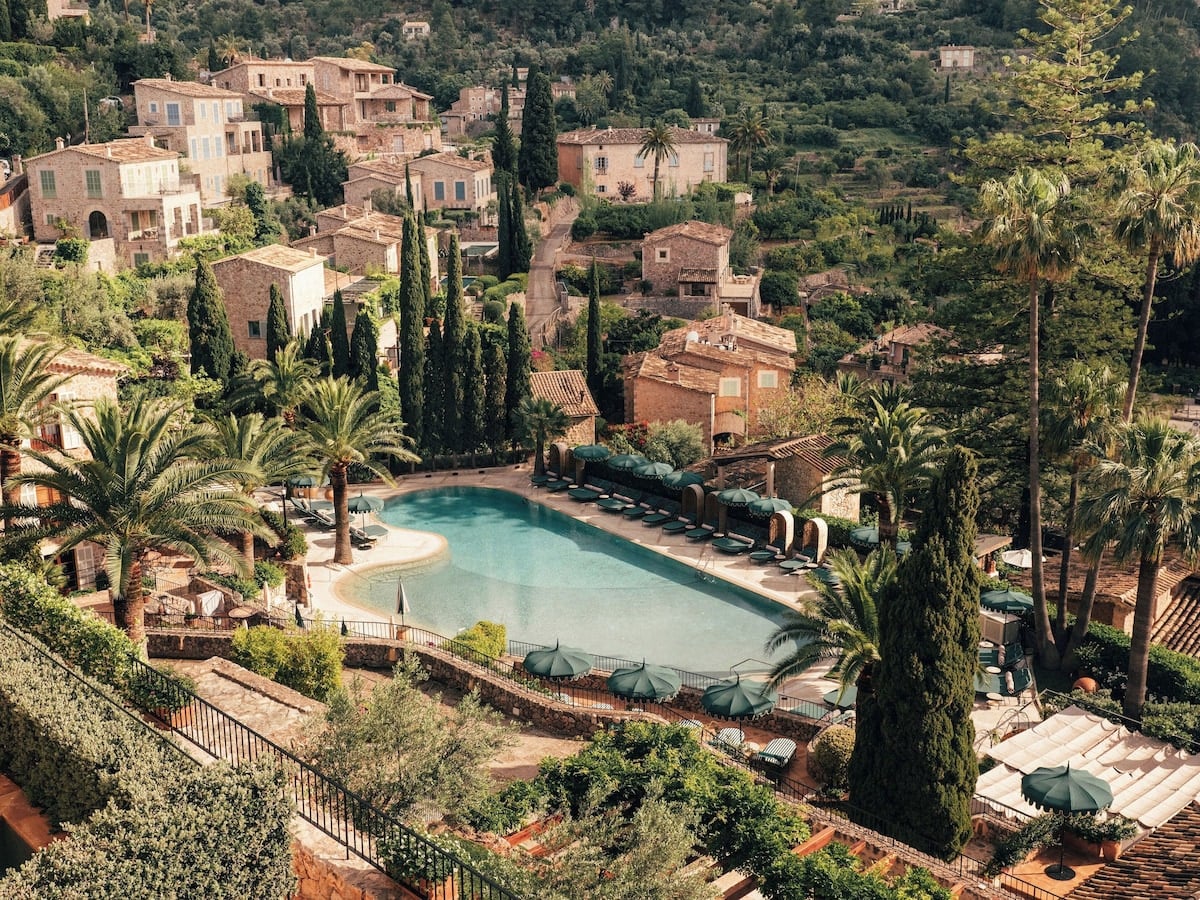
Two manor houses from the 17th and 18th centuries in Deià — Belmond La Residencia is the anchor point of the artist colony, not its backdrop.
THE BACKSTORY
Axel Ball opened La Residencia in 1984 in two restored manor houses from the 17th and 18th centuries — each room furnished with antiques, an approach without precedent on the island at the time. In 1987 Richard Branson joined as a co-owner. In 2002 the property was acquired by Orient-Express Hotels, which in 2014 renamed itself Belmond Ltd and rebranded the hotel. Today Robert Graves's house — a museum run by his son William, a seven-minute walk up through the village — forms a natural extension of the hotel's cultural topography.
WHY NOW
In the 2025 season the hotel expanded Sa Vinyeta — one of Europe's most permanent outdoor sculpture collections. The kitchen at El Olivo under chef Pablo Aranda received its listing in MICHELIN Guide España 2026. Book now ahead of the summer season; shuttle to Cala Deià is included.
THE ROOM
Choose a Superior or Deluxe room in the original manor building, upper floor — direct views across the terraced hillside groves and away from service-yard noise. Suite 67, redesigned by Matthew Williamson, is the alternative for those who prefer botanical visual logic over antiquity.
WELLNESS
Six treatment rooms, three with private terraces. The signature Citrus Siesta combines olive oil exfoliation with Zen massage in essential oils — ingredients sourced from the hotel's own groves. Indoor pool, outdoor jacuzzi, ice-water bath and sauna complete the facilities; open daily 10–19.
THE TABLE
8-course tasting menu with Mediterranean cuisine and Arabian influences — menu concept inspired by Federico García Lorca's poetic world — El Olivo. The hotel's fine-dining room in an 18th-century mill with original tafona — MICHELIN-listed 2026 under chef Pablo Aranda, Granada-born with a Basque Culinary Center degree. In summer, dinner moves to the terrace overlooking the rooftops of Deià and the Tramuntana.
THE SERVICE
The hotel's Artists in Residencia programme invites artists and sculptors with studio rooms, accommodation and production grants — guests may participate in classes with resident painter Alan Hydes and sculptor Juan Waelder, whose granite pillars along Poet's Walk bear names including Robert Graves and Pablo Neruda.
THE NEIGHBORHOOD
Deià is Mallorca's most concentrated artist village — a population in the hundreds, established since the 1920s and protected by UNESCO-listed Tramuntana nature. Valldemossa is reached in 20 minutes by car heading south; Port de Sóller in 26 minutes. Palma airport is 45 minutes away.
HONEST CAVEAT
Cala Deià is reached via a 2-kilometre walk (30 minutes) or the hotel's complimentary shuttle — but Deià has no town beach, and the price tag reflects the location, not the pool.
THE VERDICT
La Residencia is Deià rather than Mallorca — the right choice for those who value artistic density and Belmond's unhurried service excellence over the pool-bar scene. The price is among the island's absolute highest, but the breadth of the arts programme and El Olivo's MICHELIN-listed kitchen justify it.
THE FULL PICTURE
You don’t arrive at La Residencia so much as you yield to it. The final, serpentine kilometers of road that climb into the Tramuntana mountains are a necessary compression, shedding the coastal clamor of Mallorca until all that remains is the scent of pine, the chalky dust of limestone, and the startling blue of a sliver of sea caught between two peaks. The hotel doesn’t announce itself with a grand gate but with a subtle shift in the landscape: the wild olive groves become meticulously terraced, the dry-stone walls feel older, more intentional. This is Deià. And this 16th-century manor house, flanked by two others, is the village’s anchor, its conscience, and its most sought-after address.
The check-in is a quiet conversation over a glass of chilled water infused with lemon from the estate. There is no transactional urgency. The crowd here operates on a different frequency: a Berlin-based architect and his partner, finally taking the honeymoon they postponed three years ago; a celebrated novelist from Dublin, pretending to be on holiday while discreetly taking notes in a leather-bound journal; a couple in their late seventies who have been coming for thirty years and now watch their grandchildren chase lizards across the terracotta patios. They are not here to be seen, but to disappear into the 35 acres of citrus trees and ancient olive groves, to feel the accumulated weight of a place where art and literature are baked into the very mortar of the walls.
Your room is a study in monastic calm. The floors are cool stone underfoot, the ceiling timbered with heavy, dark beams. You open the shutters and the 4 p.m. sun floods in, carrying the sound of a lone sheep bell from the slopes above. The air is thick with the fragrance of jasmine and the low, electric hum of cicadas. This is the first test: to resist the urge to do anything. To simply sit on the wrought-iron balcony and watch the light turn the formidable face of the Teix mountain from ochre to rose gold. The real work of a stay here is recalibration.
Before dinner, you take the seven-minute walk up through the village to La Casa de Robert Graves. It’s not a tourist detour; it’s an act of pilgrimage, a necessary piece of context for understanding the village’s soul. You see the writer’s simple desk, his tools, the tangible evidence of a life built on discipline and Mediterranean sun. On the way back, you detour upwards to the Deià Village Cemetery. From this vantage, perched above the cypress trees, the entire valley unfolds. You see La Residencia set below, its tiled roofs a warm counterpoint to the silver-green of the olive canopy. This is the view that has undone poets and painters for a century.
Dinner at El Olivo is the stay’s central ceremony. The restaurant, a converted 16th-century olive mill, is a theatre of candlelight dancing against immense stone walls. While chefs in Palma chase notoriety with elaborate tasting menus of Scottish langoustine or deconstructed sobrassada, the kitchen here practices a kind of devotional classicism. The order is the Slow-cooked Mallorcan lamb tumbet with estate olive oil and seasonal herbs. It arrives not as a composition but as a statement of fact: the lamb, impossibly tender, tastes of the wild thyme it grazed on; the vegetables have the deep, resonant sweetness that only comes from being pulled from the earth hours, not days, before. Each bite is a communion with the surrounding landscape.
There is, of course, a flaw in this perfection. The absolute tranquility of La Residencia is so profound, so hermetically sealed, that it can feel isolating. This is not a base for exploring Mallorca; it is the destination itself. The thirteen-minute walk down a steep, rocky path to Cala Deià is a glorious morning ritual, but the pebbled cove is small, and in July, it heaves with day-trippers. The climb back up is a lung-searing reminder that paradise demands a toll. The village itself, a single characterful street, can be fully absorbed in an afternoon. After three days, the profound quiet can begin to echo if you’re not prepared to meet it with your own inner resources. This is a place for reading, for talking, for swimming in one of the two pools, and for thinking. It is an active retreat, not a passive vacation, and the price of entry—in every sense—selects for a guest who understands the difference.
On the morning of your departure, you take your coffee on the terrace one last time. The air has the clean, cool edge of mountain dawn. You watch the sun crest the ridge, its first rays catching the dew on the orange trees. You are leaving not with a collection of memories, but with a lingering sensory imprint: the scent of lemon leaves crushed between your fingers, the feel of sun-warmed stone, the taste of salt and olive oil. You came seeking an escape and found a standard against which all other hotels will now be measured, and likely found wanting.
FACTS
- Neighbourhood: Deia
- Stars: 5
- From 700 EUR per night
- Tripadvisor: 4.7/5 (1212)
- 39.74967, 2.64923
FAQ
When is the best time to visit?
In the 2025 season the hotel expanded Sa Vinyeta — one of Europe's most permanent outdoor sculpture collections. The kitchen at El Olivo under chef Pablo Aranda received its listing in MICHELIN Guide España 2026. Book now ahead of the summer season; shuttle to Cala Deià is included.
Anything I should know before booking?
Cala Deià is reached via a 2-kilometre walk (30 minutes) or the hotel's complimentary shuttle — but Deià has no town beach, and the price tag reflects the location, not the pool.
What is the neighbourhood like around La Residencia, A Belmond Hotel, Mallorca?
Deià is Mallorca's most concentrated artist village — a population in the hundreds, established since the 1920s and protected by UNESCO-listed Tramuntana nature. Valldemossa is reached in 20 minutes by car heading south; Port de Sóller in 26 minutes. Palma airport is 45 minutes away.
MORE HOTELS IN Mallorca
- AluaSoul Mallorca Resort — Adults Only — Cala Egos / Cala d'Or
- Barefoot Hotel Mallorca — Portocolom
- Bikini Island & Mountain Hotel Es Trenc — Adults Only — Colonia Sant Jordi
- Bikini Island & Mountain Hotel Port de Sóller — Port de Sóller
- Blau Colònia Sant Jordi Resort & Spa — Colonia Sant Jordi / Ses Salines
- Bordoy Alcúdia Port Suites — Port d'Alcúdia