El Palace Barcelona
Eixample, Barcelona · imperial
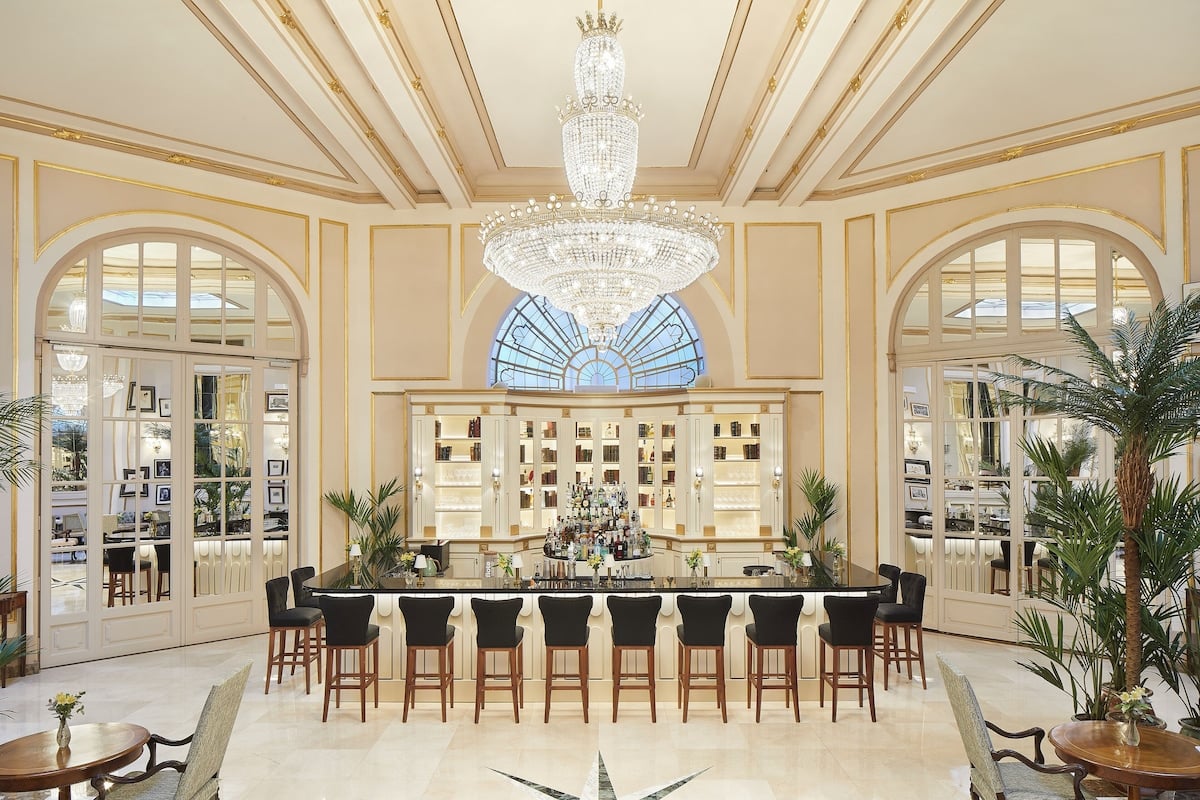
THE VIBE
Gran Via 668 since 1919 — the address in Eixample where the Civil War and Dalí shared a ground floor.
THE BACKSTORY
Opened in 1919 as the Hotel Ritz de Barcelona, initiated by Catalan politician Francesc Cambó and businessman Gonzalo Arnús — César Ritz died in 1918 and never saw the inauguration. Architect: Eduard Ferrés i Puig. On 22 July 1936 the hotel was seized by trade union forces, renamed 'Hotel Gastronómico No. 1', and its basement converted into an air-raid shelter and field hospital. In 2005 the name was changed to El Palace Barcelona; membership of Leading Hotels of the World remains.
WHY NOW
Amar Barcelona, Rafa Zafra's seafood-focused restaurant in the original 1919 dining room, has welcomed Barack Obama, Bruce Springsteen and Steven Spielberg since its 2022 opening. The guest list sets the tone: this hotel is not a museum but a functioning hub.
THE ROOM
The Art Suites series (six rooms since 2017, dedicated to Dalí, Miró, Josephine Baker and others) offers more character than the standard suites and is often priced only marginally higher. Rooms facing the inner courtyard are quieter than those facing Gran Via.
WELLNESS
Mayan Luxury Spa, located on the basement level, is Europe's first hotel with a traditional Temazcal — a pre-Hispanic steam bath using heated volcanic stone and medicinal herbs, a tradition directly imported from Mesoamerican Mexico. The treatment menu uses Anne Semonin cosmetics from Paris. Four treatment rooms, a chromotherapy shower and a relaxation zone. No pools in the spa — the hotel's pool is on the roof terrace.
THE TABLE
Amar Lentamente — seafood-dominant tasting menu featuring oysters, caviar and dry-spiced fish — Amar Barcelona. Rafa Zafra (former head chef at El Bulli under the Adrià brothers) runs the restaurant in the original 1919 dining room, with its blue tones, gold mouldings and crystal chandeliers intact. No Michelin star yet but listed in the Michelin Guide since its 2022 opening.
THE SERVICE
The concierge department holds the Les Clefs d'Or distinction, and Expedia reviews from 2025 consistently note that the doorman has a taxi ready without being asked — a measure of operational routine rather than performative attentiveness.
THE NEIGHBORHOOD
The address Gran Via 668 is in Dreta de l'Eixample. Passeig de Gràcia metro (L2/L3/L4) is under a kilometre's walk, approximately nine minutes on foot. Casa Batlló on Passeig de Gràcia is about a 15-minute walk to the north. Plaça de Catalunya is reached in a similar distance to the west.
HONEST CAVEAT
Gran Via de les Corts Catalanes is a six-lane arterial road. Rooms facing the inner courtyard are a measurably better choice for light sleepers.
THE VERDICT
El Palace is one of Barcelona's most historically weighted hotels — the Civil War, Dalí and a Catalan politician who convinced César Ritz are not reconstructed atmosphere but documented past. 120 rooms, a functioning rooftop with pool and Europe's first Temazcal spa. If you choose a hotel for the gravity of its address and a kitchen working with genuine produce, the choice is clear.
THE FULL PICTURE
The heavy brass doors on Gran Via swing shut with a cushioned thud, instantly severing the city’s six lanes of traffic from your presence. Inside, the air cools, stills, and breathes a blend of lilies and the deep, clean scent of beeswax floor polish. A hushed reverence settles, a silence not of absence but of deference, where Catalan doyennes arrange assignations on velvet settees, their hushed tones absorbed by polished travertine, and a sommelier polishes glasses behind the Bluesman Cocktail Bar, his movements economical, precise. This is not a lobby designed for the transient digital nomad; it is a grand receiving room, a deliberate portal for those who believe hotels should possess a history, not merely a hashtag.
Here, the past is not preserved under glass but actively inhabited. A recent, top-to-bottom renovation has buffed the Belle Époque grandeur, clarifying its lines without erasing a single, storied curve. But the true contemporary pulse beats beneath the surface, in the new subterranean spa. Drawing inspiration from Mayan philosophy, it’s an unexpected and genuinely transportive addition to Barcelona’s wellness scene—a hushed, subterranean world of obsidian pools and steaming rituals that feels miles from the Eixample district’s urban grid, a necessary recalibration before plunging back into the city’s insistent rhythm.
You’ll rise from that immersion to a room that continues the dialogue between eras. The suites facing Gran Via offer a cinematic sweep of the urban panorama, but the discerning eye will pivot towards an interior courtyard Junior Suite, specifically on the fifth or sixth floor. Here, the trade-off is absolute, cloistered silence for the urban theatre—a precious commodity in a district where life rarely pauses. Open the shutters at 7 AM, and the light, filtered and soft, paints the walls a buttery gold, illuminating the intricate plasterwork. The air, still cool from the night, carries only the distant call of a swift. If your taste leans towards the idiosyncratic, the Ronnie Wood Art Suite (No. 623) delivers, with its Union Jack Smeg fridge humming softly and a vintage jukebox loaded with forgotten rock-and-roll anthems—a surreal, rock-and-roll hideout tucked within these classical walls.
It is essential to understand the hotel’s geographical truth: Gran Via is a six-lane artery that never truly sleeps. Rooms positioned along this thoroughfare, even with the benefit of double glazing, contend with a persistent, low hum of traffic and the occasional, urgent wail of an ambulance slicing through the night. The rooftop plunge pool, while offering a dramatic vista over the city’s rooftops, is decidedly more for a ceremonial dip and a photograph against the skyline than for dedicated swimming laps; it’s a compact basin, often crowded by midday with guests seeking an escape from the midday sun. Furthermore, the classic decor, while immaculately maintained down to the last gilded detail, can feel formal and, for some, a touch somber if your aesthetic preferences skew sharply towards the starker lines of modernism. These are not flaws, but rather the hotel’s specific character, demanding a particular appreciation.
Downstairs, the ground floor remains a critical nexus of Barcelona’s social life. Rafa Zafra's restaurant Amar, housed in the hotel's former ballroom, ensures this. Slip into the gilded, theatrical setting for dinner, and you might find yourself among architects who’ve come to argue about Gaudí over the third glass of cava, or a gallery owner discussing acquisition strategies. Here, the Nécora-cannelloni—a delicate, almost translucent pasta tube filled with an intensely sweet, rich concentration of spider crab meat, resting in a pool of its own coral-hued bisque—is an exercise in potent minimalism. It’s the pure, unadulterated essence of the Catalan sea, delivered with the technical precision Zafra honed at El Bulli, and a better Barcelona decision than most day trips.
Stepping back onto Gran Via, the city reclaims you. A brisk walk of six minutes will deliver you to the churning heart of Placa Catalunya, the city’s central nervous system. Continue for another minute, and the polychromatic explosion of Palau de la Música looms, a Modernista fever dream brought to life in stone and mosaic. Five hundred and forty-four metres, or a seven-minute stroll, will place you before Casa Batlló, Gaudí’s most unsettling facade, a reckoning with ambition that demands more than a mere glance. The ancient stones of the Cathedral, a twelve-minute walk, ground you in the city’s longer history, while a similar distance leads to MACBA, for those seeking a contemporary pulse.
As departure looms, you carry not just souvenirs, but a specific understanding of Barcelona—a city of layered histories and relentless energy, glimpsed through the hushed, beeswax-scented halls of a hotel that dares to exist as an anachronism. You leave with the echo of the heavy brass doors closing behind you, sealing off one world, and the vibrant hum of Gran Via inviting you back into another, having experienced the city with a depth that eludes the casual observer.
FACTS
- Neighbourhood: Eixample
- Stars: 5
- From 520 EUR per night
- Tripadvisor: 4.7/5 (2816)
- 41.3915, 2.1715
FAQ
When is the best time to visit?
Amar Barcelona, Rafa Zafra's seafood-focused restaurant in the original 1919 dining room, has welcomed Barack Obama, Bruce Springsteen and Steven Spielberg since its 2022 opening. The guest list sets the tone: this hotel is not a museum but a functioning hub.
Anything I should know before booking?
Gran Via de les Corts Catalanes is a six-lane arterial road. Rooms facing the inner courtyard are a measurably better choice for light sleepers.
What is the neighbourhood like around El Palace Barcelona?
The address Gran Via 668 is in Dreta de l'Eixample. Passeig de Gràcia metro (L2/L3/L4) is under a kilometre's walk, approximately nine minutes on foot. Casa Batlló on Passeig de Gràcia is about a 15-minute walk to the north. Plaça de Catalunya is reached in a similar distance to the west.
MORE HOTELS IN Barcelona
- Hotel 1898 — La Rambla
- ABaC Hotel & Restaurant Barcelona Monument — Sarrià
- Alenti Sitges Hotel & Restaurant — Sitges
- Alexandra Barcelona Hotel Curio Collection — Eixample
- Alma Barcelona GL — Eixample
- Almanac Barcelona — Eixample