El Palauet Modernist Suites Barcelona
Gràcia, Barcelona · heritage
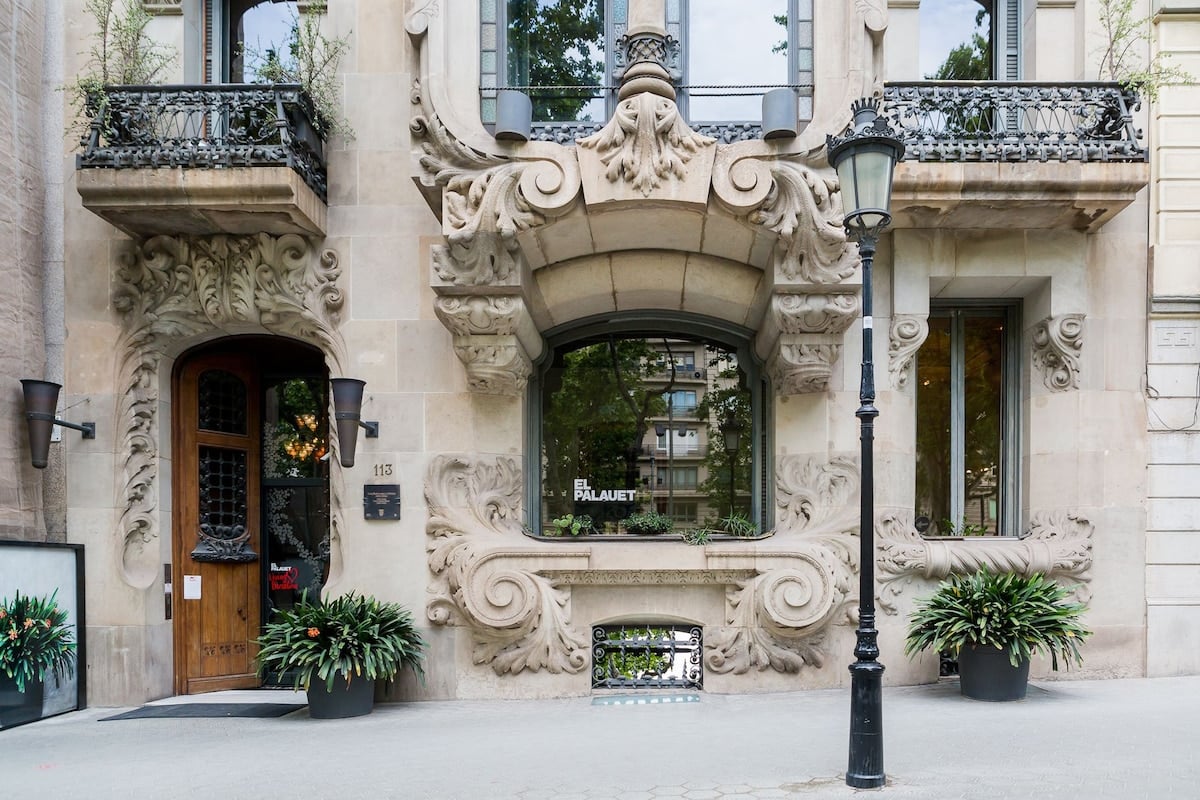
THE VIBE
El Palauet Living Barcelona — six suites in a fin-de-siècle palace, architecture that demands you slow down.
THE BACKSTORY
In 1905–1906 the architect Pere Falqués i Urpí built Casa Bonaventura Ferrer on commission from textile merchant José Matheu Mercader — a gift to his wife Bonaventura Ferrer, whose name the building bears. The Matheu-Ferrer family lived here with three sons: Josep, Magín and Joan. The suite names are drawn directly from family members. In 1979 the City of Barcelona listed the building as historic and artistic heritage. Converted into a hotel in 2010.
WHY NOW
The façade at Passeig de Gràcia 113 has been listed as historic and artistic heritage since 1979. The six-suite format means you never share the house with more than 23 other guests — a scarcity that has not changed since the conversion in 2010.
THE ROOM
Suite 1906 carries the house's own name — originally the Matheu-Ferrer family's reception room for their textile industry clients. The Bonaventura and Matheu suites have a balcony facing the Passeig de Gràcia façade.
WELLNESS
The rooftop spa offers a Finnish sauna, massage room and saltwater jacuzzi with views across the city's Modernista rooftops — bookable privately per suite, with no shared time slots.
THE SERVICE
Each suite is assigned a personal assistant for the duration of the stay — breakfast is prepared inside the suite, restaurant reservations and city logistics handled on request. No front desk, no queue.
THE NEIGHBORHOOD
Passeig de Gràcia 113 is in upper Eixample, at the boulevard's Jardinets de Gràcia. La Pedrera (Casa Milà, PdG 92) is a short walk south. Diagonal metro station (L3/L5) is one block north on foot.
HONEST CAVEAT
The building sits directly above a metro line; guests note periodic vibrations every 10–15 minutes. No on-site restaurant — all meals are managed via the concierge or the suite's own kitchen.
THE VERDICT
El Palauet is not a hotel in the conventional sense — no reception desk, no restaurant, six suites of 150 m² each inside a Modernista palace dating from 1906. Pere Falqués designed the building's façade during the same period he completed the boulevard's celebrated street lamps. The format suits the guest who wants to occupy an entire floor with a personal assistant rather than someone seeking a lively hotel atmosphere.
THE FULL PICTURE
Arriving here feels less like a hotel check-in and more like inheriting a Catalan estate. Step off the broad, plane-tree-lined expanse of Passeig de Gràcia into a 1906 Enric Sagnier masterpiece. There is no bustling lobby, no concierge desk clattering with luggage carts, and certainly no rooftop pool. Instead, the heavy timber doors close, shutting out the city roar, leaving only the scent of beeswax polish on old wood and the cool echo of your own footsteps against stone. This is the clandestine redoubt for design purists and gallery owners who require absolute sovereignty over their time.
You are sleeping at the threshold of Gràcia, where aristocratic boulevards dissolve into narrow, bohemian alleys. Secure the principal floor suite for the most dramatic architectural proportions. At 8:00 a.m., throw open the balcony shutters. The morning light catches the original Modernist ceiling frescoes suspended above your bed. You sit exactly where you need to be. Casa Batlló waits just down the avenue, while a mile away, the cranes over the Sagrada Família continue their century-long negotiation with the sky. Rather than battling the midday uphill crowds at Park Güell, let your butler summon a private chef to prepare lunch right in your suite, turning the historic dining room into your personal restaurant.
The sheer absence of traditional hotel facilities forces a deliberate rhythm. You must either lean completely on the butler's orchestration or embrace absolute self-reliance. By 9:00 p.m., surrender to Barcelona's nocturnal schedule. Have your staff secure a late table at Botafumeiro for the Parrillada de mariscos—a towering, briny monument to the sea that demands your complete attention.
Returning past midnight, the six-suite palace is entirely silent. You pour a measure of dark vermouth, the ice clinking loudly against the glass, and listen to the muffled hum of night taxis rolling down Passeig de Gràcia. The ultra-premium price of admission buys exactly this transient, profound illusion: the rare privilege of holding a historic masterpiece almost entirely to yourself, long after the ticketed museum crowds have surrendered the city.
FACTS
- Neighbourhood: Gràcia
- Stars: 5
- From 500 EUR per night
- Tripadvisor: 4.7/5 (109)
- 41.3969, 2.1583
FAQ
When is the best time to visit?
The façade at Passeig de Gràcia 113 has been listed as historic and artistic heritage since 1979. The six-suite format means you never share the house with more than 23 other guests — a scarcity that has not changed since the conversion in 2010.
Anything I should know before booking?
The building sits directly above a metro line; guests note periodic vibrations every 10–15 minutes. No on-site restaurant — all meals are managed via the concierge or the suite's own kitchen.
What is the neighbourhood like around El Palauet Modernist Suites Barcelona?
Passeig de Gràcia 113 is in upper Eixample, at the boulevard's Jardinets de Gràcia. La Pedrera (Casa Milà, PdG 92) is a short walk south. Diagonal metro station (L3/L5) is one block north on foot.
MORE HOTELS IN Barcelona
- Hotel 1898 — La Rambla
- ABaC Hotel & Restaurant Barcelona Monument — Sarrià
- Alenti Sitges Hotel & Restaurant — Sitges
- Alexandra Barcelona Hotel Curio Collection — Eixample
- Alma Barcelona GL — Eixample
- Almanac Barcelona — Eixample