Akelarre
San Sebastián, Basque Country · flagship
LA ESENCIA
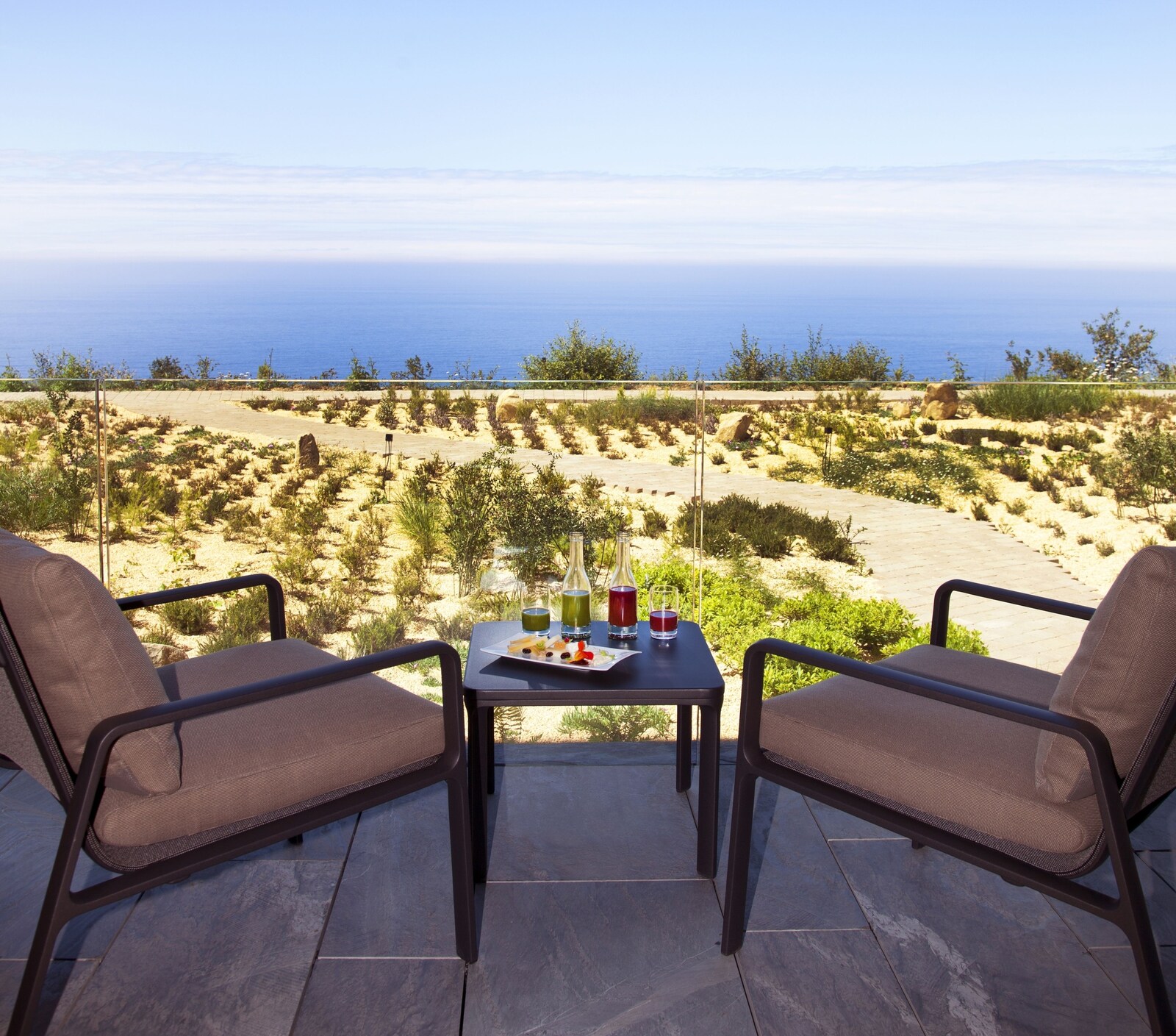
Veintidós habitaciones al borde del acantilado del Monte Igeldo, donde las ventanas del comedor dan directamente al golfo de Vizcaya y no a la ciudad.
LA HISTORIA
Pedro Subijana fundó el restaurante Akelarre en 1974 en el Monte Igeldo y fue una figura destacada de la Nueva Cocina Vasca. La cocina obtuvo su primera estrella en 1978, la segunda en 1982 y la tercera en 2007, que conserva desde entonces. Solo en 2017 se incorporó el hotel — 22 habitaciones, gestionado bajo Relais & Châteaux — al mismo edificio, junto con un segundo restaurante que lleva el nombre del escultor Jorge Oteiza.
POR QUÉ AHORA
El hotel abrió en 2017 en el mismo edificio que el restaurante de Pedro Subijana, que mantiene tres estrellas Michelin desde 2007 — dormir donde se cena esa misma noche es justamente el sentido.
LA HABITACIÓN
Pida expresamente una habitación con vistas al mar orientada al oeste; esas dan al Atlántico abierto y a la puesta de sol, mientras que la parte trasera mira a la ladera y no al agua.
EL BARRIO
El Monte Igeldo se alza en el extremo occidental de San Sebastián, más allá de la playa de Ondarreta; el funicular de 1912 sube el monte, y la bahía central de La Concha queda a 10–15 minutos en coche. Es una altura residencial tranquila, no a distancia a pie del circuito de pintxos del casco viejo.
HONESTAMENTE
Igeldo está por encima de la ciudad, no dentro de ella: cuente con 10–15 minutos en coche para bajar a La Concha, y la subida es empinada y con curvas de noche y con lluvia.
EL VEREDICTO
La fortaleza es la rara combinación de una cocina de tres estrellas y una cama a diez metros, con una vista que justifica el viaje por sí sola; la debilidad es el aislamiento en lo alto del monte. Conviene a la pareja que viene por la comida y quiere quedarse, no al viajero que busca el casco viejo y los bares de pintxos a la puerta.
LA IMAGEN COMPLETA
The car climbs Monte Igeldo in a series of tight switchbacks that feel designed to test your commitment. The road narrows. The hedgerows close in. If it's raining—and in San Sebastián it is always possibly raining—the headlights catch the wet asphalt at angles that make you grip the armrest. This is the honest cost of admission: Akelarre sits not in the city but above it, on a cliff at the western edge of everything, and the ten-to-fifteen-minute drive from La Concha is the price you pay for what waits at the top.
What waits is a building that does not announce itself. Twenty-two rooms, opened in 2017, grafted onto the restaurant that Pedro Subijana founded here in 1974—back when this hilltop was little more than farmland and ambition. The lobby is quiet in the way that places are quiet when they have nothing left to prove: three Michelin stars held since 2007, a half-century of New Basque Cuisine, and a view of the Bay of Biscay that makes conversation feel beside the point.
Check in late afternoon. The staff will walk you to your room with the unhurried calm of people who know you're not leaving the property tonight. Ask—explicitly, and at booking, not at the desk—for a west-facing sea room. This matters. The west side opens directly onto the Atlantic, floor-to-ceiling glass framing nothing but salt air and horizon line and, around half past nine in summer, a sunset that turns the water the color of burnt apricot. The rear rooms face the hillside. They are fine. They are not why you came.
By seven in the evening, the light starts to thicken. Open the window and the air carries salt and cut grass and something faintly vegetal from the kitchen gardens below. The Bay of Biscay is not the Mediterranean—it doesn't shimmer, it heaves, grey-green and muscular, and the sound of it reaching the rocks below is less a lapping than a slow, rhythmic argument. This is the hour to sit on the edge of the bed and do nothing, which is a skill this hotel quietly insists you practice.
Dinner is the architecture of the entire stay. The restaurant sits in the same building—ten metres from your pillow, if the numbers are to be believed—and the tasting menu is not a meal so much as a thesis on what Basque cooking became when Subijana and his generation decided to take it apart and rebuild it. The Gin-tonic en texturas arrives looking like a provocation and tasting like one too: the familiar rendered unfamiliar, gin deconstructed into something you eat rather than drink. The dining room faces the bay through glass walls, and at this hour the darkness outside turns the windows into mirrors, doubling the room, doubling the candlelight, until you feel suspended between the kitchen and the sea.
There is a second restaurant here, named for the sculptor Jorge Oteiza, which carries a different register—less ceremony, though still unmistakably Subijana's hand at work. The couple at the next table will likely be from Bilbao or Bordeaux, the kind of people who plan holidays around reservations, who have opinions about the relative merits of Arzak's Huevo a la inversa versus Martín Berasategui's Milhojas caramelizado de foie-gras and will share those opinions whether you ask or not. This is the tribe: gastronomes who treat the Basque Country's constellation of three-star kitchens as a pilgrimage route, and who consider sleeping ten metres from the stove a form of devotion.
The isolation is real, and you should decide before booking whether it suits you. Monte Igeldo rises at the western end of San Sebastián, past Ondarreta beach, above the city rather than inside it. The 1912 funicular that climbs the hill is a charming artifact, not a practical transit option at midnight. The old town's pintxo bars—the counters stacked with anchovy on toast and croquetas, the txakoli poured from a height—are a winding drive away, and after Subijana's tasting menu you will not want pintxos. You will want your bed. This is the hotel's wager: that the kitchen and the cliff are enough. For the right guest, they are more than enough. For the traveller who wants to stumble home from the Parte Vieja at one in the morning, this is the wrong address.
Morning arrives with the sound of gulls and the particular silence of altitude. The bay below has shifted overnight from black to pewter to a pale, luminous grey. The Kursaal and Zurriola beach are visible in the distance across the water, reduced to geometry. Monte Urgull holds its position on the far side of the bay like a sentinel. Up here, the city is a rumor.
Checkout carries a specific melancholy. You have eaten extraordinarily. You have slept in the arms of a view that earned every minute of that winding road. And as the car descends the switchbacks toward La Concha, the hedgerows opening up to reveal the crescent of sand and the promenade railings, you understand the trade this hotel makes: it gives you the cliff and the kitchen and asks you to surrender the city. Whether that trade enriches or diminishes your San Sebastián depends entirely on what you came here for.
DATOS
- Barrio: San Sebastián
- Estrellas: 5
- Desde 475 EUR por noche
- Tripadvisor: 4.5/5 (184)
- 43.30778, -2.04315
FAQ
¿Cuál es la mejor época para visitar?
El hotel abrió en 2017 en el mismo edificio que el restaurante de Pedro Subijana, que mantiene tres estrellas Michelin desde 2007 — dormir donde se cena esa misma noche es justamente el sentido.
¿Algo que deba saber antes de reservar?
Igeldo está por encima de la ciudad, no dentro de ella: cuente con 10–15 minutos en coche para bajar a La Concha, y la subida es empinada y con curvas de noche y con lluvia.
¿Cómo es el barrio alrededor de Akelarre?
El Monte Igeldo se alza en el extremo occidental de San Sebastián, más allá de la playa de Ondarreta; el funicular de 1912 sube el monte, y la bahía central de La Concha queda a 10–15 minutos en coche. Es una altura residencial tranquila, no a distancia a pie del circuito de pintxos del casco viejo.
MÁS HOTELES EN Basque Country
- The Artist Grand Hotel of Art (formerly Gran Hotel Domine) — Bilbao
- Hotel de Londres y de Inglaterra — San Sebastián
- Hotel María Cristina — San Sebastián
- Hotel Marqués de Riscal — Elciego
- Hotel Viura — Villabuena de Álava
- Lasala Plaza Hotel — San Sebastián