Almadraba Park Hotel
Roses / Cala Almadrava, Costa Brava · curated
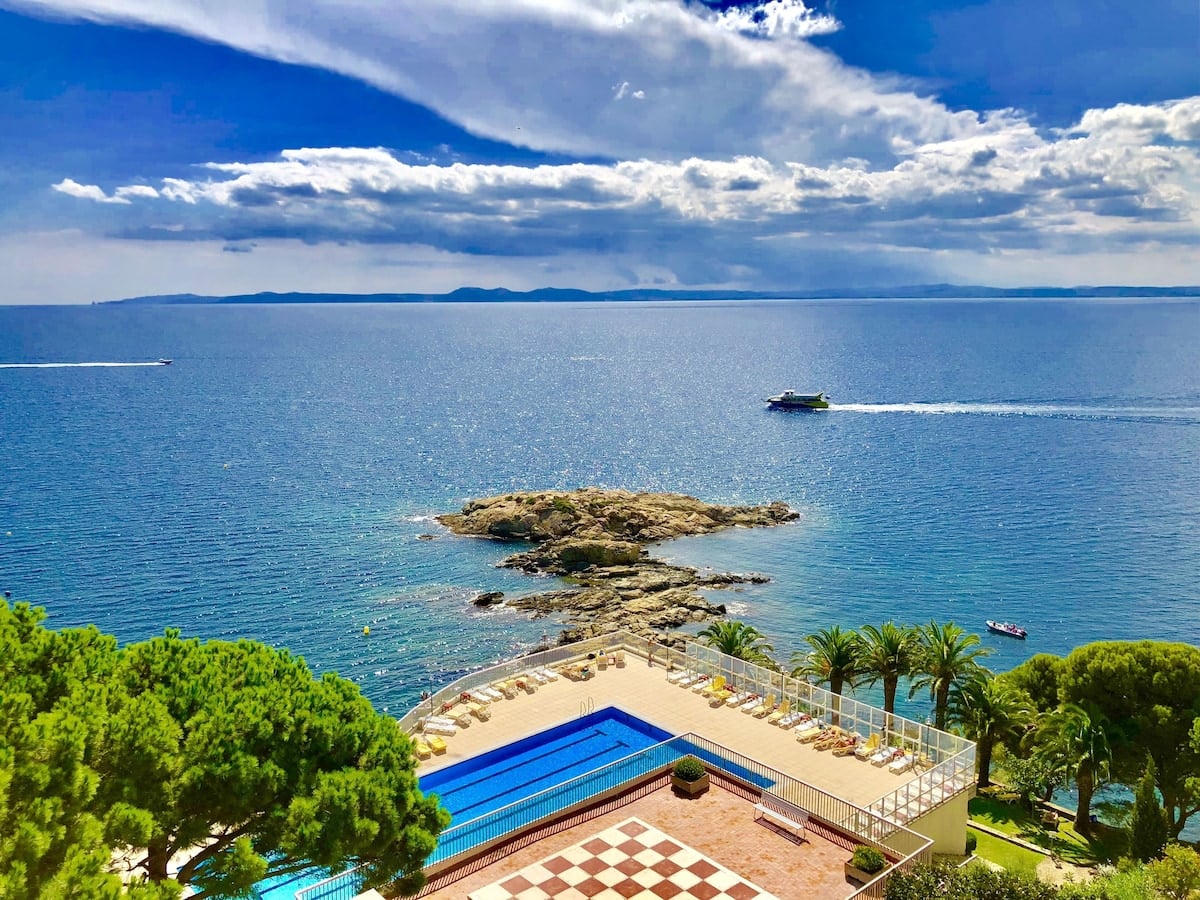
THE VIBE
Almadraba Park Hotel — family-run since 1970 on the southern edge of the Cap de Creus peninsula.
THE BACKSTORY
Josep Mercader founded the hotel in 1970 on a headland outside Roses, four kilometres from the town centre. Mercader, who had already been running Motel Empordà in Figueres since 1961, wanted to create a setting in which the sea and the kitchen stood at the centre. After his death, his son-in-law Jaume Subirós — married to Mercader's daughter Anna Maria — took over the operation. The third generation, represented by Albert, Jordi, Lluís and Sílvia Subirós, is now actively involved. A fourth generation is already on its way.
WHY NOW
The 2026 season opens 16 April and closes 11 October — book early, as the hotel's 66 rooms sell out well ahead of high season.
THE ROOM
Request a room with sea views towards Cap de Creus — the hotel's position on the headland means the outlook varies considerably depending on orientation.
WELLNESS
The spa includes a jacuzzi, sauna and steam room. Outdoor facilities include a saltwater pool and a second pool. On-site sports: tennis, squash, pétanque, table tennis and a gym.
THE TABLE
Fresh tuna from the Almadraba strait — the hotel's namesake and the kitchen's defining ingredient throughout the season. — Restaurante Almadraba. The hotel's own restaurant concept with direct sea views; tuna from the historic Almadraba strait is a local ingredient with documented history in the area.
THE SERVICE
The staff mirrors the long family tradition: familiar without being intrusive, service-minded without losing the informal Costa Brava tone. Breakfast is served 08–11, lunch 13–15 and dinner 20–22 at Restaurante Almadraba, with a terrace facing the sea.
THE NEIGHBORHOOD
The hotel lies within the Cap de Creus natural park, four kilometres northeast of Roses town centre along the coast towards Cadaqués. The nearest town with full services is Roses; Cadaqués is reached in approximately twenty minutes by car, heading north along the winding coastal roads.
HONEST CAVEAT
The hotel closes November–April; the 2026 season runs 16 April–11 October. Car-dependent location: four kilometres to Roses town centre, with no practical public transport.
THE VERDICT
For the traveller who seeks authenticity without irony: four generations of expertise, Cap de Creus as a neighbourhood, and a kitchen whose defining ingredient gives the hotel its name.
THE FULL PICTURE
The road from Roses thins and sheds its skin. The last of the apartment blocks and holiday-maker bustle gives way to a serpentine coastal track flanked by Aleppo pines, their trunks bent into submission by the persistent Tramuntana wind. It feels less like a drive to a hotel and more like a pilgrimage to the peninsula's end. Just as you begin to wonder if you've missed a turn, the road dips, and there it is: Almadraba Park Hotel. It doesn’t announce itself. It simply exists, a series of low-slung, white-washed terraces cascading down the hillside, settling into the landscape as if it had risen organically from the ochre rock. The architecture, unmistakably of the late ‘60s, is all clean lines and confident horizontality, a piece of sober modernism that has aged with a quiet grace. Pulling into the shaded car park, the engine’s hum is replaced by a soundscape that will define the next few days: the rhythmic shush of waves on shingle, the distant cry of a yellow-legged gull, and the rustle of dry grasses. The air itself is different here—thick with the briny tang of the sea, the resinous perfume of pine needles baking in the Catalan sun, and a faint, sweet whisper of bougainvillea. This isn’t an arrival; it’s a decompression.
Inside, the lobby is cool and hushed, terracotta tiles underfoot and large windows framing the main event: the brilliant, impossible blue of the Cala Almadrava below. The hotel unfolds downwards, a series of terraces and gardens that create pockets of privacy. There’s no central, see-and-be-seen pool scene. Instead, a saltwater pool is tucked away on one level, a quiet terrace with loungers on another. It’s a design that encourages you to find your own corner of the property. The crowd reflects this ethos. These aren’t people chasing trends. You see multi-generational Catalan families who have made this their annual summer redoubt since the hotel opened, their conversations a gentle murmur of Catalan and Castilian. There are French couples of a certain age, the kind who know their wine and bring well-thumbed paperbacks to the beach. A smattering of Dutch and German guests, drawn by the promise of direct access to the Cap de Creus trails, their hiking boots sitting discreetly outside their doors. The common denominator is an appreciation for discretion. The currency here is not overt luxury, but the profound privilege of space, of quiet, of being left alone in a place of significant natural beauty. It's a crowd that understands the difference between a holiday and a retreat.
My days fall into a simple, tidal rhythm. The specific sensory anchor becomes the late afternoon light. Around five o’clock, as the sun begins its slow descent behind the headland, the light shifts. The harsh midday glare softens into a viscous, golden honey that pours over the cove. It catches the mica in the granite cliffs, making them glitter. It turns the turquoise water into a sheet of hammered gold and silver. This is when the Tramuntana, the famous wind of the Empordà region, often makes its presence known. It’s not a gentle breeze but a forceful, cleansing gust that rattles the shutters and whips the sea into a frenzy of whitecaps. You can hear it coming through the pines before you feel it, a deep, resonant whoosh that seems to carry the wild spirit of the Cap de Creus right onto your balcony. This is the time to sit with a glass of crisp, local Empordà white—a Celler Hugas de Batlle, perhaps—and just watch. Earlier, the day was for activity: a pre-breakfast snorkel in the crystalline water directly off the hotel’s small jetty, exploring the posidonia meadows teeming with sea bream and wrasse, or taking a paddleboard out to trace the rugged coastline. Lunch isn’t here, but a ten-minute drive back towards Roses, bypassing the tourist traps for the legendary Rafa’s, a temple of seafood where the grilled Palamos prawns are so fresh they taste of the sea’s very soul.
Let’s be clear: this is not a new, purpose-built luxury machine. The Almadraba Park is a product of its time, and it wears its history with pride, not apology. And therein lies the honest caveat. The hotel’s 1968 bones, while structurally elegant, mean that certain modern expectations might need to be adjusted. The soundproofing between rooms, for example, is not the tomb-like silence of a contemporary construction. You might occasionally hear the faint scrape of a neighbour’s chair on their terrace or the muffled sounds of a television. The bathrooms, while impeccably clean and perfectly functional, retain a certain vintage charm; don’t expect sprawling marble wet rooms with rainforest showers. The Wi-Fi, strong in the main building, can be a temperamental affair down by the water’s edge—a feature, some might argue, rather than a flaw. This is the trade-off. You are exchanging the anonymous perfection of a global hotel chain for a place with a soul, a history, and a location so sublime that any minor interior imperfection feels utterly insignificant. To complain about the Wi-Fi here would be like visiting a cathedral and critiquing the acoustics. You’re missing the point.
The departure is the inverse of the arrival. Driving back up the winding road, the cove shrinks in the rearview mirror until it’s just a sliver of turquoise and white. The spell is broken gradually, the re-entry into the world of traffic and commerce a gentle, almost reluctant process. What lingers is not the memory of a particular meal or a perfectly fluffed pillow, but the feeling of being held by a place. The hotel is merely the facilitator, the comfortable perch from which to witness the raw, elemental theatre of the Costa Brava. It is a testament to a different era of travel, one built on the belief that the greatest luxury a hotel can offer is a direct, unmediated connection to its environment. The Almadraba Park hasn’t tried to tame the wildness of the Cap de Creus; it has simply built a window through which to observe it, to feel its winds, to swim in its waters, and to be humbled by its stark beauty. It’s a place that doesn’t shout. It whispers, and if you’re quiet enough to listen, the sound stays with you long after you’ve gone.
FACTS
- Neighbourhood: Roses / Cala Almadrava
- Stars: 4
- From 320 EUR per night
- Tripadvisor: 4.4/5 (400)
- 42.251, 3.204
FAQ
When is the best time to visit?
The 2026 season opens 16 April and closes 11 October — book early, as the hotel's 66 rooms sell out well ahead of high season.
Anything I should know before booking?
The hotel closes November–April; the 2026 season runs 16 April–11 October. Car-dependent location: four kilometres to Roses town centre, with no practical public transport.
What is the neighbourhood like around Almadraba Park Hotel?
The hotel lies within the Cap de Creus natural park, four kilometres northeast of Roses town centre along the coast towards Cadaqués. The nearest town with full services is Roses; Cadaqués is reached in approximately twenty minutes by car, heading north along the winding coastal roads.
MORE HOTELS IN Costa Brava
- Boutique Hotel Can Pico — Empordà Interior
- Can Mascort Eco Hotel — Palafrugell
- Casa Vincke — Baix Empordà
- Finca Victoria — Begur
- Gran Hotel Reymar & Spa — Tossa de Mar
- Hostal de La Gavina — S'Agaró