Hotel de Londres y de Inglaterra
San Sebastián, Basque Country · heritage
THE VIBE
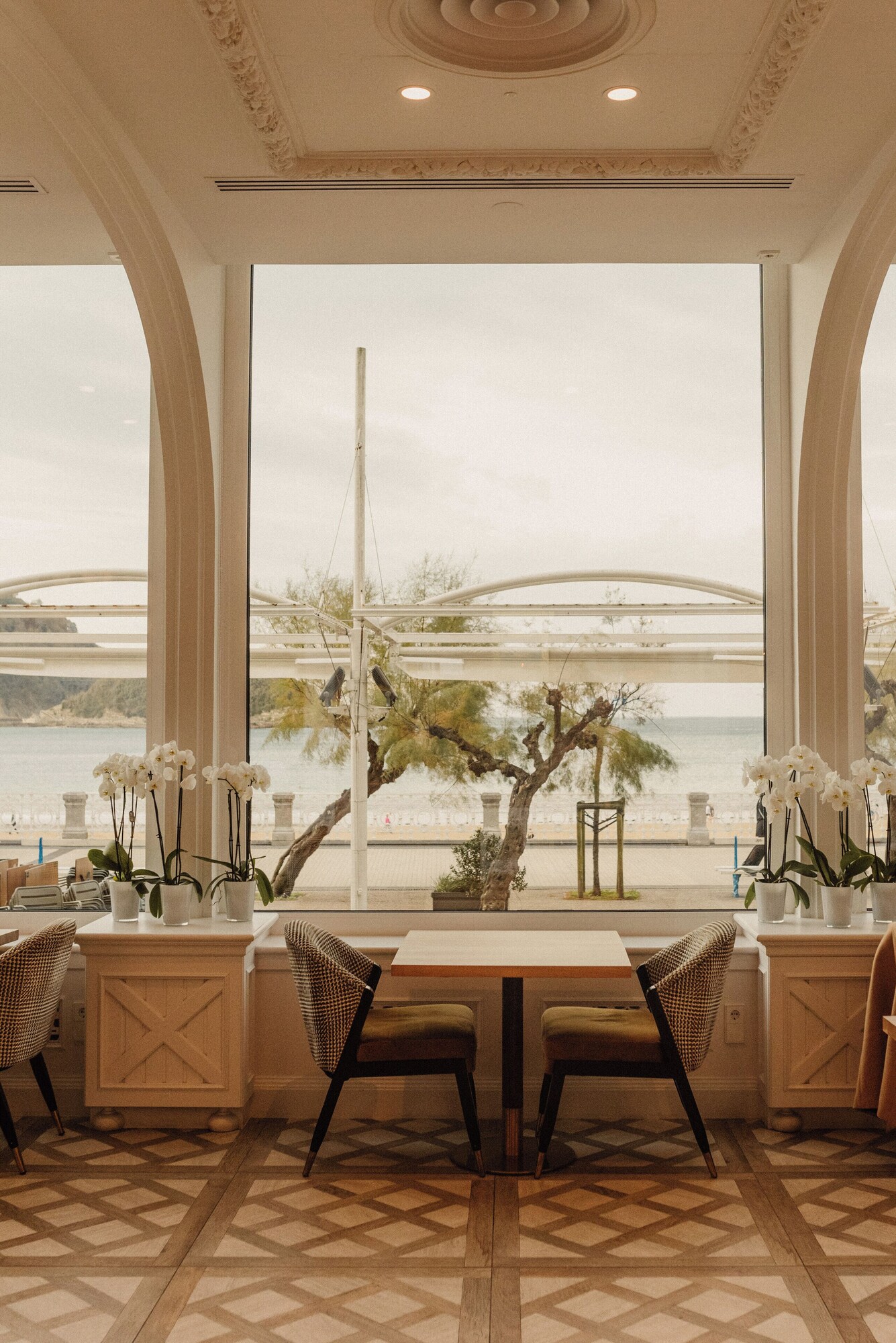
An 1865 building turned to face La Concha bay head-on — Queen Isabel II's former residence, a hotel since 1902.
THE BACKSTORY
The house on La Concha was built in the 1860s and linked to Queen Isabel II before her 1868 exile. In 1902 Eduardo Dupouy acquired the building and moved his already-established hotel there under the name Hotel de Londres y de Inglaterra. It has faced La Concha throughout San Sebastián’s transformation from a royal bathing resort in the 1880s to today’s gastronomic capital — one of the few houses on the bay to keep its Belle Époque façade.
WHY NOW
San Sebastián froze new hotel capacity in its central districts in January 2026, and a Euskadi-wide tourist tax takes effect on 1 January 2027 — the existing bayfront classics only get harder to replace.
THE ROOM
Pay up for a room facing the sea rather than the street: the Zubieta façade looks straight across La Concha, while the rear lacks the view that is the whole point of the address.
THE NEIGHBORHOOD
The hotel sits at Zubieta 2, midway along the La Concha promenade. The Old Town (Parte Vieja) and its dense pintxo grid is a 10–15 minute walk along the bay; Hotel María Cristina and Amelia, Paulo Airaudo's two-star restaurant, are a few minutes away by the Urumea river.
HONEST CAVEAT
This is a four-star heritage hotel, not the city's five-star top tier — service and spa fall short of María Cristina's level, and the promenade setting means traffic noise on the street side.
THE VERDICT
The strength is the address and the continuity: a 19th-century building directly on La Concha that has been a hotel for over a century, at a rate below the city's five-star rooms. The weakness is that service and facilities sit a notch below the top tier. It suits the traveller who prioritises view and location over spa and butler-grade service.
THE FULL PICTURE
The taxi drops you at Zubieta 2 and the first thing that registers is not the Belle Époque façade but the sound — the particular hush of La Concha at low tide, water drawing back across wet sand with the patience of someone who has done this for millennia. The hotel sits midway along the promenade, facing the bay so squarely that the building feels less like accommodation and more like a declaration of intent. Queen Isabel II kept a residence here in the 1860s. Eduardo Dupouy turned it into a hotel in 1902. The bay has outlasted both of them, and the address remains the argument.
Check in during the late afternoon, when the light off the Cantabrian Sea turns the lobby's surfaces the color of weak tea, and you'll notice immediately that this is a four-star operation, not a five-star one. The difference is granular but real: the front desk is competent rather than choreographed, the luggage arrives when it arrives, and nobody offers to unpack your bags or remember your gin preference from a previous stay. If you need that theater, Hotel María Cristina sits a few minutes' walk along the Urumea, and its tariff reflects it. What you get here instead is the view — and the view is the entire transaction.
Pay the supplement for a sea-facing room on the Zubieta side. This is non-negotiable. The rear rooms look onto the street, where delivery trucks and early-morning taxis produce a low-grade urban drone that the double glazing reduces but does not eliminate — the promenade setting is the hotel's greatest asset and its most persistent irritation, depending on which direction your pillow faces. From the front, though, you open the shutters at seven in the morning and La Concha unfolds like a theorem: the crescent of sand two minutes away on foot, the green bulk of Monte Urgull across the bay, the island of Santa Clara sitting in the middle distance as if placed there by a set designer who understood restraint. On clear mornings the water is a shade of grey-green that photography cannot reproduce and memory cannot forget.
The crowd here is specific. Not the hedge-fund couples dropping four figures a night for butler service, and not the backpackers splitting pintxos in the Parte Vieja. This is the demographic that knows exactly what it wants from San Sebastián — the food, the bay, the walking — and has calculated that a sea-facing room at a four-star rate buys ninety percent of the five-star experience for considerably less. You'll share the breakfast room with retired academics from Bordeaux, food-obsessed couples who've already booked Arzak for tonight and Kokotxa for tomorrow, and the occasional architect who keeps stepping onto the balcony to photograph the façade across the street. They are not wrong to be here.
The hotel's position on the promenade is a kind of cheat code for the city. La Concha Beach is a two-minute walk — less if you're willing to jaywalk, which in San Sebastián everyone is. The Old Town and its dense grid of pintxo bars lies ten to fifteen minutes along the bay in one direction; the Kursaal, Moneo's pair of translucent volumes at the mouth of the Urumea, is a thirteen-minute walk in the other. The Catedral del Buen Pastor stands four minutes inland, its spire visible from the upper floors. And then there is the eating. Amelia, Paulo Airaudo's two-Michelin-star address near the river, serves an Italian-omakase tasting menu that justifies a trip to the city on its own terms. Kokotxa, closer to the old quarter, does kokotxas in their classic preparation — the dish that names the restaurant, a tautology you'll forgive once you taste it. And Arzak, the great monument of Basque cuisine up on the hill, offers the huevo a la inversa, which is exactly the kind of intellectual provocation disguised as an egg that this city has spent decades perfecting.
By the second evening, you'll have fallen into a rhythm: morning coffee on the balcony watching the tide, a long walk along the promenade, a late lunch that becomes the main event, an afternoon reading in the room while the bay changes color. The hotel does not interrupt this rhythm, which is both its grace and its limitation. Service is attentive but not anticipatory — the kind that responds when asked rather than predicting what you haven't yet articulated. The spa and facilities sit a notch below the top tier, and you will feel that notch if you've stayed at a María Cristina or a five-star Basque Country estate. The corridors are quiet. The Wi-Fi works. The Belle Époque bones of the building — the high ceilings, the ironwork, the proportions that modern construction has largely abandoned — do enough atmospheric work that you stop noticing what's absent.
Here is what matters: San Sebastián froze new hotel capacity in its central districts in January 2026, and a Basque-wide tourist tax arrives in January 2027. The bayfront addresses that already exist are the only ones that will exist. The Hotel de Londres y de Inglaterra has been one of them for over a century, and the bay it faces has not changed its mind about being extraordinary. You leave on the last morning carrying the specific weight of a place that gave you exactly what it promised and nothing it didn't — the salt air still in your jacket, the curve of La Concha mapped permanently onto some interior wall you didn't know you had.
FACTS
- Neighbourhood: San Sebastián
- Stars: 4
- From 300 EUR per night
- Tripadvisor: 4.4/5 (4085)
- 43.31815, -1.98498
FAQ
When is the best time to visit?
San Sebastián froze new hotel capacity in its central districts in January 2026, and a Euskadi-wide tourist tax takes effect on 1 January 2027 — the existing bayfront classics only get harder to replace.
Anything I should know before booking?
This is a four-star heritage hotel, not the city's five-star top tier — service and spa fall short of María Cristina's level, and the promenade setting means traffic noise on the street side.
What is the neighbourhood like around Hotel de Londres y de Inglaterra?
The hotel sits at Zubieta 2, midway along the La Concha promenade. The Old Town (Parte Vieja) and its dense pintxo grid is a 10–15 minute walk along the bay; Hotel María Cristina and Amelia, Paulo Airaudo's two-star restaurant, are a few minutes away by the Urumea river.
MORE HOTELS IN Basque Country
- Akelarre — San Sebastián
- The Artist Grand Hotel of Art (formerly Gran Hotel Domine) — Bilbao
- Hotel María Cristina — San Sebastián
- Hotel Marqués de Riscal — Elciego
- Hotel Viura — Villabuena de Álava
- Lasala Plaza Hotel — San Sebastián