Basque Country — Hotels
Hand-picked hotels in Basque Country, Spain. Mondmodel's magazine-grade reporting: verified imagery, no paid placement, honest caveats.
Från nedärvd elegans till medveten återuppfinning
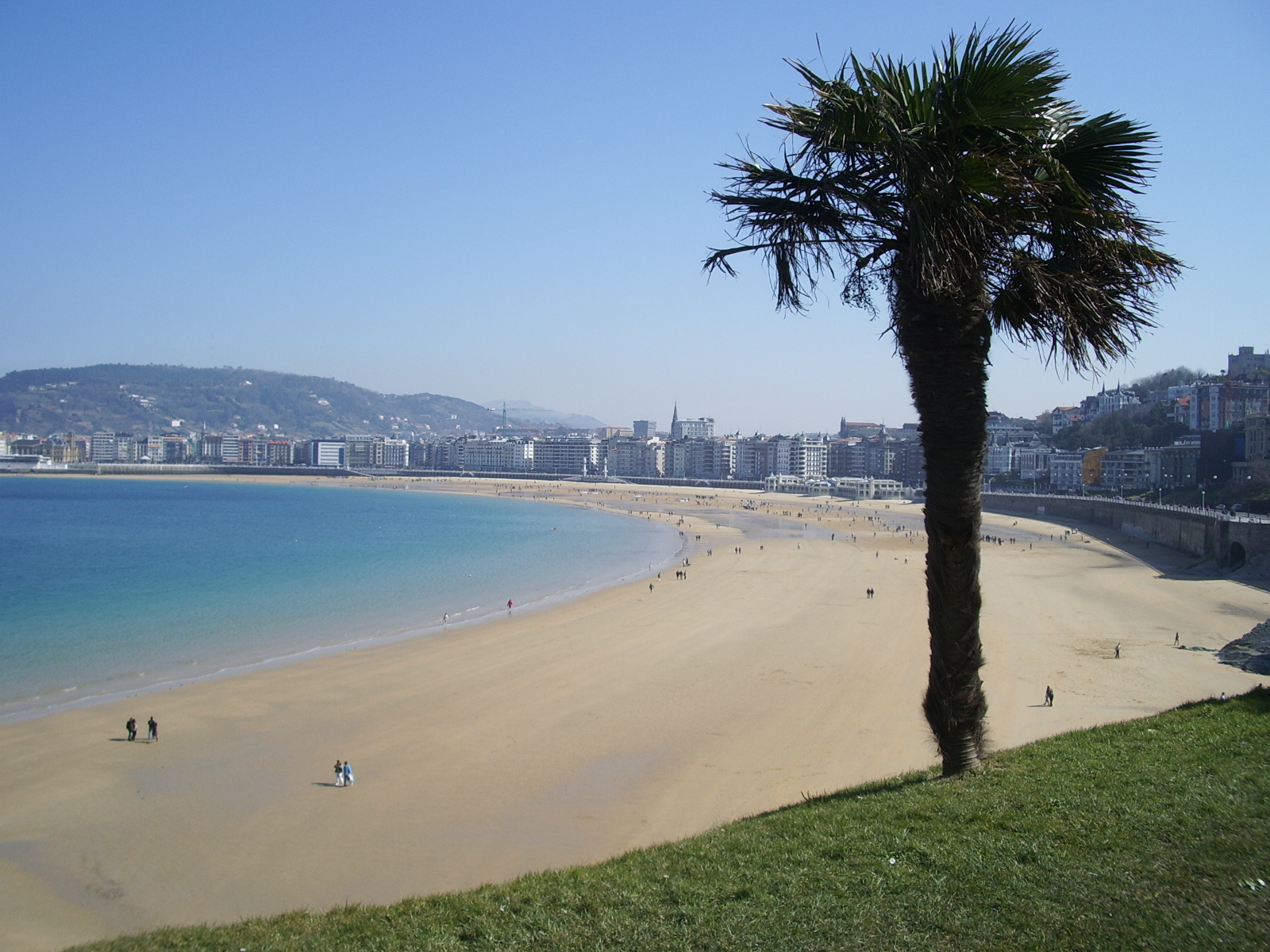
Det börjar vid La Concha, viken som det spanska hovet gjorde modern på 1880-talet och där Hotel María Cristina öppnade 1912. Sedan följer du floden 100 kilometer västerut till Bilbao, en hamnstad som var rost och tystnad tills Frank Gehrys Guggenheim öppnade 1997 och döpte om vad återuppfinning kan betyda för en stad.
Från Guggenheims titan vänder du inåt landet, två timmar söderut till Rioja Alavesa. Här reser sig Gehrys andra baskiska verk: Marqués de Riscal, hotellet från 2006 ovanför vingården från 1858 i Elciego. Runtom ligger Laguardias murade medeltidsstad och tempranillo-fälten — slutpunkten där återuppfinningen åter blir arv.
The hotels
- Akelarre — San Sebastián · 5★
The strength is the rare pairing of a three-star kitchen and a bed ten metres from it, with a view that justifies the trip on its own; the weakness is the isolation up on the hill. It suits the couple who come for the meal and want to stay put, not the traveller who wants the old town and the pintxo bars at the door. - Hotel de Londres y de Inglaterra — San Sebastián · 4★
The strength is the address and the continuity: a 19th-century building directly on La Concha that has been a hotel for over a century, at a rate below the city's five-star rooms. The weakness is that service and facilities sit a notch below the top tier. It suits the traveller who prioritises view and location over spa and butler-grade service. - Hotel María Cristina — San Sebastián · 5★
Charles Mewès — the architect behind the Ritz hotels — designed a house whose 139 rooms hold a classic standard few in the city match, and with Amelia’s two-star kitchen due to move in during 2026 the case only strengthens. But expect a city setting and façade grandeur, not sand underfoot: this suits the traveller who wants classic luxury and gastronomy close at hand, not the beach by the bedside. - Hotel Marqués de Riscal — Elciego · 5★
The strength is unconditional — a Gehry building you can live in, set above a working 1858 bodega, with a cellar few hotels can match. The weakness is the location: 61 rooms in the middle of the Álava countryside, far from coast and city. It suits the architecture-and-wine traveller who wants the destination for itself, not the one hoping to fold in a beach or pintxos on the same trip. - Hotel Viura — Villabuena de Álava · 4★
The strength is the architecture and the vineyard setting — a design hotel set among Rioja Alavesa's bodegas at a fraction of Marqués de Riscal's rate. The weakness is the isolation and the reliance on a car. It suits the wine traveller and design-minded couples, not anyone wanting coast or city pulse at the door. - Lasala Plaza Hotel — San Sebastián · 4★
The strength is the address: a 58-room four-star adults-only inside the pintxo grid, with a rooftop that is the old town's only combined view of both La Concha and the harbour. The weakness is that this is not a gran-lujo house — the rooms are consistent but not grand, and the night noise comes with the location. It suits the couple who want to sleep in the middle of the food rush and walk home, not the one after a spa resort and silence. - Nobu Hotel San Sebastián — San Sebastián · 5★
The strength is the scale and the Nobu signature inside a restored 1912 palace with a bayfront position; the weakness is that seventeen rooms buy intimacy, not resort facilities. It suits the couple after design-led closeness and Japanese-Peruvian food on the premises, not the family looking for a resort pool deck and a kids' club. - Palacio Arriluce Hotel — Getxo · 5★
The strength is the palace itself: 49 sea views, a genuine 1912 lineage, and the only address of this class in Bizkaia. The weakness is the isolation — Getxo is a calm suburb, not a destination in its own right. It suits the couple who want Bilbao and the Biscay coast within easy reach but not the city's pulse at the door, not the traveller after bar-hopping on foot. - Parador de Hondarribia — Hondarribia · 4★
The strength is the building itself — five storeys of fortress and palace where Charles V, Philip IV and Velázquez stayed, with a commanding position over the old town. The weakness is that service and rooms are parador-grade, not gran lujo. It suits the traveller who chooses setting and history over hotel polish and who has a car for the coast. - Radisson Collection Bilbao — Bilbao · 5★
The strength is the position mid-way along the Gran Vía's retail spine plus a rooftop restaurant with real weight; the weakness is that the Ensanche is an office quarter that goes to sleep on weekend evenings. It suits the traveller who wants shopping, Art Deco and Atxa's cooking within walking distance — not the one chasing river life or a sea view. - Tayko Bilbao — Bilbao · 4★
The strength is the location and the table: a Michelin star on the ground floor and Bilbao's medieval core at the door. The weakness is that it remains a compact four-star city hotel with no spa or river terrace. It suits the food-and-culture traveller who wants to stay in the old town, not the one after resort comforts. - The Artist Grand Hotel of Art (formerly Gran Hotel Domine) — Bilbao · 5★
The strength is unbeatable and simple: no other address in Bilbao puts the Guggenheim directly in your window with a roof terrace above it. The weakness is that the interiors are starting to show their age and the service runs to design-hotel rather than gran lujo standard. Suited to the architecture and art traveller who wants to sleep inside the view — not the one after Bizkaia's most polished five-star (that is Palacio Arriluce in Getxo).
Curated areas
Parte Vieja & La Concha, San Sebastián
La Concha bay got its Belle Époque seafront in 1912, when the Spanish crown made Donostia fashionable. Behind the promenade sits the Parte Vieja pintxo grid, where the gilda — guindilla pepper, anchovy and olive on a skewer — was born at Casa Vallés in the 1940s. The quarter is saturated enough that the 2026 PGOU freeze simply left it out: the lanes are already full.
Gros & Zurriola, San Sebastián
Across the Urumea from the Old Town lies Gros, built around the surf break at Zurriola. Rafael Moneo's twin glass cubes — the Kursaal, opened 1999 and home to the film festival — mark the river mouth. The pintxo here runs younger and more experimental than in the Parte Vieja, but Zurriola is exposed Atlantic surf, not the calm swimming bay.
Guggenheim & Abandoibarra, Bilbao
Frank Gehry's titanium building opened in October 1997 and gave the Bilbao Effect its name — culture-led urban renewal. It drew 1.3 million visitors in 2024 and turns 30 in 2027, the first milestone since the architect's death in December 2025. The planned Urdaibai outpost was voted down in December 2025; the museum holds its plateau, with no new attraction coming.
Casco Viejo (Siete Calles), Bilbao
Bilbao was founded in the 14th century around the Siete Calles — the seven lanes on the river's east bank. Here sit the covered Mercado de la Ribera and Álvaro Garrido's one-star Mina on Muelle Marzana. New tourist dwellings are restricted under the city's PGOU, so the quarter stays lived-in rather than let out.
Getxo & Neguri, Bizkaia
At the river mouth 15–20 minutes from Bilbao, Bizkaia's industrial families built their Belle Époque palaces in Neguri. The Vizcaya Bridge — the 1893 transporter bridge, the world's oldest of its kind and UNESCO-listed since 2006 — links Getxo to Portugalete. Here in 2023 the Palacio Arriluce opened in a cliff-top 1912 palace, the province's first five-star Gran Lujo hotel.
Rioja Alavesa (Laguardia & Elciego)
About two hours inland from the coast lies Álava's wine country, administratively Basque but not coastal. In Elciego, Frank Gehry's titanium-clad Marqués de Riscal of 2006 rises above an 1858 winery. Around it sit medieval walled wine towns such as Laguardia, and the wine here is Tempranillo red — not to be confused with the coast's txakoli.
The table
Arzak (Modern Basque). Three Michelin stars since 1989, run by Juan Mari Arzak and his daughter Elena in the family house on Alcalde José Elosegi east of the centre. The kitchen anchored the new Basque cuisine movement of the 1970s and still runs its own flavour lab upstairs. The tasting menu is the experience; there is no meaningful à la carte.
Akelarre (Modern Basque). Pedro Subijana's three Michelin stars sit on the flank of Monte Igeldo with the open Atlantic at the window. The kitchen has held three stars since 2007 and, since 2017, pairs with its own Relais & Châteaux hotel on the same clifftop. Two tasting menus, Aranori and Bekarki, share the same view.
Martín Berasategui (Modern Basque). Three Michelin stars in Lasarte-Oria, just over 10 kilometres from San Sebastián — not in the city itself. Berasategui has held three stars at the house since 2001 and is Spain's most decorated chef. The 1995 caramelised mille-feuille of smoked eel, foie gras and apple still anchors the menu.
Azurmendi (Sustainable Basque). Eneko Atxa's three Michelin stars sit in Larrabetzu, about 20 minutes from Bilbao — not in the city. The restaurant, in its glass-walled self-sufficient building, has held three stars since 2012 and ranks among the world's most sustainable kitchens. The meal opens in the greenhouse before it reaches the dining room.
La Cuchara de San Telmo (Pintxos / Modern Basque). Opened in 1999 in an alley behind the San Telmo museum by chefs Alex Montiel and Iñaki Gulín, with time at Lasarte and elBulli behind them. Unlike most pintxo bars there is no bar-top display — everything is cooked to order off the blackboard. The braised veal cheek in red wine is the house signature.
Restaurante Marqués de Riscal (Modern Riojan). One Michelin star inside Frank Gehry's titanium-clad winery hotel in Elciego, deep in Rioja Alavesa about two hours inland from the coast. The kitchen has been led since 2006 by Francis Paniego, who reads Riojan tradition with a contemporary hand. Two tasting menus, Torrea and Chirel, build around seasonal vegetables and the estate's wines.
What to do
Pintxo crawl through the Parte Vieja
The gilda — guindilla pepper, anchovy and olive on a skewer — was invented at Casa Vallés in the 1940s, streets from where you stand. The Parte Vieja holds the world's densest pintxo grid, exempted from San Sebastián's hotel freeze only because the zone is already saturated. The ritual is the txikiteo: one pintxo, one glass per bar, then move on. Start early; the counters are cleared after 21:00.
Order the gilda at Casa Vallés (Reyes Católicos 10) and eat it standing at the bar — it is the original, and they tally how many you take.
Guggenheim and the Abandoibarra art walk
Frank Gehry's titanium building opened in October 1997 and named the Bilbao Effect; it drew 1.3 million visitors in 2024. Gehry died in December 2025, which makes the 2027 thirtieth anniversary the first milestone after the architect's death. Walk the river along Abandoibarra from Jeff Koons's Puppy to Calatrava's Zubizuri footbridge — the whole regeneration spine in an afternoon. The Urdaibai outpost was voted down, so the collection stays here.
Book the Guggenheim ticket online for a slot before 11:00 — Koons's terrace tulips face the river in morning light, before the queue forms.
The funicular up Monte Igeldo
The funicular was inaugurated on 25 August 1912 by Queen Maria Cristina and is the Basque Country's oldest — the cars keep their original wooden bodies. It climbs to the headland above Igeldo, the same hill where Pedro Subijana's three-star Akelarre sits. From the top the whole La Concha bay curves in one sweep. It is a short ride with a scruffy little funfair at the summit, not a viewing deck.
Ride up on a clear evening around 19:00 outside high season — the bay light softens and the 1912 car is near-empty on the way down.
Winery architecture in Rioja Alavesa
Frank Gehry designed the titanium canopy over Marqués de Riscal in Elciego — the winery dates to 1858, the hotel above it opened in 2006. Twenty minutes away, Santiago Calatrava's Ysios raises its wave-form aluminium roof against the Sierra de Cantabria. This is inland country: Rioja Alavesa's Tempranillo reds, well away from the coast — not to be confused with the Atlantic txakoli. Reckon on a two-hour drive from San Sebastián.
Book the Ysios tour (Camino de la Hoya 1, Laguardia) at least a week ahead — visits run to a timetable and the bodega takes no walk-in groups.
Txotx season in a sagardotegi
The txotx cider season runs roughly January to April, concentrated in Gipuzkoa around Astigarraga and Hernani. At the call of "txotx!" the table rises and pours cider straight from the barrel in a thin arc. The menu is fixed and near-unchanging: chorizo in cider, salt-cod tortilla, txuleta chop, walnuts and Idiazabal cheese. This is a winter ritual, not a restaurant — you spend half the evening on your feet.
Book Petritegi (Petritegi Bidea 7, Astigarraga) on a weekday evening in February — weekends fill with local parties and the queue to the barrel at the txotx call grows long.
The Flysch coast at Zumaia
The cliffs at Zumaia lay bare more than 60 million years of strata in tilted flysch layers, forming the Basque Coast UNESCO Global Geopark with Deba and Mutriku. Itzurun beach sits below the Hermitage of San Telmo — this is the Dragonstone coast from Game of Thrones. Boat tours run the line towards Mutriku, but they hinge on the weather; in an Atlantic swell they are cancelled. The clifftop coast path always holds.
Book the flysch boat through Geoparkea (departing Zumaia harbour) the day before and call in the morning — the tour is often cancelled in high seas and they rebook at no charge.