Palacio Arriluce Hotel
Getxo, Basque Country · flagship
LA ESENCIA
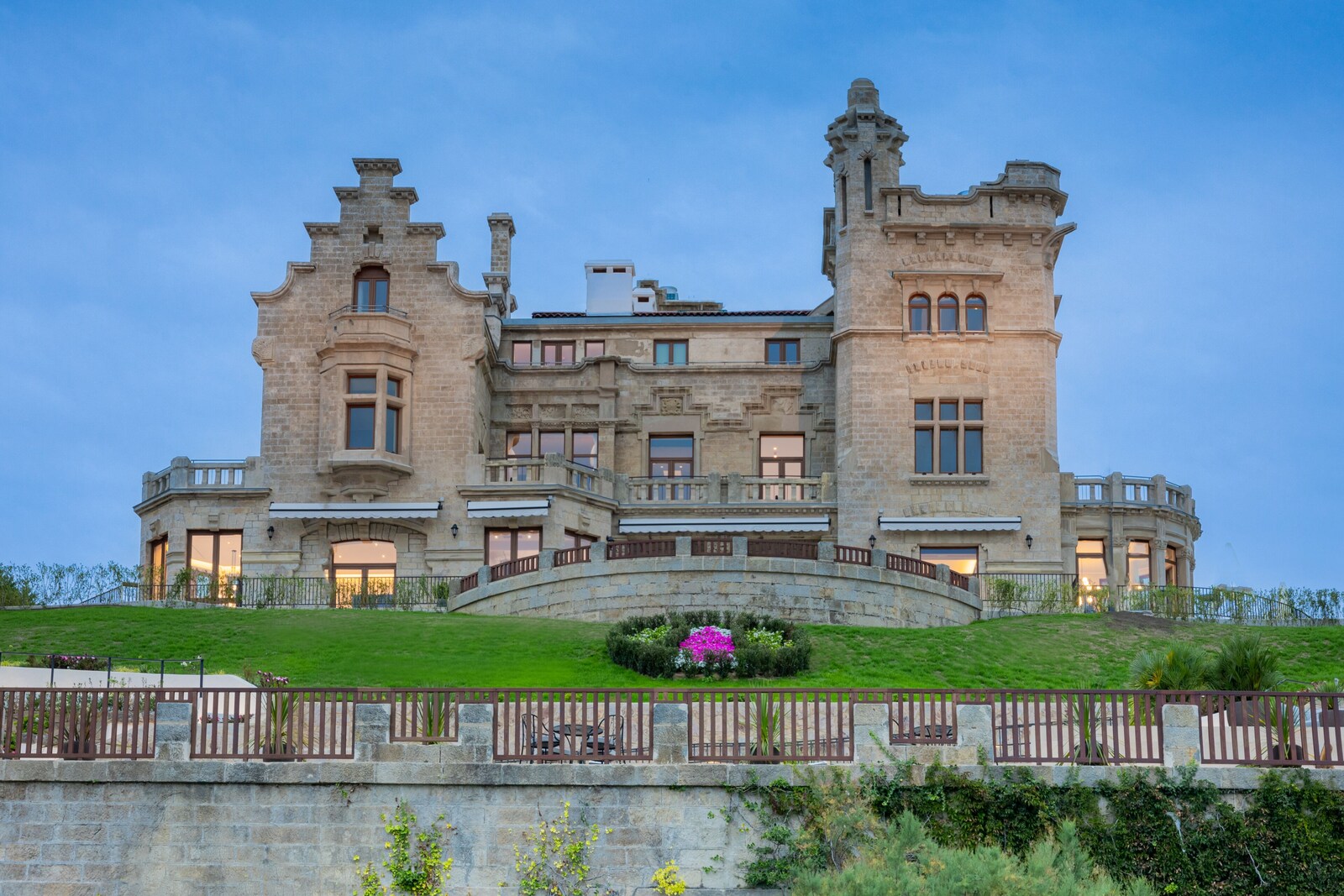
Un palacio neogótico de 1912 sobre un acantilado de Neguri, donde cada habitación mira a la desembocadura del Nervión y al golfo de Vizcaya.
LA HISTORIA
El palacio fue proyectado en 1912 por el arquitecto bilbaíno José Luis Oriol Urigüen para los marqueses de Arriluce, en un historicismo inglés con trazas de gótico victoriano — la primera mansión familiar del entonces nuevo Neguri. Sus interiores conservan obras de Sonia Delaunay, artista predilecta de los marqueses, que da nombre al restaurante de la casa bajo el cocinero vasco Beñat Ormaetxea. Tras una conversión cuidadosa abrió como hotel en octubre de 2023, gestionado bajo The Leading Hotels of the World.
POR QUÉ AHORA
Desde octubre de 2023 es el primer hotel de cinco estrellas gran lujo de Bizkaia — miembro de The Leading Hotels of the World que dotó por fin a la provincia de una dirección costera de máxima categoría, a unos veinte minutos del Guggenheim.
LA HABITACIÓN
Las 49 habitaciones tienen vistas al mar; pida una orientada a la desembocadura y no al jardín, y el golfo de Vizcaya y el faro quedarán en el encuadre durante el desayuno.
EL BARRIO
Neguri es el barrio de mansiones de Getxo, en la desembocadura del Nervión, levantado por la burguesía industrial bilbaína hacia el cambio de siglo. A pie se llega en menos de media hora al Puente de Vizcaya — el puente transbordador de 1893, Patrimonio de la Humanidad, que une Getxo con Portugalete — y el metro deja en el Casco Viejo de Bilbao en unos 25 minutos. Un suburbio costero acomodado y sosegado, no un núcleo turístico.
HONESTAMENTE
El emplazamiento es a la vez su gracia y su límite: se aloja en un tranquilo barrio residencial, no en la trama de pintxos de San Sebastián — la ciudad gastronómica queda a una buena hora en coche.
EL VEREDICTO
La fortaleza es el palacio mismo: 49 vistas al mar, un linaje auténtico de 1912 y la única dirección de esta categoría en Bizkaia. La debilidad es el aislamiento — Getxo es un suburbio tranquilo, no un destino en sí. Conviene a la pareja que quiere Bilbao y la costa vizcaína a un paso cómodo pero no el pulso de la ciudad en la puerta, no a quien busca recorrer bares a pie.
LA IMAGEN COMPLETA
The taxi climbs through Neguri's leafy residential streets — plane trees, wrought-iron gates, the kind of early-twentieth-century villas that Bilbao's shipping barons raised when they wanted salt air and distance from the foundries. Then the road opens, the estuary widens, and there it is on the cliff edge: a neogothic silhouette that looks less like a hotel and more like something an English earl misplaced on the Biscay coast. That first impression is not wrong. Designed in 1912 by Bilbao architect José Luis Oriol Urigüen for the Marquises of Arriluce, the palace was the founding mansion of Neguri itself — a declaration, in Victorian Gothic turrets and pointed arches, that Basque industry had arrived at a class of wealth that demanded its own seaside quarter. A century later, converted with evident care and opened in October 2023 as Bizkaia's first five-star gran lujo hotel, it still feels like a private claim on the horizon.
Check in and the first thing you notice is not the architecture but the sound — or rather, the withdrawal of it. Getxo is not Bilbao. There are no tram bells, no construction cranes, no tour-group megaphones. What reaches you instead is the low, rhythmic percussion of the Bay of Biscay against the cliff below, a sound that saturates every corridor and follows you into sleep. The lobby holds works by Sonia Delaunay, the marquises' favoured artist, whose geometric colour fields feel strangely right against the pointed stonework — as if someone decided to hang the twentieth century's most optimistic painter inside the nineteenth century's most sombre architectural mood. It works. Barely.
All forty-nine rooms face the sea — a genuine claim, not the hedged kind that means "if you lean out far enough." But the views are not equal. Ask for a room oriented toward the estuary mouth rather than the garden side, and you wake to the Bay of Biscay framed by the lighthouse, the water shifting between slate grey and a cold, luminous green depending on what the Atlantic has decided that morning. Open the shutters at seven and the light enters like an argument you cannot refuse: you will not be sleeping late here, and that is a feature, not a flaw.
The crowd is specific. This is not the hotel for the thirty-two-year-old who wants craft cocktails and a DJ set within stumbling distance. Neguri draws couples in their fifties and sixties — the kind who own a few pieces of art and have opinions about Chillida, who treat Bilbao as a cultural pilgrimage rather than a weekend bender. Architects appear regularly, drawn by the Oriol Urigüen lineage and the rare chance to sleep inside a building whose bones have not been hollowed out by renovation. You will find them at breakfast, debating the tension between the original historicism and whatever the conversion team chose to do with the bathrooms, which is a conversation that can last through a second coffee and a third croissant.
The in-house restaurant, named for Delaunay and led by Basque chef Beñat Ormaetxea, is the evening anchor. But to eat only here would be to misunderstand the geography. Down near the waterfront, Tamarises Izara serves a txangurro gratin with Iberico that earns its reputation without trying too hard — the kind of dish that makes you reconsider the spider crab as something beyond a tourist novelty. For red-meat conviction, Asador Borda delivers a chuletón a la brasa with the char and mineral edge that defines the Basque grill tradition. And for the meal that justifies a car, Azurmendi — perched in the green hills outside Bilbao — offers a truffled inverted egg that collapses every boundary between technique and pleasure. Book weeks ahead.
Now the caveat, because this hotel earns trust by admitting what it is not. You are in a quiet, well-heeled suburb at the mouth of the Nervión. The Metro carries you to Bilbao's Casco Viejo in about twenty-five minutes, where the Mercado de la Ribera and Teatro Arriaga offer the density and texture of a proper city. On foot you can reach the Bizkaia Bridge — the UNESCO-listed 1893 transporter bridge connecting Getxo to Portugalete — in under half an hour, and the flysch formations at Zumaia make for a worthwhile coastal drive. But San Sebastián's pintxo grid, the one you are probably already imagining, is a solid hour by car. And after dark, Neguri offers precisely nothing in the way of nightlife. No tapas crawl. No late bars. The street outside the palace is silent by ten, and you are either at peace with that silence or you have booked the wrong hotel.
What saves it — what elevates it — is the building's stubborn refusal to be anything other than what it was always meant to be: a private house on a clifftop, built to watch the sea. By the second morning you have stopped reaching for your phone and started watching the fishing boats trace the estuary. By checkout you carry something difficult to name — not relaxation exactly, but a recalibration of tempo. The Bay of Biscay has reset your internal clock to its own rhythm, which is slower, older, and entirely indifferent to your calendar.
You will leave wanting more time. Not more activities. More time.
DATOS
- Barrio: Getxo
- Estrellas: 5
- Desde 600 EUR por noche
- Tripadvisor: 4.8/5 (93)
- 43.34001, -3.01217
FAQ
¿Cuál es la mejor época para visitar?
Desde octubre de 2023 es el primer hotel de cinco estrellas gran lujo de Bizkaia — miembro de The Leading Hotels of the World que dotó por fin a la provincia de una dirección costera de máxima categoría, a unos veinte minutos del Guggenheim.
¿Algo que deba saber antes de reservar?
El emplazamiento es a la vez su gracia y su límite: se aloja en un tranquilo barrio residencial, no en la trama de pintxos de San Sebastián — la ciudad gastronómica queda a una buena hora en coche.
¿Cómo es el barrio alrededor de Palacio Arriluce Hotel?
Neguri es el barrio de mansiones de Getxo, en la desembocadura del Nervión, levantado por la burguesía industrial bilbaína hacia el cambio de siglo. A pie se llega en menos de media hora al Puente de Vizcaya — el puente transbordador de 1893, Patrimonio de la Humanidad, que une Getxo con Portugalete — y el metro deja en el Casco Viejo de Bilbao en unos 25 minutos. Un suburbio costero acomodado y sosegado, no un núcleo turístico.
MÁS HOTELES EN Basque Country
- Akelarre — San Sebastián
- The Artist Grand Hotel of Art (formerly Gran Hotel Domine) — Bilbao
- Hotel de Londres y de Inglaterra — San Sebastián
- Hotel María Cristina — San Sebastián
- Hotel Marqués de Riscal — Elciego
- Hotel Viura — Villabuena de Álava