Avenue Hotel Copenhagen by Brøchner Hotels
Frederiksberg, Copenhagen · curated
THE VIBE
Emil Blichfeldt's 1900 red-brick building now houses Norrøn Architects' study in contrast — concrete-grey Nørrebro volumes meeting Frederiksberg's forest green in a single corridor.
THE BACKSTORY
Emil Blichfeldt designed the building at Åboulevard 29 in 1900 — the same architect who, a decade earlier, shaped Tivoli's main entrance together with Richard Bergmann. Avenue Hotel occupied the property for decades. Brøchner Hotels carried out a complete reimagining and opened Hotel Hans in November 2025, named after the chain's founder Hans Brøchner-Mortensen, the carpenter who in 1982 took over a 50-room hotel at his father-in-law's urging.
WHY NOW
Hotel Hans opened in November 2025 following a comprehensive reimagining of the former Avenue Hotel. Brøchner Hotels named the property after founder Hans Brøchner-Mortensen — the craftsman who in 1982 traded his workbench for the hotel industry. Restaurant BOLO, with the Mediterranean as its compass, opened in December 2025. The journey here is complete; the reason to book is at its peak.
THE ROOM
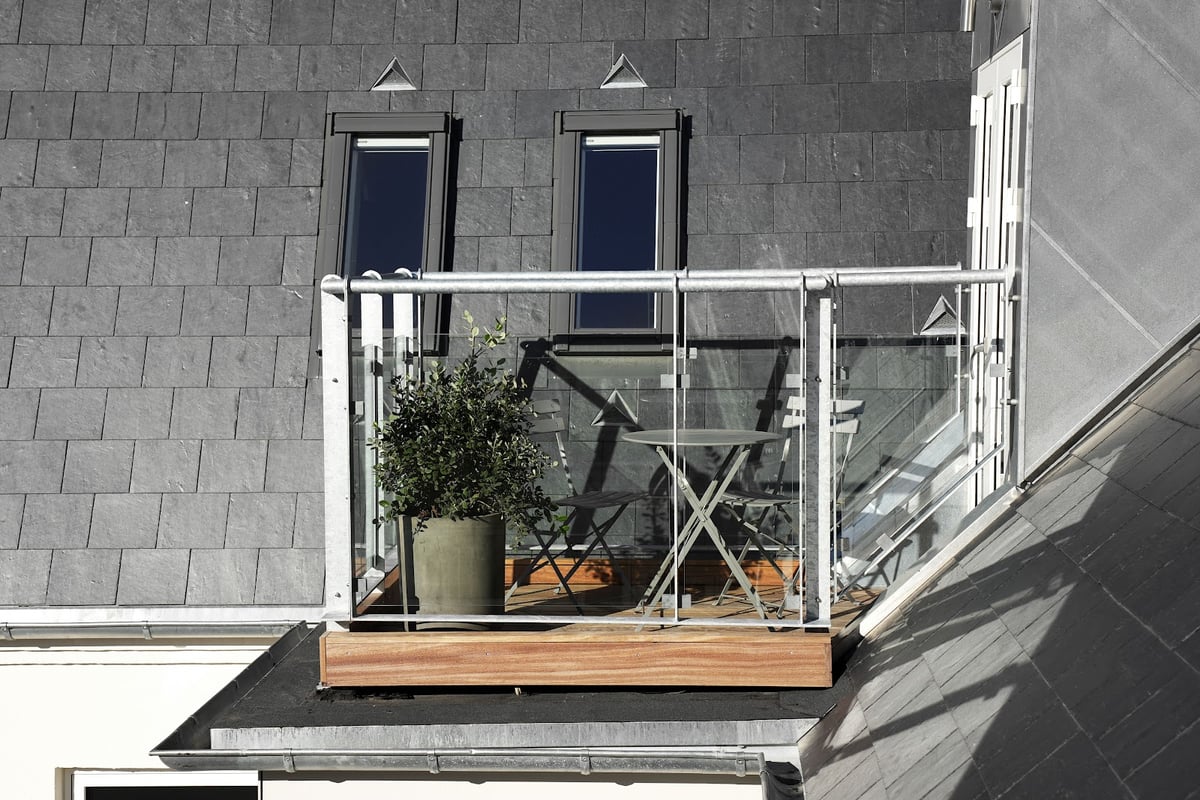
The 91 rooms are distributed across standard formats and suites — choose a deluxe room with a private balcony for natural daylight, or a suite with a rooftop terrace for 360-degree views over Copenhagen's roofscape.
THE TABLE
Mediterranean sharing plates — BOLO. The hotel's own restaurant concept BOLO, opened December 2025, works with the Mediterranean as its reference and shared dishes as its format. The kitchen is hotel-operated; terrace seating is offered during the summer months in the courtyard.
THE SERVICE
Every morning includes Brøchner Hotels' signature concept 'Goodmorning it's Organic' — a 90–100 per cent organic breakfast spread with freshly baked bread and specialty coffee. The evening's Wine Hour (17–18) and Nightcap Hour (22–23) are complimentary for hotel guests.
THE NEIGHBORHOOD
Forum metro station (line M2) is approximately 320 metres and five minutes' walk north. The hotel sits on the boundary between Frederiksberg — with Frederiksberg Have and the palace gardens — and Nørrebro, whose Assistens Kirkegård and café culture are equally close.
HONEST CAVEAT
Åboulevard is a wide urban artery and the hotel has no spa. Those seeking a quiet inner-city neighbourhood should note that the property shares its backdrop with Copenhagen's traffic flow — choose a room facing the courtyard if street noise is a concern.
THE VERDICT
Hotel Hans is Brøchner Hotels' clearest material statement: Emil Blichfeldt's 1900s brick structure carries Norrøn Architects' dichotomous interior without yielding — a serious addition to Copenhagen's boutique segment. Forum metro five minutes' walk north resolves mobility.
THE FULL PICTURE
You arrive frazzled, straight from the airport, onto the ceaseless, six-lane torrent of Åboulevard. For a moment, you’ll question your driver, your map, your very decision. This cannot be it. But behind a discreetly marked, heavy door is the decompression chamber you’ve been seeking. The door clicks shut, and the city’s grinding gears dissolve into a low, distant hum. The air inside changes instantly; it’s not the anonymous floral spray of a global chain but a tangible atmosphere of dark-roast coffee brewing in a La Marzocco machine, the faint, reassuring scent of old leather, and the particular warmth of Danish wool. Light, milky and soft, pours through tall windows, catching the dust motes as they dance over the sculptural curve of a well-worn Jacobsen egg chair. There is no soaring, impersonal lobby—only a series of intimate, interlocking salons where the most jarring sound is the clink of a ceramic cup on a slate coaster.
Let’s be brutally honest from the outset: this is not a hotel on a characterful, cobbled side street. Your fantasy of flinging open the shutters to the tinkling of bicycle bells is best saved for another trip. Avenue Hotel is planted directly on a major urban artery, and its soundproofing, while valiant, is not invincible. If you accept a room below the third floor facing the street, you will become intimately familiar with the low-frequency rumble of the 2A bus at 6 AM. This is the contract you enter into. In exchange for the urban reality, you are granted access to a perfectly calibrated world of understated Danish design. You must be strategic. Insist on a courtyard-facing Large Double on an upper floor—Room 312, for instance. Here, the city vanishes, replaced by a monastic quiet and soft, indirect morning light that filters over the serene patio. The ‘Small’ rooms are an exercise in truth in advertising; they are exquisitely designed but punishingly compact, suitable only for a solo traveler with a single carry-on and a disciplined lifestyle.
By 5 PM, the quiet salons transform. The daily wine hour begins, and the hotel reveals its tribe. These aren’t tourists ticking off a list; they are architects from Berlin, textile designers from Milan, and academics from Chicago, all drawn by a shared aesthetic language. They sink into low-slung sofas, swirling glasses of a crisp Riesling, their conversations a low murmur of Danish, English, and German. They are the kind of people who notice the precise texture of a Missoni throw and appreciate the satisfying heft of a wine glass in their hand. This convivial gathering can make the compact lobby feel more like a stylish house party than a hushed retreat, another trade-off in the hotel’s character. This is a self-service base for the fiercely independent, not a full-service cocoon. There is no gym to sweat in, no spa to be swaddled in, and no room service to summon a club sandwich at midnight.
Your days are spent outside its walls. The hotel is a launchpad, not a destination in itself. You borrow one of the house bikes and in minutes you are crossing Dronning Louises Bro, the bridge thrumming with the city’s real circulatory system: cyclists. You glide past Søerne, the city’s great lakes, where Copenhageners are out for their evening run, their faces flushed in the lingering summer light. A ten-minute walk in the other direction leads you to the solemn gates of Assistens Kirkegård, a cemetery that doubles as one of the city’s most beloved parks, a place for a pensive stroll among the headstones of Hans Christian Andersen and Søren Kierkegaard. This is your Copenhagen—not a checklist of sights, but a series of lived moments.
When evening comes, you will be tempted by the bar, but you must resist. Dinner is elsewhere. A ten-minute stroll into the neighborhood takes you to Enomania, an osteria that feels like a quiet act of rebellion in a city obsessed with the New Nordic doctrine. You are here for one dish: Chef Damiano Alberti’s Tajarin al Tartufo. What arrives is not food, but a statement. A mound of impossibly thin, hand-cut pasta ribbons, so rich with egg yolk they are the color of pure sunshine, slick with nutty butter. The dish is then buried under a blizzard of freshly shaved black truffle, its earthy, intoxicating perfume silencing the table. It is a meal of profound, un-trendy classicism that mirrors the hotel’s own philosophy: master the fundamentals, edit mercilessly, and ignore the noise. You return to your quiet room, the scent of truffle still ghosting on your senses, and sleep deeply, insulated from the city you so thoroughly explored. This is the genius of the place: it provides the perfect filter, sharpening your experience of Copenhagen while protecting you just enough from its raw, urban energy.
FACTS
- Neighbourhood: Frederiksberg
- Stars: 4
- From 1650 DKK per night
- Tripadvisor: 4.8/5 (50)
- 55.68361, 12.5489
FAQ
When is the best time to visit?
Hotel Hans opened in November 2025 following a comprehensive reimagining of the former Avenue Hotel. Brøchner Hotels named the property after founder Hans Brøchner-Mortensen — the craftsman who in 1982 traded his workbench for the hotel industry. Restaurant BOLO, with the Mediterranean as its compass, opened in December 2025. The journey here is complete; the reason to book is at its peak.
Anything I should know before booking?
Åboulevard is a wide urban artery and the hotel has no spa. Those seeking a quiet inner-city neighbourhood should note that the property shares its backdrop with Copenhagen's traffic flow — choose a room facing the courtyard if street noise is a concern.
What is the neighbourhood like around Avenue Hotel Copenhagen by Brøchner Hotels?
Forum metro station (line M2) is approximately 320 metres and five minutes' walk north. The hotel sits on the boundary between Frederiksberg — with Frederiksberg Have and the palace gardens — and Nørrebro, whose Assistens Kirkegård and café culture are equally close.
MORE HOTELS IN Copenhagen
- 25hours Hotel Indre By — Indre By
- 71 Nyhavn Hotel — Indre By
- Absalon Hotel — Vesterbro
- AC Hotel by Marriott Bella Sky Copenhagen — Ørestad
- Andersen Boutique Hotel — Vesterbro
- Axel Guldsmeden — Vesterbro