Hotel Diana
Tossa de Mar, Costa Brava · flagship
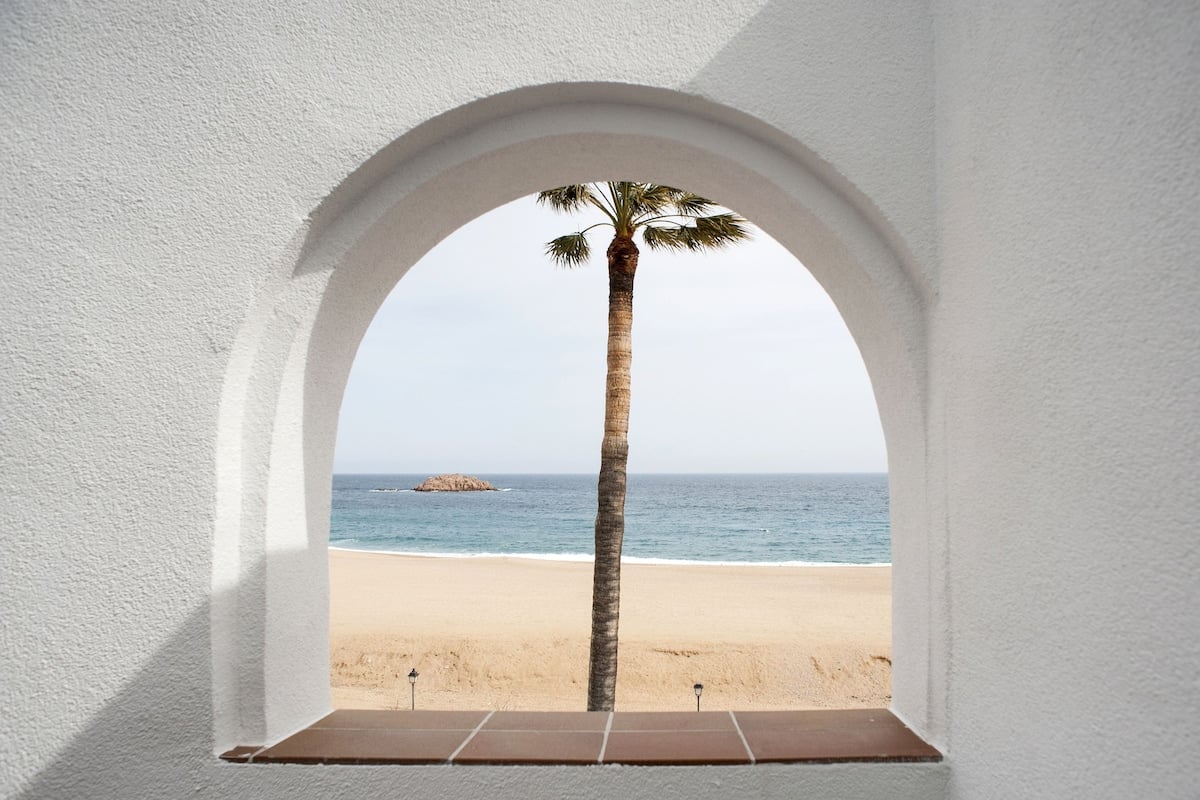
THE VIBE
Hotel Diana — a Modernista palace with a century of Tossa in its walls.
THE BACKSTORY
Joan Sans, a cork merchant who had made his fortune in Colombia, commissioned the palace at Plaça d'Espanya 6 in 1906 to designs by Antoni de Falguera i Sivilla, a pupil of Puig i Cadafalch. Gargoyles representing the four seasons were crafted by Alfons Juyol; trencadís mosaics in glazed ceramics cover the façade details. Fernando Vilallonga i Balam acquired the building in 1930 and commissioned the Diana fountain sculpture from Frederic Marès, along with a staircase in Carrara marble. In 1958 Mercedes Gotarra Blanqué — great-great-granddaughter of the Sans family — converted the palace into a hotel.
WHY NOW
The coastal town's medieval city wall rises from the sea thirty metres from the hotel's terrace restaurant — a location no newly built hotel along Costa Brava can replicate.
THE ROOM
Suite Diana — 45 m², two floors, sea views, private terrace and a private solarium with sun loungers and an outdoor shower — is the hotel's most fully specified room on the official website.
WELLNESS
The hotel has no spa or gym of its own. Access to the rooftop pool facilities at Hotel Delfín is included; distance has not been measured by us.
THE TABLE
Mediterranean spread — tapas, fish and meat dishes with seasonal produce — La Terraza del Diana. The hotel's own restaurant concept in three settings: indoors, the El Patio courtyard, and a beachfront terrace facing the sea wall. TripAdvisor ID d4749407.
THE SERVICE
21 rooms across six categories. Breakfast is served in three settings: the indoor salon, the El Patio courtyard, and the seafront promenade. Staff coordinate pool access via the neighbouring Hotel Delfín.
THE NEIGHBORHOOD
The hotel is located at Plaça d'Espanya 6 / Passeig de Mar 41 in Tossa de Mar, with direct views of the medieval fortification Vila Vella and the sea. No shopping districts or food markets are referenced in official materials.
HONEST CAVEAT
The hotel has no pool of its own. The TripAdvisor rating of 4.6 (1,013 reviews) is sourced from Supabase and may have changed.
THE VERDICT
One of Costa Brava's few hotels where architectural history is a primary reason to book, not a side effect of location.
THE FULL PICTURE
You arrive at Hotel Diana on foot. There is no other way to do it justice. To leave the air-conditioned silence of a car and step onto the Passeig del Mar is to plunge into the kinetic, sun-bleached heart of Tossa de Mar. The promenade is a cacophony of families shaking sand from towels, the clink of ice in vermouth glasses from terrace bars, and the distant cry of gulls circling the medieval fortress of Vila Vella. Then you see it. Hotel Diana is not a building that shouts for attention; it asserts its presence with a quiet, confident dignity. The white façade, ornamented with the undulating, organic forms of Catalan Modernisme, is a serene counterpoint to the churn of beach life. Stepping through the arched doorway is an immediate sensory shift. The heat and noise of the promenade fall away, replaced by the cool, hushed atmosphere of an entryway clad in dark wood and glazed ceramic tiles. The air inside is different—it carries a faint, pleasant scent of beeswax, sea salt, and a century of history seeped into the walls. The check-in is not a transactional formality but a low-key conversation at a carved wooden desk, an introduction to a place that values personality over protocol. You feel at once that this is not a hotel built to process the masses, but a residence created to captivate the individual.
My room, one of only twenty-one, feels less like a hotel room and more like a private chamber in a grand turn-of-the-century bourgeois apartment. The true soul of the space is underfoot: the original 1906 hydraulic mosaic tiles, a swirling pattern of grapevines and flowers in muted tones of sage, ochre, and terracotta. They are cool and imperceptibly uneven, each tile a small work of art, a testament to the craftsmanship of a bygone era. It’s a detail so many modern hotels would have sacrificed in the name of renovation, but here it is preserved as fundamental to the building’s character. I push open the heavy wooden doors to the balcony and am met with the real reason one stays here. The view is a composition of almost painterly perfection. Below, the Platja Gran unfolds, its coarse sand populated with bright umbrellas. To the right, so close you feel you could reach out and touch it, rises the fortified wall of the Vila Vella, its seven towers standing sentinel against the cobalt Mediterranean. It is here, on the wrought-iron balcony, that the defining sensory detail of Hotel Diana reveals itself. It is not a smell, or a sight, but a sound: the rhythmic, persistent percussion of the waves breaking on the shingle beach. It is a constant, deep breath from the sea, an ancient lullaby that permeates the room and becomes the soundtrack to the stay, a reminder of the place’s inextricable link to the water.
The clientele at Diana are as distinct as the building itself. You don't see the brash, logo-clad crowds that flock to the larger resorts along the Costa Brava. The guests here are more restrained, their luxury one of knowledge and appreciation. I spot an architect from Amsterdam sketching the façade in a Moleskine in the small interior courtyard garden. A couple from Paris, academics perhaps, quietly reading paperbacks on the sea-facing terrace, a glass of chilled Empordà rosé beside each of them. Conversations are muted, often in Catalan or French, revolving around art, history, or the plans for a hike along the Camí de Ronda coastal path to the secluded cove of Cala Pola. This is a crowd that has not come to be seen, but to see. They understand that the hotel's true value lies not in an exhaustive list of amenities, but in its architectural integrity and its prime position at the nexus of Tossa de Mar's history. They are here to inhabit a work by Antoni de Falguera i Sivilla, a student of Gaudí, and to feel the pulse of a town that once charmed Ava Gardner.
Of course, no place is without its quirks, and Hotel Diana demands a certain contract of acceptance from its guests. Here is the honest caveat: this is not an insulated bubble of tranquility. The hotel's greatest asset—its unbeatable location directly on the main beachfront promenade—is also its greatest compromise. The moment you step out of the door, you are in the immediate thrum of high-summer activity. The sound of street musicians, the chatter from restaurants, and the general energy of a resort town in full swing is inescapable. While the double-glazed windows do an admirable job for a 1906 building, those seeking absolute silence might find the constant presence of the town intrusive. This is not a place to retreat from the world; it is a place to engage with it, to step out for a morning walk through the empty, winding streets of the Vila Vella before the town wakes, or to head down to the nearby Can Pini for a plate of grilled Palamós prawns. The hotel is part of the fabric of the town, not an enclave set apart from it. Its three-star rating is an honest one: it offers character, not coddling; history, not high-tech distraction.
On my last morning, I sit on the balcony with a cortado, watching the first rays of sun illuminate the golden stones of the Vila Vella walls. The fishing boats, the 'barques', bob in the bay, their engines a soft morning thrum. Leaving Hotel Diana doesn't feel like checking out of a hotel. It feels more like bidding farewell to an old, characterful home you were lucky enough to inhabit for a while. The memory I take with me is not of seamless service or a lavish breakfast buffet, but of specific, indelible details: the exact shade of blue in a stained-glass panel catching the afternoon light, the feel of the cool, solid wrought-iron railing under my hands, and above all, the eternal sound of the sea that served as a constant companion. Hotel Diana is proof that true luxury is not always about polish and plenitude. Sometimes, it is about authenticity, about the privilege of dwelling, if only for a few nights, inside a piece of living history, with the soul of the Mediterranean just beyond your window.
FACTS
- Neighbourhood: Tossa de Mar
- Stars: 4
- From 160 EUR per night
- Tripadvisor: 4.6/5 (1013)
- 41.721, 2.9322
FAQ
When is the best time to visit?
The coastal town's medieval city wall rises from the sea thirty metres from the hotel's terrace restaurant — a location no newly built hotel along Costa Brava can replicate.
Anything I should know before booking?
The hotel has no pool of its own. The TripAdvisor rating of 4.6 (1,013 reviews) is sourced from Supabase and may have changed.
What is the neighbourhood like around Hotel Diana?
The hotel is located at Plaça d'Espanya 6 / Passeig de Mar 41 in Tossa de Mar, with direct views of the medieval fortification Vila Vella and the sea. No shopping districts or food markets are referenced in official materials.
MORE HOTELS IN Costa Brava
- Almadraba Park Hotel — Roses
- Boutique Hotel Can Pico — Empordà Interior
- Can Mascort Eco Hotel — Palafrugell
- Casa Vincke — Baix Empordà
- Finca Victoria — Begur
- Gran Hotel Reymar & Spa — Tossa de Mar