Hotel El Far
Calella de Palafrugell / Llafranc, Costa Brava · curated
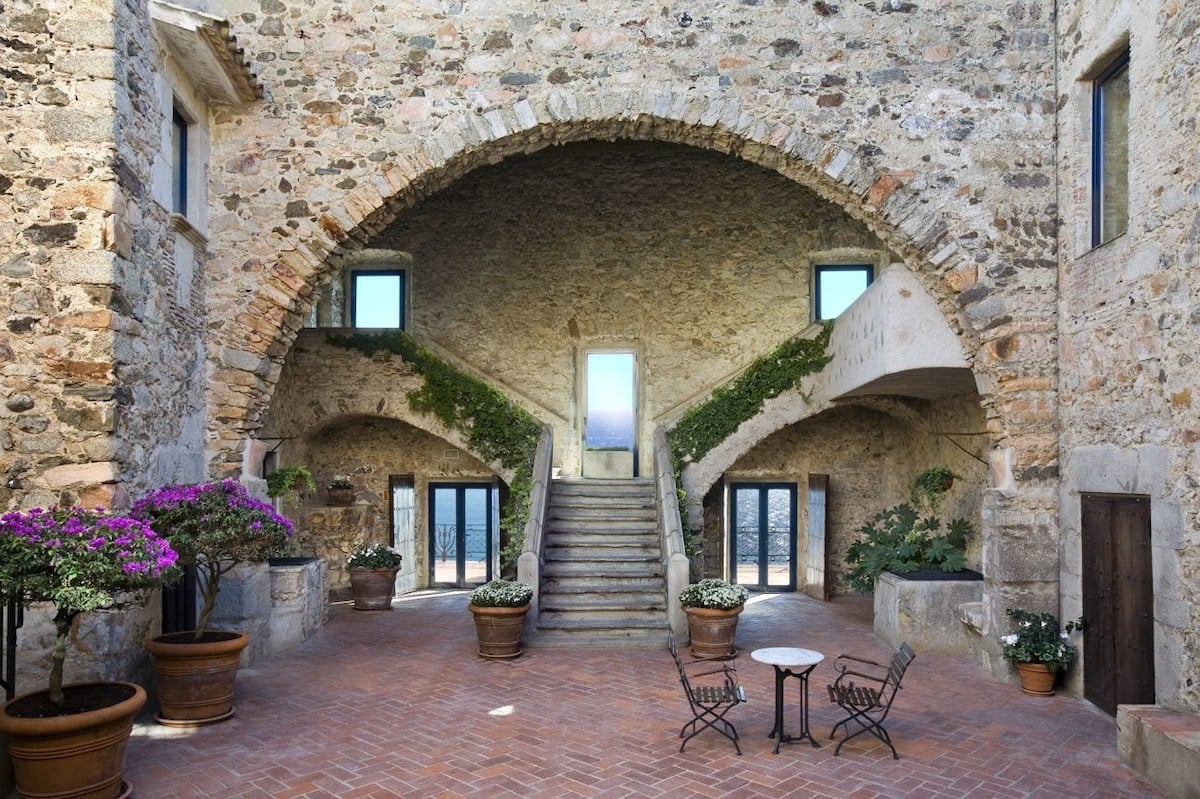
THE VIBE
Lighthouse, medieval watchtower and eighteenth-century inn as a single complex — nine rooms where 175 metres of cliff carry the sea all the way to the horizon.
THE BACKSTORY
Housed in an eighteenth-century inn, wall to wall with a seventeenth-century hermitage and a fifteenth-century watchtower. The adjacent lighthouse was inaugurated on 1 October 1857 and, with a range of 32 nautical miles, is the most powerful along the entire Catalan coast. Beneath the hotel's cliff lies an Iberian settlement layer from the sixth century BC, excavated during the 1980s. This is not a hotel that has constructed its history — it inhabits three grown-together buildings that are genuinely historical.
WHY NOW
The restaurant closes on Tuesdays outside high season (daily 15 June–7 September 2026) and shuts entirely 1 November–3 December. The June window is the right one: the terrace seasonal menu is served without the tourist pressure that July brings.
THE ROOM
Four of the nine rooms have a private terrace and sea view — the remaining four face the coastal landscape without a sea-facing aspect. The suite (room 1) is the only one combining full sea view and terrace.
THE TABLE
The garoinada menu (€68/person) with raw sea urchins, black rice and shellfish — available January–March with advance booking. Outside the season: the monthly themed menu (€45/person) with seasonal Costa Brava produce. — El Far (the hotel's restaurant). The restaurant is run by the hotel and specialises in traditional Costa Brava gastronomy: monthly-rotated menus of rice, fresh fish and shellfish. The sea-view terrace is served without any alternative of equivalent standing within walking distance.
THE SERVICE
The Figueras family runs both El Far and Mas de Torrent in Baix Empordà. In a nine-room house, that means the same staff receive you at reception and recommend the month's rice dish at the table.
THE NEIGHBORHOOD
The hotel sits on the headland of Cap de Sant Sebastià, 175 metres above the coast and 1.5 kilometres north of Llafranc beach. From the terrace, all three coves — Llafranc, Calella de Palafrugell and Tamariu — are visible in a single arc. The Camí de Ronda coastal path runs past the headland towards Tamariu and down to Llafranc harbour. Palafrugell town centre is reached by car.
HONEST CAVEAT
The rooms are sober rather than materially luxurious — the interiors are stripped-back and nautical. Llafranc beach is reached via the cliff path below the headland; allow time for the walk.
THE VERDICT
El Far is a nine-room boutique hotel on Cap de Sant Sebastià, run by the Figueras family and housed in a historic three-building complex spanning three different centuries. The restaurant — monthly menus of rice, fish and shellfish — carries half the stay. The rooms are sober. It is a hotel for those seeking coastal-path stillness and a sea view that is genuinely earned.
THE FULL PICTURE
The ascent to Hotel El Far is a slow, deliberate shedding of the world below. You leave the pastel facades and chattering terraces of Llafranc, winding up the serpentine road that clings to the Cap de Sant Sebastià. Pine trees, bent by a lifetime of wrestling the Tramuntana wind, part to reveal glimpses of an impossibly blue Mediterranean. The air changes up here. The scent of sun-baked rock and wild rosemary sharpens, replacing the softer, salt-marsh notes of the harbour. Then, the complex appears: not as a grand hotel entrance, but as a cluster of historic stone—the stout, whitewashed lighthouse, the 15th-century watchtower, and the quiet hermitage. Checking in feels less like a transaction and more like being granted custodianship of a view. There is no soaring lobby, no performative welcome. Instead, there's a cool, cloistered corridor and the quiet understanding that the real reception is happening just beyond your room’s window, where the sky and sea are holding a magnificent, ongoing committee meeting.
Let’s be clear from the outset: you do not come to El Far for the thread count or the square footage. This is the hotel’s core truth, its honest caveat. The nine rooms, carved from the old hermitage, are monastic in their simplicity. White walls, terracotta floors, dark wood furniture—they are comfortable, immaculate, but spare. They are frames, not the painting. To expect more is to miss the point entirely. The indulgence here is not material; it is positional. My door opened not onto a room, but onto a panorama. The window, a simple rectangle of glass, held a view so vast and dominant it felt like a physical presence. The entire sweep of the coastline, from the sheltered coves of Calella de Palafrugell to the distant, hazy silhouette of the Medes Islands, was laid out like a cartographer's dream. The room is a cell for contemplation, a spartan perch from which to witness something magnificent. It is a proposition that filters its clientele effectively. The crowd is one of quiet appreciation: a Parisian couple reading on their balcony, a novelist staring into the middle distance with a notebook, a pair of architects sketching the archways. They are here for the sublime, not the service bell.
As dusk begins to settle, the hotel's terrace becomes the most sought-after location on this stretch of coast. It’s a stage set for the daily drama of the setting sun. The prevailing sound is not music, but the elemental whisper of the wind sweeping up the cliff-face, carrying with it the percussive crash of waves on the rocks 170 meters below. It’s a sound that feels ancient, a rhythm that has scored this coastline for millennia. Glasses of crisp, Empordà white wine clink, a counterpoint to the distant cry of gulls heading home. The scent is a complex blend: the saline bite of the sea, the resinous perfume of the surrounding pines, and, as plates begin to arrive from the kitchen, the glorious, garlic-and-saffron promise of a perfectly executed *suquet de peix*. I watch as the light performs its magic, the harsh afternoon glare softening into a wash of apricot and lavender that catches the white sails of the boats below. This is not just dinner; it is an act of immersion, a sensory triangulation of place, taste, and time.
The morning after a storm, the air scrubbed clean, I found the true purpose of El Far’s location. It is not just a place of retreat, but a gateway. Directly from its grounds, a small wooden sign marks the start of the Camí de Ronda, the legendary coastal path that stitches together the coves and headlands of the Costa Brava. The 20-minute descent to Calella de Palafrugell is a journey in itself, a steep, winding path through Aleppo pines and agaves, with the sea appearing and disappearing through the foliage. Each turn reveals a new composition: the tiled roofs of Calella, the iconic arches of the *voltes* on the seafront, the small fishing boats—the *bots catalans*—pulled up on the sand. Reaching the sand at Port Bo feels like returning to civilisation, but a particularly characterful version of it. I sat for a coffee at Tragamar, my feet almost in the water, watching the town come to life, and then looked back up. From here, the lighthouse is a remote, stoic beacon, a postcard image. But having slept within its aura, it felt personal, a secret shared. The hotel’s unique proposition is this duality: the eagle’s-nest solitude above, and the direct, physical connection to the vibrant Catalan life below.
The guests at El Far are not chasing the transient buzz of a new hot-spot; they are what I’d call ‘geographic connoisseurs.’ They understand that the most profound luxury is often a matter of longitude and latitude. They are the type to have a well-worn copy of Josep Pla’s “The Gray Notebook” in their luggage, seeking to connect with the very essence of the Empordà that he so vividly described. They eschew the larger, more anonymous resorts for a place with a story etched into its very stones. Their days are not dictated by a schedule of activities, but by the movement of the sun and the tide. They might spend an afternoon exploring the medieval hilltop town of Begur, a short drive away, or visiting the Dalí Theatre-Museum in Figueres, but their anchor is always this cliff. They are as likely to be found dining on the terrace, savouring the local rockfish, as they are to be heading down to Llafranc for a more rustic meal of grilled sardines at La Llagosta, right on the quay. They understand that El Far is not an escape from the Costa Brava, but the most privileged vantage point from which to engage with it.
Leaving El Far is a process of gentle re-entry. Driving back down the hill, the world expands from the focused frame of the window to the wider, more chaotic reality of the coast. The sounds of traffic and town life gradually replace the whisper of the wind. My final glance in the rearview mirror was of the white tower, already receding into its iconic status. The memory I take with me is not of a hotel room, but of the light. The sharp, crystalline light of morning that made the sea look like shattered glass, and the soft, forgiving light of evening that turned the cliffs to gold. Hotel El Far doesn't offer the conventional comforts of a five-star property. It offers something far more rare and valuable: a change in perspective. It elevates you, quite literally, above the everyday, and for a few nights, allows you to inhabit one of the most sublime viewpoints in the entire Mediterranean. It’s a reminder that sometimes, the greatest luxury is simply having the best seat in the house.
FACTS
- Neighbourhood: Calella de Palafrugell / Llafranc
- Stars: 4
- From 140 EUR per night
- Tripadvisor: 4.1/5 (339)
- 41.893, 3.196
FAQ
When is the best time to visit?
The restaurant closes on Tuesdays outside high season (daily 15 June–7 September 2026) and shuts entirely 1 November–3 December. The June window is the right one: the terrace seasonal menu is served without the tourist pressure that July brings.
Anything I should know before booking?
The rooms are sober rather than materially luxurious — the interiors are stripped-back and nautical. Llafranc beach is reached via the cliff path below the headland; allow time for the walk.
What is the neighbourhood like around Hotel El Far?
The hotel sits on the headland of Cap de Sant Sebastià, 175 metres above the coast and 1.5 kilometres north of Llafranc beach. From the terrace, all three coves — Llafranc, Calella de Palafrugell and Tamariu — are visible in a single arc. The Camí de Ronda coastal path runs past the headland towards Tamariu and down to Llafranc harbour. Palafrugell town centre is reached by car.
MORE HOTELS IN Costa Brava
- Almadraba Park Hotel — Roses
- Boutique Hotel Can Pico — Empordà Interior
- Can Mascort Eco Hotel — Palafrugell
- Casa Vincke — Baix Empordà
- Finca Victoria — Begur
- Gran Hotel Reymar & Spa — Tossa de Mar