Hotel Trias
Palamos, Costa Brava · curated
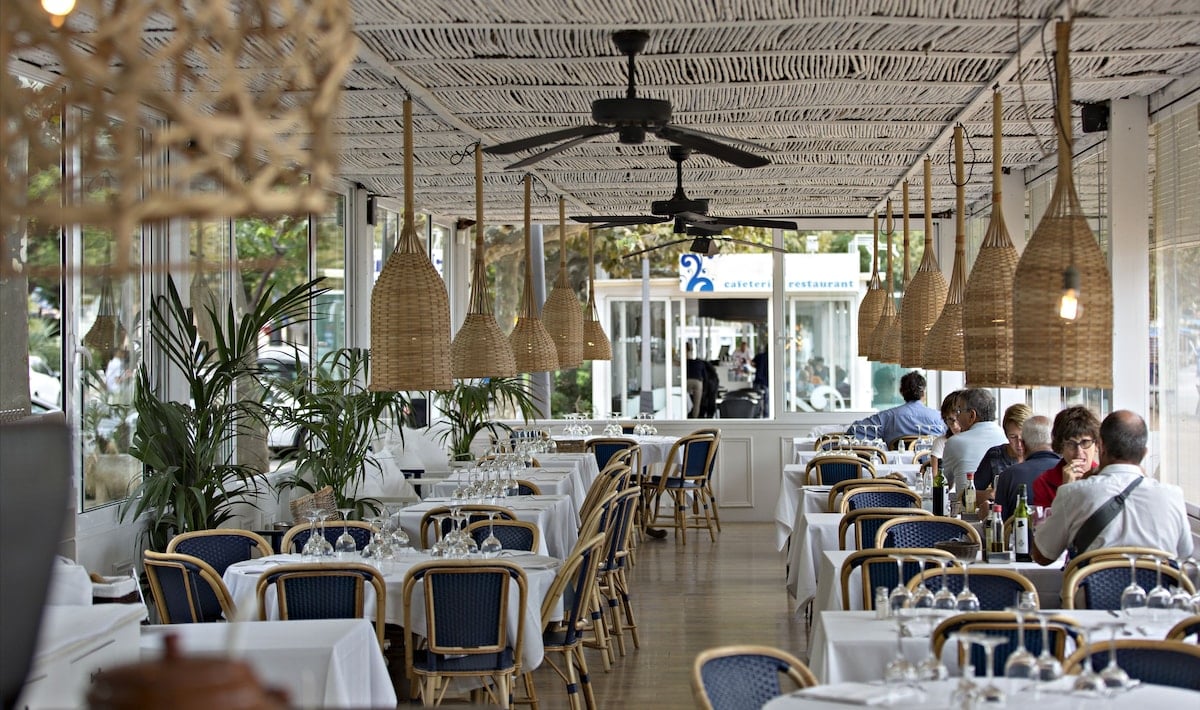
THE VIBE
Passeig del Mar with an active fishing harbour outside the window — Palamós without a constructed tourist backdrop.
THE BACKSTORY
Hotel Trias opened in 1900 on the Palamós seafront and was comprehensively renovated in 2005 under Grup Andilana with interiors by designer Lázaro Rosa-Violán. Truman Capote arrived in April 1960 in room 705 with Jack Dunphy, four thousand pages of notes and three dogs — and returned three summers in a row to work on In Cold Blood. Ava Gardner and David Niven belonged to the same circle of returning guests, earning the hotel the epithet 'the hotel of the stars'.
WHY NOW
Summer season 2026: Trias Restaurant opens its terrace menu with a focus on Aristeus antennatus from the harbour below. The Palamós prawn auction is one of Catalonia's most active — June bookings are safer than July.
THE ROOM
Sea-facing rooms on floors 5–7 offer views over Palamós Bay and the fishing harbour. Rear street-side rooms have no sea view — and no morning light at all.
THE TABLE
Gambas de Palamós a la planxa — Trias Restaurant & Terrace. The hotel's own restaurant serves prawns landed at Palamós harbour — Aristeus antennatus from one of the Mediterranean's most recognised fishing grounds. Plancha cooking is the local consensus for how best to present the ingredient.
THE SERVICE
The hotel is operated by Grup Andilana. Trias Restaurant & Terrace (also known as La Corniche) is the hotel's own restaurant, open daily for lunch 13:00–15:30 and dinner 20:00–22:30. Reception handles local bookings.
THE NEIGHBORHOOD
Passeig del Mar runs directly outside the hotel entrance along the Palamós seafront. The fish auction at Moll dels Pescadors — one of Catalonia's most active — is a short walk away. Palamós lacks the large-scale apartment buildings that dominate the rest of the Costa Brava coastline and is considered one of the most intact fishing communities along the stretch.
HONEST CAVEAT
The fishing harbour is active — trawler engines and gulls start early. No spa. Parking costs 16 euros per night.
THE VERDICT
Hotel Trias sells a location and a literary-historical address — not a design hotel. Lázaro Rosa-Violán's 2005 interior ages with dignity but is ready for a second act. For those who want to stay beside a working fishing harbour on the Costa Brava, with an in-house kitchen that takes its ingredients seriously, it is hard to find better.
THE FULL PICTURE
The arrival in Palamós is not a trumpet blast, but a slow realization. You drive past the more obvious Costa Brava resorts, their cloned apartment blocks and transient beach bars, and turn into a town that feels immediately more substantial, more authentic. The pace slackens. And there, commanding the end of the Passeig del Mar, its facade a pale, buttery yellow that seems to have absorbed a century of sunsets, is the Hotel Trias. It is not a building that shouts for attention; it murmurs its history. Inaugurated in 1914, it is a Belle Epoque survivor, a grande dame that has watched the fishing fleet sail in and out for over a hundred years. To step from the car is to instantly change the soundtrack. The distant hum of traffic is replaced by the rhythmic clinking of rigging against masts, the guttural cry of gulls, and the low thrum of a trawler maneuvering in the port. The hotel doesn't just overlook the marina; it is intrinsically part of it, a silent, elegant witness to the daily theatre of the quay.
Inside, the promise of a preserved soul is kept. Forget the anonymous gloss of contemporary lobbies. Here, the immediate sensation is the cool of the original marble staircase underfoot, its treads gently worn into shallow concavities by generations of guests – from Truman Capote to Ava Gardner. The 2016 renovation was executed with a light touch, achieving the difficult feat of modernizing without erasing. The crowd, too, is as understated as the hotel itself. You won’t see flashy logos or performative wealth. Instead, it’s a self-selecting congregation of connoisseurs: Barcelona architects seeking a weekend of quiet contemplation; sailors, their faces weathered by sun and sea, in linen shirts, discussing wind charts over a glass of crisp Empordà wine at the bar; multi-generational Catalan families for whom a stay here is an annual rite. There is a sense of quiet, earned leisure, of people who have nothing to prove, who are here for the elemental pleasures of salt air, fresh fish, and a slower rhythm of life.
My sea-view room is not so much a room as it is a private box overlooking the soul of Palamós. The decor is spare and functional, all white walls and nautical blue accents, correctly assuming that the main event is outside. And what an event it is. The balcony doors slide open onto a panorama of the port, where the traditional fishing vessels, the *barques de pesca*, are moored gunwale to gunwale with sleek sailing yachts. It is here, leaning on the rail in the late afternoon sun, that the hotel’s most defining sensory detail asserts itself: the smell. It is not just the generic scent of the sea. It is a complex, layered perfume. There is a base note of brine and seaweed, a mid-note of diesel and the sharp iodine tang of drying nets, and, floating over it all, a subtle, appetizing hint of garlic and olive oil drifting up from the restaurant kitchen. It is the smell of a working port, of labour and leisure, of the sea and the kitchen. It is the specific aroma of Palamós, captured on the breeze.
This profound connection to the sea is not merely aesthetic; it is the hotel’s gastronomic creed. Every afternoon around four o’clock, you can watch the fishing fleet chug back into the harbour. An hour later, the frenetic fish auction, *la llotja*, is underway just a stone’s throw from the hotel’s entrance. And by evening, that same day’s catch is the star of the menu at Restaurant Trias. To dine here is a lesson in maritime terroir. The waiter doesn't just name the dish; he can practically name the boat that brought in the sole or the langoustines. To order the legendary *gamba de Palamós*, the intensely red prawn that is the town’s proudest export, and to have it served *a la planxa* – blistered on a hot plate with nothing more than coarse salt and a slick of olive oil – is to taste the very essence of a place. It’s a culinary experience so deeply rooted in its immediate geography as to be impossible to replicate anywhere else on earth. This is the antithesis of generic, globalized hotel fare.
An honest caveat is in order, however. This complete immersion in the life of the port comes at a small price: absolute silence. If you are seeking a hushed retreat where the only sound is the lapping of waves, the Trias may not be your sanctuary. The port wakes early. The chug of engines and the morning congress of gulls begin before dawn. It is not a disturbance, but rather the town's heartbeat, the sound of a place at work. For me, this is part of its profound charm, a reminder that this is not an isolated compound. It is an invitation to rise with the sun and witness the spectacle, perhaps to take a walk along the coastal *Camí de Ronda* path towards the unspoiled cove of Platja de Castell as the morning light turns the cliffs to ochre. The hotel is a base, not a bubble.
Leaving the Hotel Trias does not feel like checking out. It feels like taking your leave from a place that has shared its rhythm with you. You are not just leaving a room, but a cadence of life dictated by tides and the daily catch. The memory that lingers is not of opulent fixtures or extravagant service, but of specific, sensory imprints: the singular, sweet taste of that just-caught prawn; the sound of the first fishing boat of the day cutting through the morning stillness; the image of that pale-yellow facade, a beacon of enduring grace in the blue hour. The Trias is that rare thing: a grande dame that has refused to become a museum piece, that remains vibrantly, inextricably tethered to the real, working heart of the Costa Brava.
FACTS
- Neighbourhood: Palamos
- Stars: 4
- From 195 EUR per night
- Tripadvisor: 4.2/5 (640)
- 41.8496, 3.1295
FAQ
When is the best time to visit?
Summer season 2026: Trias Restaurant opens its terrace menu with a focus on Aristeus antennatus from the harbour below. The Palamós prawn auction is one of Catalonia's most active — June bookings are safer than July.
Anything I should know before booking?
The fishing harbour is active — trawler engines and gulls start early. No spa. Parking costs 16 euros per night.
What is the neighbourhood like around Hotel Trias?
Passeig del Mar runs directly outside the hotel entrance along the Palamós seafront. The fish auction at Moll dels Pescadors — one of Catalonia's most active — is a short walk away. Palamós lacks the large-scale apartment buildings that dominate the rest of the Costa Brava coastline and is considered one of the most intact fishing communities along the stretch.
MORE HOTELS IN Costa Brava
- Almadraba Park Hotel — Roses
- Boutique Hotel Can Pico — Empordà Interior
- Can Mascort Eco Hotel — Palafrugell
- Casa Vincke — Baix Empordà
- Finca Victoria — Begur
- Gran Hotel Reymar & Spa — Tossa de Mar