Hotel Alexandra
Indre By, Copenhagen · curated
THE VIBE
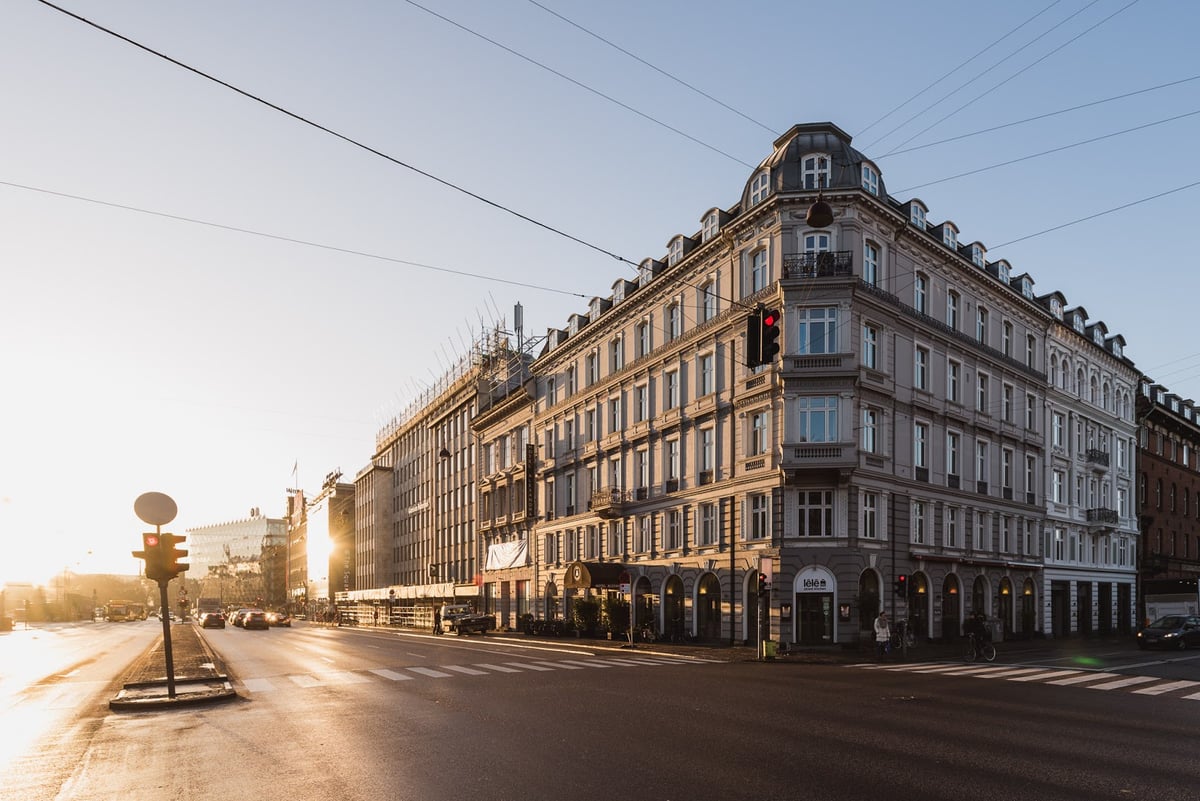
An 1880s building at H.C. Andersens Boulevard 8 housing one of the world's largest collections of Danish vintage design — 61 rooms, none identical.
THE BACKSTORY
The building was constructed in the 1880s as fashionable apartments and converted to a hotel around the turn of the century in 1900. The design concept took shape in 2001 when hotel director Jeppe Mühlhausen, driven by a single Kaare Klint chair find, began building the collection — at a time when Scandinavian design still traded for a fraction of today's prices. The hotel is today owned and operated independently, not by a chain.
WHY NOW
3daysofdesign takes place 10–12 June 2026 in Copenhagen, with exhibitions and open showrooms across the city. Hotel Alexandra is the most natural base — the hotel is a living archive of precisely that heritage.
THE ROOM
Collector's Suite (#570) is the hotel's most considered room — 35 m², dedicated to Poul Kjærholm, with textiles by his daughter. The furniture is for sale, curated by Anders Petersen.
THE SERVICE
Every evening a complimentary glass of wine is served in the lobby, surrounded by Wegner, Juhl and Jacobsen. An honour bar is available for those who wish to continue.
THE NEIGHBORHOOD
H.C. Andersens Boulevard 8 sits at the corner facing Rådhuspladsen, with Tivoli's northern entrance and the National Museum's entrance within walking distance. Strøget begins at the square. Public transport directly outside the door.
HONEST CAVEAT
Ø-12, the restaurant on the premises, operates independently and is open 07:00–16:00 — it is not a hotel-run restaurant concept, and room service is limited.
THE VERDICT
61 rooms, no spa, no cocktail bar — but a collection of Danish midcentury design without parallel on the hotel market. The right choice for those who prioritise aesthetics and location; the wrong choice for those expecting a full-service hotel.
THE FULL PICTURE
The heavy glass door clicks shut behind you, and the civic roar of H.C. Andersens Boulevard—a relentless stream of buses, bicycles, and ambition heading for Rådhuspladsen—is instantly muted. It is not replaced by silence, but by a profound and reverent quiet. This is the first recalibration. Your senses, assaulted by the city, begin to unclench. The air carries the scent of oiled teak and the faint, scholarly perfume of old paper. Your fingers, instinctively, find the cool, responsive curve of a Finn Juhl armchair in the lobby, its polished grain a topographic map of a distant Danish forest. The light is different here; it is the soft, northern glow you’ve only seen in photographs, filtered through vast windows and landing with deliberate gentleness on panels of Kvadrat wool and the brass spine of a Poul Henningsen lamp. There is no cloying fragrance, no insistent soundtrack. There is only the soft report of another guest’s leather-soled shoes on a Persian rug and the solid, satisfying thud of your room key—a real, reassuringly heavy key—on the rosewood reception desk. You have not checked into a hotel; you have been granted temporary custody of a private, obsessively curated design collection.
You are here, of course, because Copenhagen is UNESCO’s World Capital of Architecture this year, making a pilgrimage to this living archive of Danish Modernism feel less like a choice and more of an obligation. The city is a festival of form, but you require a base that doesn’t just observe the subject but embodies it. Your key opens the door to Room 512, the Nanna Ditzel Suite. You’ve insisted on it, or one of the other individually curated rooms on the fifth or sixth floors facing the inner courtyard. To accept a standard room on a lower floor, facing the boulevard, would be a catastrophic error in judgment, condemning you to nights soundtracked by sirens and the ceaseless rumble of the city’s circulatory system. Here, on the fifth floor, there is only peace. The afternoon sun slants across the floorboards, illuminating the iconic hanging ‘Egg’ chair, which sways almost imperceptibly. You sit, and the chair enfolds you. This is the experience: not to see these masterpieces behind a velvet rope, but to live inside them. To feel the genius of the designer in the perfect pitch of a backrest, the thoughtful placement of a reading lamp, the heft of a drawer pull. The other guests understand this. They are architects with Moleskine notebooks, academics who flew from Tokyo to sleep in the Børge Mogensen suite, industrial designers arguing in hushed tones over the superiority of a Wegner joint. They are not here for the Tivoli Gardens theme park, whose faint, happy screams you can just about hear from across the street. They are here for this.
Let us be brutally clear on one point: this is a magnificent place to sleep, but it is not a hotel for those who need coddling. Its soul is in its furniture, not its pampering. The service is impeccably professional but carries a distinct Nordic coolness; they will check you in with flawless efficiency but will not remember your name tomorrow. This is a hotel for the fiercely independent traveler. There is no gym in which to atone for the previous night’s pastry, no spa, no humming cocktail bar where deals are made. The lobby is a stylish passageway, not a destination. Room service is a functional afterthought. If you require a concierge who can conjure impossible theatre tickets or a porter to unpack your suitcase, you will be profoundly, achingly disappointed. The Hotel Alexandra assumes you are here for a singular purpose, and it has stripped away every distraction to help you achieve it.
That purpose is clarified when you descend for a late lunch at Restaurant Ø-12. The city outside is a whirlwind of new Nordic tasting menus and culinary pyrotechnics. Here, the focus is quieter, more confident. You order the Pan-fried Plaice Smørrebrød. It arrives as a lesson in precision, a culinary mission statement that mirrors the hotel’s own ethos. The fish, so fresh it tastes of the sea’s clean salinity, is fried in browned butter, its edges a delicate, shattering crisp while the fillet within remains pearlescent and tender. It rests on a slice of dense, malty rye bread, a perfect earthy counterweight. The true genius, however, is the house-made remoulade—chunky, sharp with capers and cornichons, and singing with fresh dill. It cuts through the richness with surgical accuracy. This is not a sandwich. It is the perfect execution of a Danish classic, a quiet masterpiece of texture and tradition. As you eat, you look out at the frantic energy of the city, at the tourists spilling out of the Tivoli Food Hall, and feel an immense sense of calm. You have made the right choice. You are in the right place. Leaving, you know, will be difficult. Returning to the noise and the visual chaos after existing in this state of curated harmony will feel like a genuine expulsion from paradise.
FACTS
- Neighbourhood: Indre By
- Stars: 4
- From 2250 DKK per night
- Tripadvisor: 4.1/5 (1645)
- 55.67631, 12.56816
FAQ
When is the best time to visit?
3daysofdesign takes place 10–12 June 2026 in Copenhagen, with exhibitions and open showrooms across the city. Hotel Alexandra is the most natural base — the hotel is a living archive of precisely that heritage.
Anything I should know before booking?
Ø-12, the restaurant on the premises, operates independently and is open 07:00–16:00 — it is not a hotel-run restaurant concept, and room service is limited.
What is the neighbourhood like around Hotel Alexandra?
H.C. Andersens Boulevard 8 sits at the corner facing Rådhuspladsen, with Tivoli's northern entrance and the National Museum's entrance within walking distance. Strøget begins at the square. Public transport directly outside the door.
MORE HOTELS IN Copenhagen
- 25hours Hotel Indre By — Indre By
- 71 Nyhavn Hotel — Indre By
- Absalon Hotel — Vesterbro
- AC Hotel by Marriott Bella Sky Copenhagen — Ørestad
- Andersen Boutique Hotel — Vesterbro
- Boutique Hotel Hans (formerly Avenue Hotel) — Frederiksberg