Ibsens Hotel
Indre By, Copenhagen · curated
THE VIBE
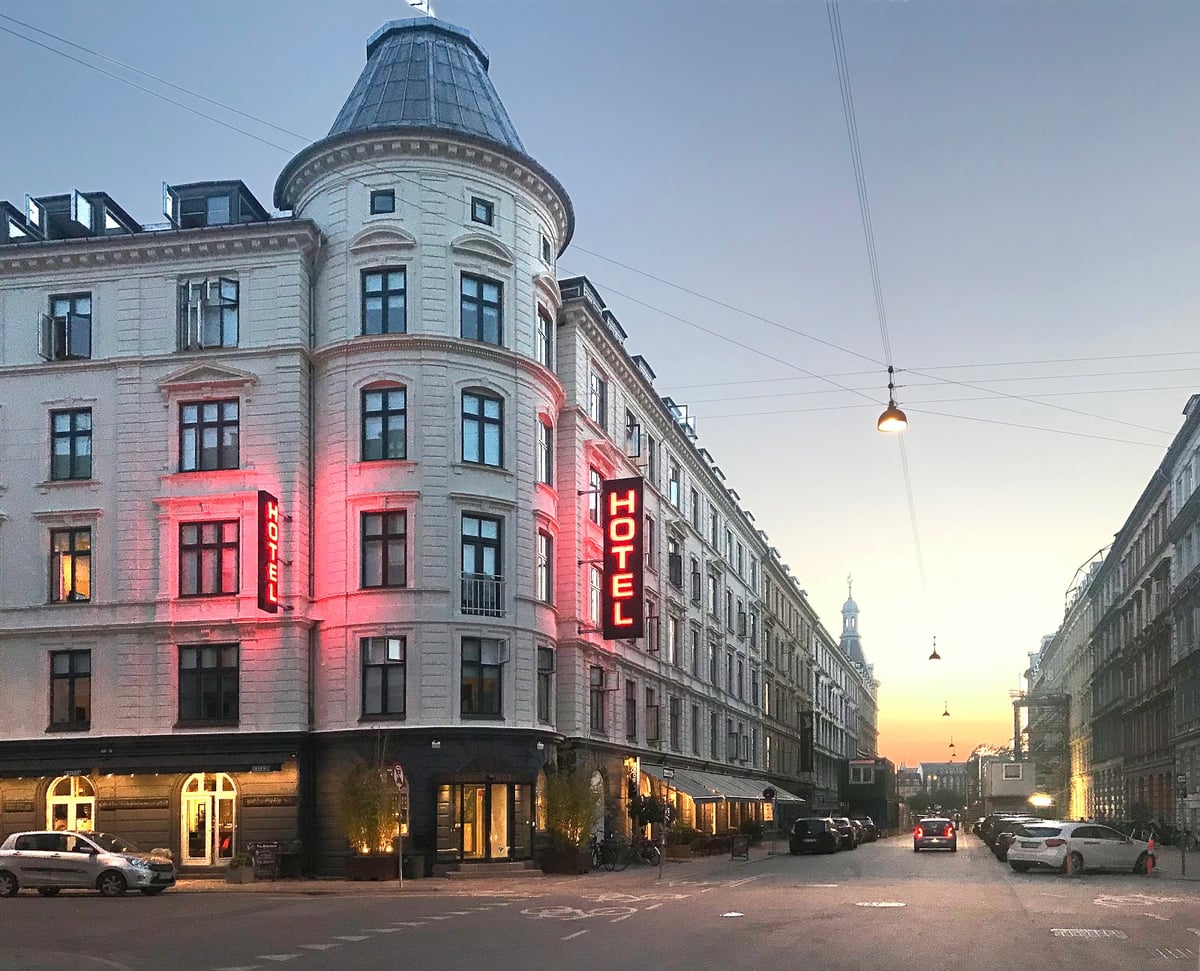
The 1906 building was comprehensively renovated in 2011 with local artists from Nansensgade as co-creators — the result is a 118-room hotel where ceramics and textile art alternate with the hotel's own design choices.
THE BACKSTORY
The property at Vendersgade 23 dates from 1906. Brøchner Hotels acquired it in 1997; in 2011 the building underwent a complete reconstruction during which artists from the Nansensgade neighbourhood were involved in the interior work. In 2013, Ibsens Hotel and sister hotel Kong Arthur were transferred to the newly formed Arthur Hotels under Kirsten Brøchner.
WHY NOW
Arthur Hotels has been part of the world's first carbon-neutral hotel group since 2007 — not as 2026's news, but as an established fact with Green Key certification since 2009. The Nansensgade neighbourhood surrounding the hotel has over the same period consolidated its standing with ceramics studios, natural wine bars and cafés serving single origin. It is a location that speaks for itself without the need for seasonal hype.
THE ROOM
Choose the Large category (20–25 sqm) if you are two with luggage — X-large rooms offer 30 sqm and views over Nansensgade and are the only category officially described with an open view. Avoid Tiny (10–12 sqm, single bed) if comfort weighs more than price.
THE SERVICE
Breakfast is served at Kong Arthur (walking distance) with a New Nordic buffet setup that emphasises local and organic produce. The hotel's own lobby bar offers hot drinks and light snacks during the evening. Access to Kong Arthur's gym (06:00–22:00) is included in the stay.
THE NEIGHBORHOOD
Torvehallerne food market is 300 metres north. Nørreport station (metro M1/M2, S-tog, regional rail) is a five-minute walk. Ørstedsparken begins around the corner. Dronning Louises Bro and the lakeside promenade are reachable on foot north of Nørreport.
HONEST CAVEAT
The hotel has no in-house restaurant and no in-house spa — Ni'mat Spa is nearby but is booked and paid for separately. Breakfast is not automatically included in the room rate and is an additional 265 DKK per person.
THE VERDICT
Ibsens Hotel is a well-positioned 3-star boutique alternative on Nansensgade's finest block: 118 rooms, carbon-neutral operations since 2007, breakfast at neighbouring hotel Kong Arthur (265 DKK/person if not included) and Torvehallerne 300 metres away. No in-house restaurant, no in-house spa. Right for those who want location and a sustainability profile without paying for services they won't use.
THE FULL PICTURE
There is a certain type of traveler who understands that the soul of a city is rarely found within the walls of its most opulent hotels. They know the real transaction isn’t about thread count or turndown service, but about proximity to the pulse. For this tribe—the sustainability consultants debating circular economies over their morning coffee, the landscape architects from Oslo who’ve come to study urban green spaces—this hotel on Vendersgade is less a destination and more a perfectly calibrated instrument for experiencing Copenhagen. You feel it the moment you arrive. The building itself, dating to 1997, forgoes grand pronouncements for a quiet, confident presence, a brick-and-mortar assertion that it belongs here, tucked between the city’s historic core and the thrum of its inner-borough life.
The lobby makes a deliberate, slightly eccentric choice. It’s a space where knightly motifs might share air with clean-lined Nordic seating, a decision that will either read as charmingly idiosyncratic or a perplexing misstep. There is no fawning welcome, but rather a brisk, professional efficiency that feels distinctly Danish. The staff seem to operate on the understanding that you’ve chosen this hotel for its principles—it’s part of the world’s first carbon-neutral hotel group, a fact they wear with quiet pride, not as a marketing slogan. This is a place where your Green Key certification matters more than your luggage brand.
Your room, when you find it, will be an exercise in sufficiency. It is clean, the lines are straight, and the bed offers a firm, restorative sleep. But it is here that the hotel’s honesty becomes its most defining feature. The 2011 renovation is beginning to speak its age, not through neglect, but through design dialect. The bathroom fixtures, once contemporary, now feel like echoes of a past trend, and the placement of power outlets betrays a pre-tablet era of travel. The walls are thin enough that a neighbor’s late-night phone call might register as a low murmur, a gentle reminder that this is a city building with a history and 117 other concurrent stories unfolding. This is the trade-off, the candid admission of a three-star reality. You are not here to be cloistered from the world; you are here to be thrust into its most compelling corner.
And what a corner it is. Drop your bags. It’s 4 p.m., and the city is calling. A two-minute walk lands you on Dronning Louises Bro, the bridge that is not a bridge but Copenhagen’s sprawling, open-air salon. Here, the entire city seems to exhale. The soundtrack is a collage of bicycle bells, the sharp pop of a canned beer opening, and snippets of conversation that float over the placid surface of Søerne, the city’s great watery lungs. You are instantly part of the tableau, an observer dissolving into the scene. This is the hotel’s profound gift: it places you, immediately and without ceremony, at the city’s energetic center.
Turn the other way from the hotel’s entrance, and in three minutes, you’re enveloped by the glorious chaos of Torvehallerne. The air inside is thick with the scent of searing fish from one stall, grinding coffee from another, and the earthy perfume of fresh truffles. It’s a sensory atlas of the New Nordic pantry. You can map out your entire day’s consumption here: a flaky pastry for breakfast, a precisely constructed smørrebrød for lunch from Hallernes Smørrebrød, a handful of almonds and a glass of crisp white wine for an afternoon pause. You buy a block of Vesterhavsost cheese, not because you need it, but because the experience of buying it feels essential.
As evening settles, the hotel’s courtyard becomes a microcosm of culinary choice. The decision of where to eat feels less like a menu selection and more like choosing an identity for the night. Will it be the rustic, carb-heavy warmth of La Rocca, where the scent of baking pizza dough spills into the night air? Or the quick, sharp, satisfying bites at Pintxos, a staccato meal of skewered olives, anchovies, and peppers? Perhaps it’s the disciplined, elegant geometry of Sticks'n'Sushi, where each piece is a testament to umami and control. The crowd gathered here confirms your suspicions: these are people who read policy papers for pleasure and whose travel is an extension of their intellectual curiosity. They are not here for a vacation; they are on a field study.
You leave the next morning, after a final walk through Ørstedsparken, the dew still fresh on the grass. The check-out is as seamless as the arrival. You don’t depart with memories of exceptional luxury or fawning service. Instead, you carry a feeling of profound strategic victory. You were not a tourist held at arm’s length from the city; you were embedded within it. The hotel served as a key, unlocking a Copenhagen of lived moments: the taste of that cheese from the market, the specific quality of the late-afternoon light on the lakes, the sound of a city at ease with itself. You realize the room was never the point. The point was everything else.
FACTS
- Neighbourhood: Indre By
- Stars: 3
- From 2000 DKK per night
- Tripadvisor: 4.2/5 (2354)
- 55.68415, 12.56545
FAQ
When is the best time to visit?
Arthur Hotels has been part of the world's first carbon-neutral hotel group since 2007 — not as 2026's news, but as an established fact with Green Key certification since 2009. The Nansensgade neighbourhood surrounding the hotel has over the same period consolidated its standing with ceramics studios, natural wine bars and cafés serving single origin. It is a location that speaks for itself without the need for seasonal hype.
Anything I should know before booking?
The hotel has no in-house restaurant and no in-house spa — Ni'mat Spa is nearby but is booked and paid for separately. Breakfast is not automatically included in the room rate and is an additional 265 DKK per person.
What is the neighbourhood like around Ibsens Hotel?
Torvehallerne food market is 300 metres north. Nørreport station (metro M1/M2, S-tog, regional rail) is a five-minute walk. Ørstedsparken begins around the corner. Dronning Louises Bro and the lakeside promenade are reachable on foot north of Nørreport.
MORE HOTELS IN Copenhagen
- 25hours Hotel Indre By — Indre By
- 71 Nyhavn Hotel — Indre By
- Absalon Hotel — Vesterbro
- AC Hotel by Marriott Bella Sky Copenhagen — Ørestad
- Andersen Boutique Hotel — Vesterbro
- Boutique Hotel Hans (formerly Avenue Hotel) — Frederiksberg