Hotel Monument Mas Passamaner
La Selva del Camp, Costa Dorada · flagship
THE VIBE
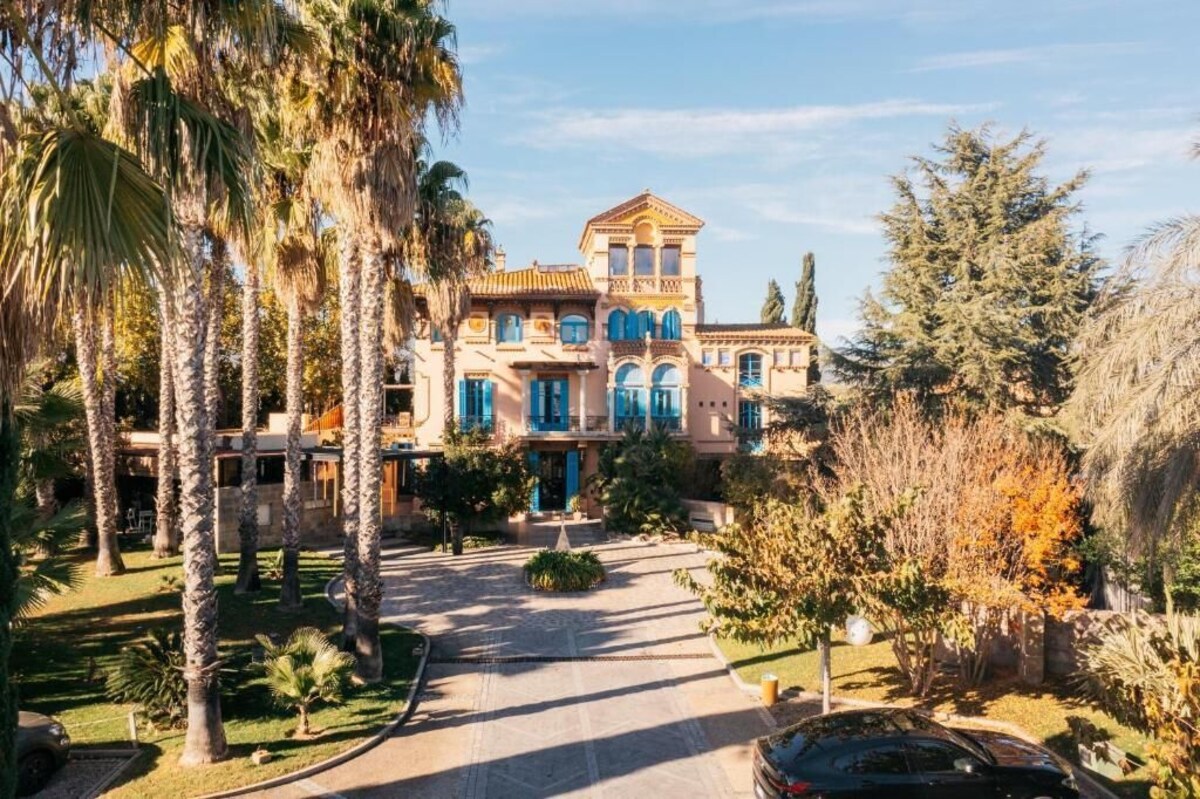
Twenty-four keys in a modernista summer villa by Lluís Domènech i Montaner at La Selva del Camp — painted tile, a palm park, and the quiet of the Camp de Tarragona plain around the walls.
THE BACKSTORY
The villa was designed in the early twentieth century by Lluís Domènech i Montaner — the architect of the Palau de la Música in Barcelona — and has been restored as a five-star hotel with thirteen doubles, nine modernista suites and two villas. The garden, the spa and the La Gigantea restaurant all sit within the same park.
WHY NOW
The hotel lives inside one of Domènech i Montaner's surviving modernista buildings, eight kilometres from Reus. For anyone who wants to see Reus modernisme and sleep inside it at once, it is the only address in the Camp de Tarragona that offers both.
THE ROOM
The modernista suites in the main building — the original detail and the ceiling height make for a wholly different stay than the newer rooms in the annexe. Ask explicitly for a suite in the Domènech house; book a standard and you land outside the architecture you came for.
THE TABLE
Carpaccio of Camp de Tarragona vegetables with Siurana oil — La Gigantea. The house's gastronomic restaurant cooks on the plain's produce and the region's Siurana DOP oil — Alamar-priority as it sits in the hotel.
THE NEIGHBORHOOD
La Selva del Camp is a walled medieval village on the plain, eight kilometres from Reus and fourteen from Tarragona. Reus modernisme and Casa Navàs are a quarter-hour by car; the beach lies the other way, half an hour off.
HONEST CAVEAT
The hotel is a sought-after wedding and events venue, and on weekends the park can be booked out privately — ask about the calendar before booking. The spa is a paid supplement, not included, and the setting is inland: the nearest beach is half an hour away.
THE VERDICT
A modernista monument you get to sleep in — a rarity in the Camp de Tarragona. Come for Domènech i Montaner's architecture and the calm of the plain, not for the beach, which belongs to another part of the destination.
THE FULL PICTURE
The car turns off the main road outside Reus and the landscape flattens into the Camp de Tarragona — olive groves, almond orchards, and the kind of agricultural quiet that makes you check whether your phone still has signal. Eight kilometres later, the walled perimeter of La Selva del Camp appears, a medieval village that hasn't bothered to announce itself with signage or fanfare. Inside its stone limits, behind iron gates and a curtain of palms, sits the summer villa that Lluís Domènech i Montaner built at the turn of the twentieth century — the same architect who gave Barcelona the Palau de la Música Catalana, and who remains, to this day, the one modernista genius most travellers cannot name. Twenty-four keys. Five stars. A building you'd normally pay admission to enter.
Arrival is a recalibration. You step from gravel onto painted tile — hand-laid, chromatic, the kind of decorative excess that Domènech treated not as ornament but as argument. The lobby smells of cut garden herbs and old plaster, the particular mineral coolness of thick walls that have kept out the Tarragona heat for over a century. There is no check-in desk in the corporate sense; someone meets you in what was once a drawing room. The ceilings are high enough that your voice changes register. You notice it immediately — the acoustics of a building designed for a different century's idea of grandeur, when summer houses on the plain were built to impress the industrialists of Reus.
Ask explicitly for a suite in the Domènech house. This is not a soft suggestion — it is the difference between sleeping inside the architecture you came to see and sleeping adjacent to it. The nine modernista suites occupy the original villa: painted ceilings, ironwork, the weight of authorial intention in every cornice. The thirteen doubles and two villas in the annexe are comfortable, contemporary, and entirely beside the point. Book a standard room and you've driven to the Camp de Tarragona to sleep in something you could find in any coastal resort. The suites are why you're here. The original tile underfoot, the shutters that open onto the palm park at seven in the morning with its chorus of blackbirds and the distant thrum of a tractor crossing the plain — these are not details a renovation can replicate.
By mid-morning, the garden establishes its hold. The park is generous, shaded, the air carrying the dry rustle of palm fronds and the warmth of sun on old stone. A quarter-hour's drive puts you at Casa Navàs in Reus, Domènech's other masterwork in the region, where the stained glass and ceramic detail will send you back to your suite to examine every surface with sharper eyes. Farther afield — the Amfiteatre Romà de Tarragona and the Catedral de Tarragona sit within half an hour, the Roman amphitheatre facing the sea that this hotel deliberately turns its back on. The Serra del Montsant rises to the northwest, its ridgeline visible from the park on clear days, and Siurana — the cliff-top village that fell last to the reconquest — rewards those willing to wind up the mountain road. But neither the ruins nor the cliffs are the reason most guests linger past checkout.
Lunch at La Gigantea answers the question of what to eat on the plain. The carpaccio of Camp de Tarragona vegetables with Siurana oil is the dish that earns the table — raw produce rendered with a precision that lets the oil, pressed from olives grown in the valley below the Montsant, do the talking. The restaurant sits within the park, and on a warm afternoon you eat surrounded by the garden you've been walking through all morning, which blurs the boundary between meal and landscape in a way that resort dining rarely manages.
A word of earned honesty: this is a sought-after wedding venue, and on weekends the park can be given over entirely to private events. If you arrive on a Saturday expecting monastic calm and find a sound system testing levels among the palms, you have only your own booking inquiry to blame — ask about the events calendar before you confirm. The spa exists but carries a paid supplement; it is not folded into the room rate, a detail that stings at the five-star tier. And the coast — Cambrils, the nearest port with its fishing boats and rice kitchens — lies a solid thirty minutes away. This is an inland hotel. It does not pretend otherwise. The guests who understand this are the ones who return: architecture historians tracing Domènech's lesser-known commissions, couples from Barcelona who want a weekend without the obligation of a beach itinerary, food writers mapping the Siurana oil trail, and the occasional modernista obsessive who has already visited the Palau de la Música six times and needs a new chapter.
By the last evening, the villa has done something to your internal clock. The light drops across the plain in long amber sheets, the kind of sunset that belongs to flat agricultural country and nowhere else. You sit in the garden with a glass of something local, the painted tile of the terrace warm beneath bare feet, the palms casting shadows that lengthen toward the medieval walls of the village. Departure, the next morning, arrives with an unexpected reluctance — not for the comfort, which is real but not the point, but for the silence. The Camp de Tarragona is not a destination most travellers think to seek. That is precisely its currency. You leave knowing you slept inside a building that matters, in a landscape that asks nothing of you, and that both of those things are harder to find than any five-star rating suggests.
FACTS
- Neighbourhood: La Selva del Camp
- Stars: 5
- From 170 EUR per night
- Tripadvisor: 3.8/5 (390)
- 41.213, 1.141
FAQ
When is the best time to visit?
The hotel lives inside one of Domènech i Montaner's surviving modernista buildings, eight kilometres from Reus. For anyone who wants to see Reus modernisme and sleep inside it at once, it is the only address in the Camp de Tarragona that offers both.
Anything I should know before booking?
The hotel is a sought-after wedding and events venue, and on weekends the park can be booked out privately — ask about the calendar before booking. The spa is a paid supplement, not included, and the setting is inland: the nearest beach is half an hour away.
What is the neighbourhood like around Hotel Monument Mas Passamaner?
La Selva del Camp is a walled medieval village on the plain, eight kilometres from Reus and fourteen from Tarragona. Reus modernisme and Casa Navàs are a quarter-hour by car; the beach lies the other way, half an hour off.
MORE HOTELS IN Costa Dorada
- Gran Claustre — Altafulla
- Gran Hotel Mas d'en Bruno — Torroja del Priorat
- Hotel Cal Llop — Gratallops
- Hotel Termes Montbrió — Montbrió del Camp
- Le Méridien Ra Beach Hotel & Spa — El Vendrell
- Mas La Boella — La Canonja