Ora Hotel Priorat
Torroja del Priorat, Costa Dorada · flagship
THE VIBE
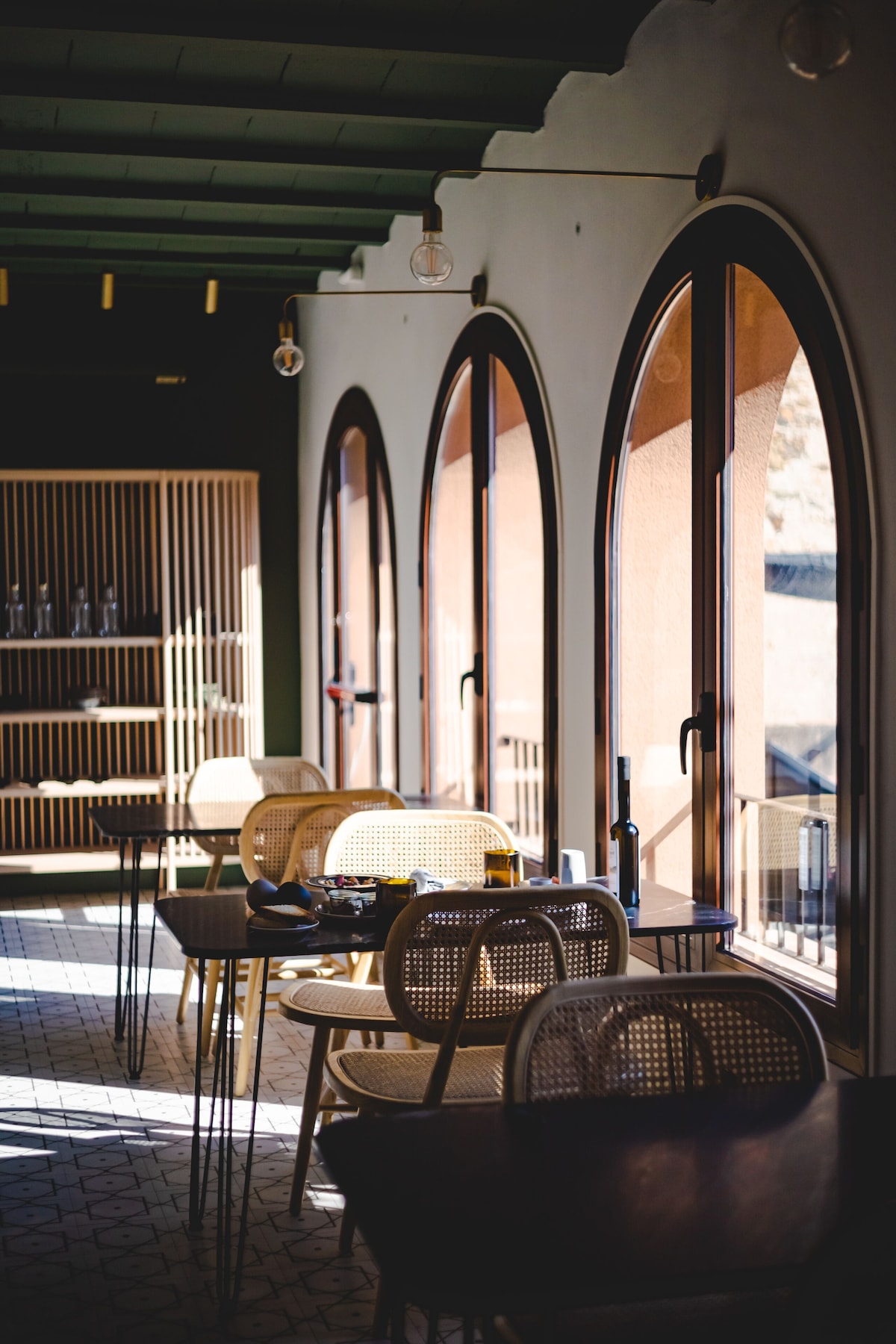
Thirteen rooms in an 18th-century abbey in the heart of Torroja del Priorat — old stone vaults, restrained contemporary design, and the hush of the village street where the vines begin.
THE BACKSTORY
An 18th-century monastery in the village core, carefully rebuilt as a design hotel and a member of Design Hotels. The interior lets the old stone walls speak and meets them with custom-made furniture and a broad selection of Priorat wines.
WHY NOW
The house is a Design Hotels membership moved into an 18th-century abbey in the middle of one of Priorat's wine villages. For anyone who wants to stay inside the village rather than on a remote estate, it puts the street and the cellars within walking distance.
THE ROOM
The rooms under the original stone vaults — the height and the muted light give a calm rhythm the newer rooms lack. Ask for a room away from the village street; those facing it can hear the evening life around the neighbouring restaurants.
THE TABLE
Char-grilled local fish with the season's vegetables — Ora Restaurant. The house restaurant keeps the cooking simple and well-made with clear flavour, pairing it from the village's own Priorat wines — Alamar-priority as it sits in the hotel.
THE NEIGHBORHOOD
Torroja del Priorat is a wine village of a few hundred; the hotel sits in the middle of it, with cellars and the village street within walking distance. Gratallops is ten minutes by car, Falset a quarter-hour — but the point is that you can step out of the gate straight into the village.
HONEST CAVEAT
The village setting means the evening life around the neighbouring restaurants carries into the street-facing rooms, and the thirteen rooms book out fast through harvest. Without a car you can barely reach the neighbouring villages despite the central position in Torroja.
THE VERDICT
A design hotel for those who want to stay inside a Priorat village, not above it — stone, wine and a short walk to the cellars. Come for the rhythm of the village and the wine, not for spa or pool, which are not the house's business.
THE FULL PICTURE
You arrive in Torroja del Priorat the way everyone does — by car, on a narrow road that climbs through terraced vineyards scored into slate-dark soil, past villages so small they barely interrupt the landscape. The GPS insists you've arrived before the building reveals itself, because this hotel is not announced. It is absorbed into the village, its 18th-century abbey walls flush with the houses on either side, its entrance a doorway on a street where a few hundred people live the kind of life that wine demands: slow, seasonal, governed by fruit.
Step inside and the temperature drops. The stone vaults — original, undressed, thick enough to hold silence — arch overhead with the authority of a building that has outlived its first purpose and found another. The design is restrained to the point of philosophy: custom-made furniture in muted tones, nothing that competes with the weight of the walls. This is a Design Hotels property, and the membership makes sense not because of flash but because someone understood that the architecture does the work. Thirteen rooms. That's all. The ones beneath the original vaults are the reason to book — the height, the way late-afternoon light falls in a column through a deep-set window and dies against stone, the hush that feels monastic because it literally was. Ask for a room facing away from the village street; those oriented toward it catch the drift of conversation and clinking glasses from the neighbouring restaurants once evening settles in. Not intolerable, but not the deep quiet the back rooms offer, and you'll want that quiet after a day in the cellars.
The crowd here is specific. Sommeliers on pilgrimage. Wine importers who already know which parcels of Garnacha matter and have come to taste at the source. Couples in their forties who read about Priorat in a magazine ten years ago and are finally here, carrying a notebook and a tolerance for villages where the nearest shop sells exactly what you need and nothing more. The occasional architect, drawn less by the wine than by the conversion — how old stone and new furniture negotiate a truce without compromise. You will not find families with young children. You will not find anyone looking for a pool or a spa, because neither exists, and the hotel makes no apology for the absence. This is a house built around wine and stone, and it knows what it is.
Mornings begin in the kind of stillness that city hotels simulate and never achieve. Open the shutters at seven and the street is empty, the light flat and gold on the abbey wall opposite, the air carrying something herbal — rosemary, thyme, whatever grows wild between the terraces above the village. Breakfast sets you up without theatre. By nine you should be in the car. Gratallops is ten minutes away, Falset a quarter-hour, and the cellars of Priorat — small-production, appointment-only, the kind of places where the winemaker pours and talks and you leave with a case you cannot find at home — are the entire point. Without a car, you are stranded; the village's position is deceptive, because central in Priorat means central among other villages connected by roads that no bus serves with any useful frequency. Accept this before you book.
Come back by late afternoon and let the day collapse at Ora, the hotel's own restaurant. The cooking is simple in the way that requires confidence: char-grilled local fish with the season's vegetables, clean flavours that don't bury the wine. And the wine is the event. The house draws from Priorat's own producers — bottles that taste of the dark soil you drove through that morning, mineral and serious. You drink them here the way they were meant to be drunk: close to where they were made, with food that steps aside.
After dinner, walk the village. It takes four minutes. The street is quiet again, the Serra del Montsant a dark ridgeline pressing north, Siurana's cliff-top village somewhere out there in the darkness — a medieval perch you should drive to one morning for the vertigo and the silence, if you can spare a day from the cellars. Back at the hotel, the stone walls hold the cool of the evening. The room is spare, the bed good, the quiet near-total if you chose wisely.
A warning for the eager: thirteen rooms vanish through harvest season. If you want September or October, book months ahead or accept that the village has filled without you. And manage your expectations about scale. This is not a resort. There is no concierge desk orchestrating your days, no wellness programme, no evening programming beyond whatever the village itself provides. The house gives you a room, a restaurant, and a village. The rest — the driving, the tasting, the slow afternoons watching light cross old stone — you build yourself.
You leave Torroja del Priorat lighter than you arrived, though your car is heavier by several cases. The place does what the best small hotels do: it puts you inside the thing you came for. Not adjacent to it, not with a view of it, but inside the village, inside the wine, inside the particular rhythm of a place where a few hundred people have decided that this soil, these grapes, this life, is enough.
FACTS
- Neighbourhood: Torroja del Priorat
- Stars: 4
- From 200 EUR per night
- Tripadvisor: 5/5 (17)
- 41.2017, 0.8158
FAQ
When is the best time to visit?
The house is a Design Hotels membership moved into an 18th-century abbey in the middle of one of Priorat's wine villages. For anyone who wants to stay inside the village rather than on a remote estate, it puts the street and the cellars within walking distance.
Anything I should know before booking?
The village setting means the evening life around the neighbouring restaurants carries into the street-facing rooms, and the thirteen rooms book out fast through harvest. Without a car you can barely reach the neighbouring villages despite the central position in Torroja.
What is the neighbourhood like around Ora Hotel Priorat?
Torroja del Priorat is a wine village of a few hundred; the hotel sits in the middle of it, with cellars and the village street within walking distance. Gratallops is ten minutes by car, Falset a quarter-hour — but the point is that you can step out of the gate straight into the village.
MORE HOTELS IN Costa Dorada
- Gran Claustre — Altafulla
- Gran Hotel Mas d'en Bruno — Torroja del Priorat
- Hotel Cal Llop — Gratallops
- Hotel Monument Mas Passamaner — La Selva del Camp
- Hotel Termes Montbrió — Montbrió del Camp
- Le Méridien Ra Beach Hotel & Spa — El Vendrell